I had seen that Meet Bosnia provided various day trips with guides to see other parts of Bosnia and Herzegovina. Knowing that I was spending most of my time in the part of the country known formally as Bosnia, I thought it may be good to visit Herzegovina and learn some thing about this other parts of this country. It was a twelve hour bus tour with frequent stops and packed a lot into the day.
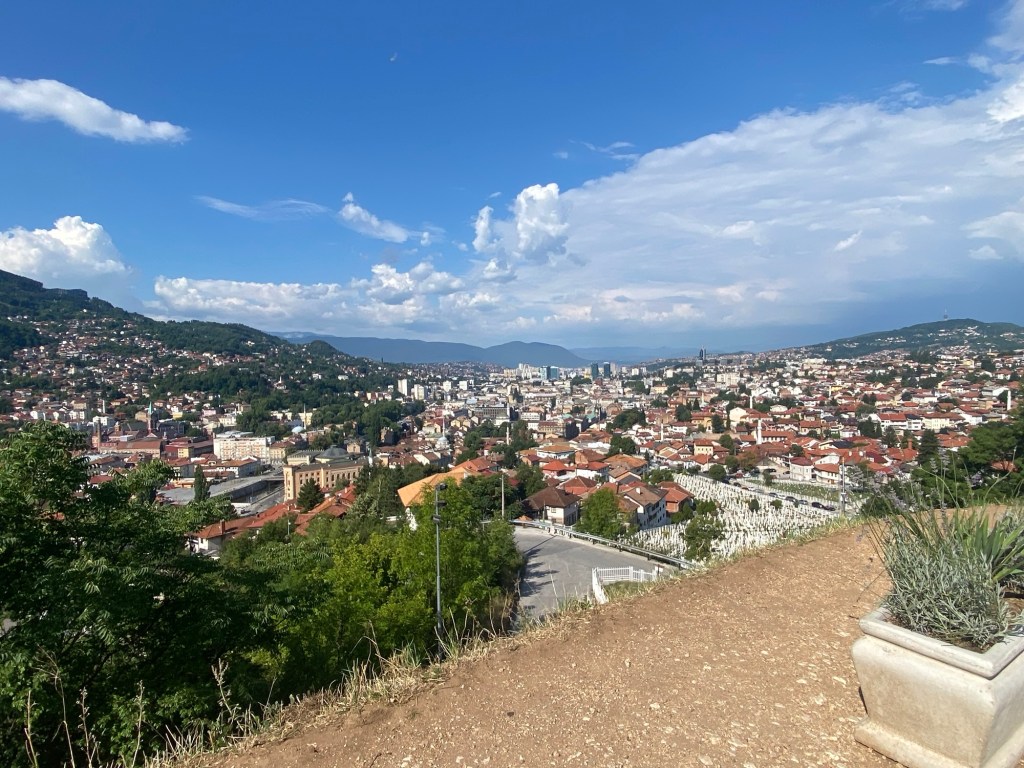
The first thing our guide did was explain that Herzegovina was mostly an administrative division brought on when people in the area were fomenting unrest against the Austria-Hungarian empire. The hope was that by sub-dividing this group within the Balkans it would prompt less coordinated actions against the monarchy. The division of Bosnia and Herzegovina has continued since then.
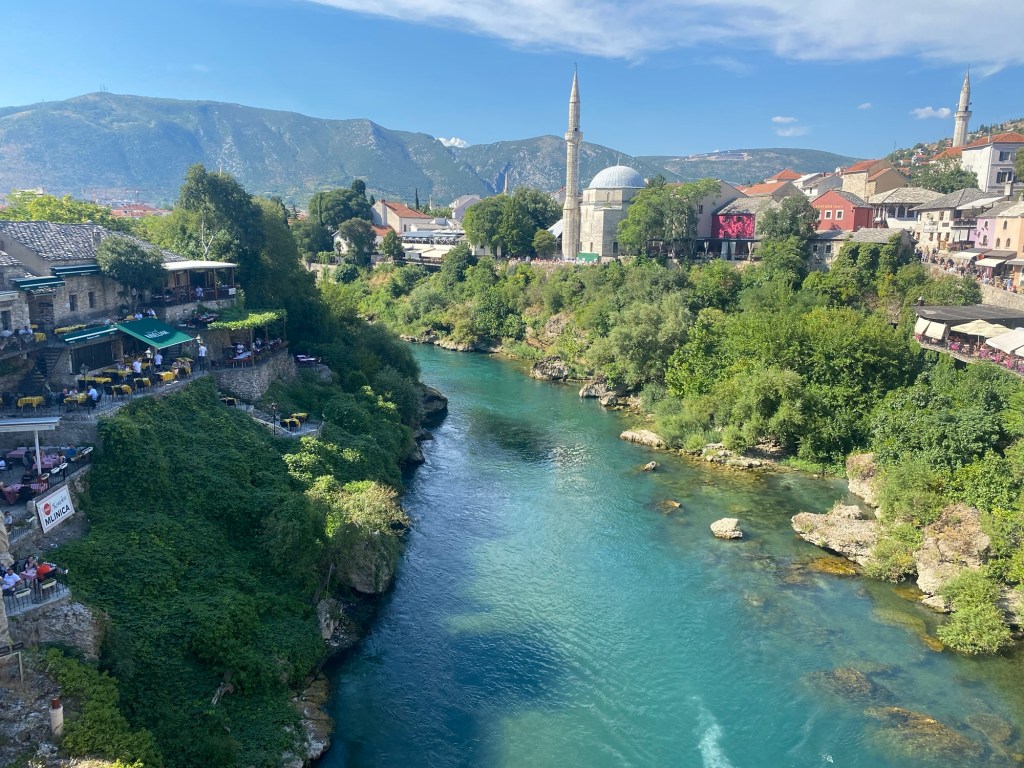
There were a few other differences including the higher population of Croats in this part of the country and a warmer, more Mediterranean climate. It definitely felt a bit warmer on this day trip than my days in Sarajevo.
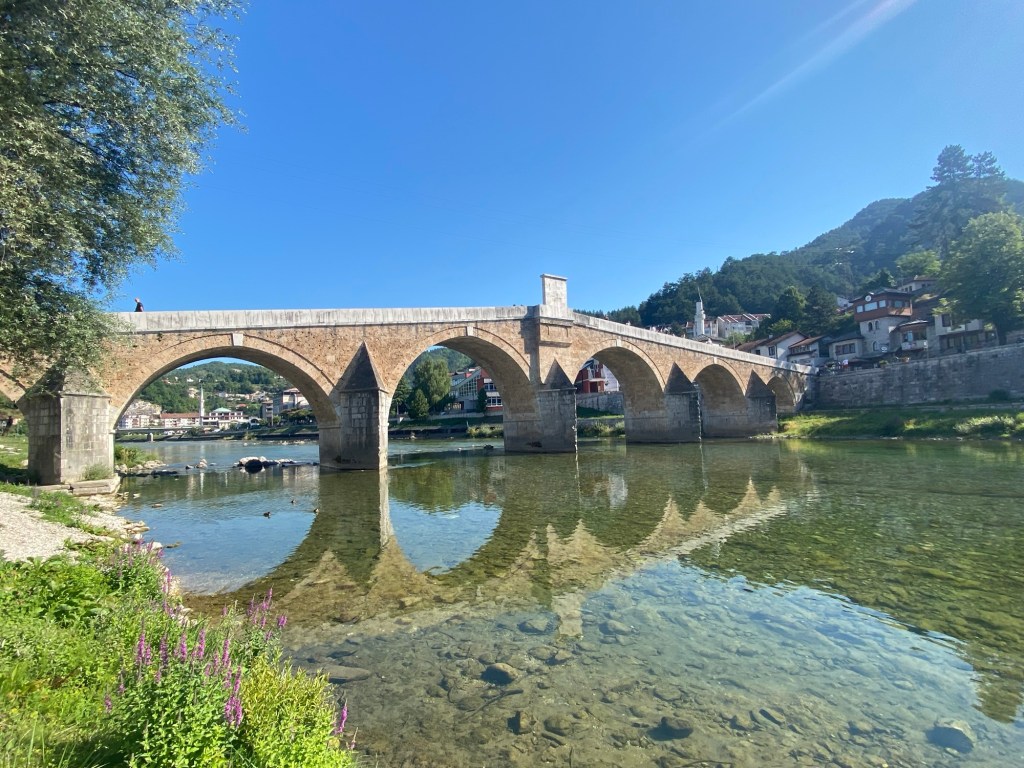
The tour hit a few key stops. The first was at an Ottoman bridge in Potoci. Although damaged both in WWII and in the more recent Bosnia-Serbian War, the bridge with its six arches had been rebuilt on its original pilings. The town had a small old town that you could walk quickly through and was a key location for artisans doing ornate carvings.
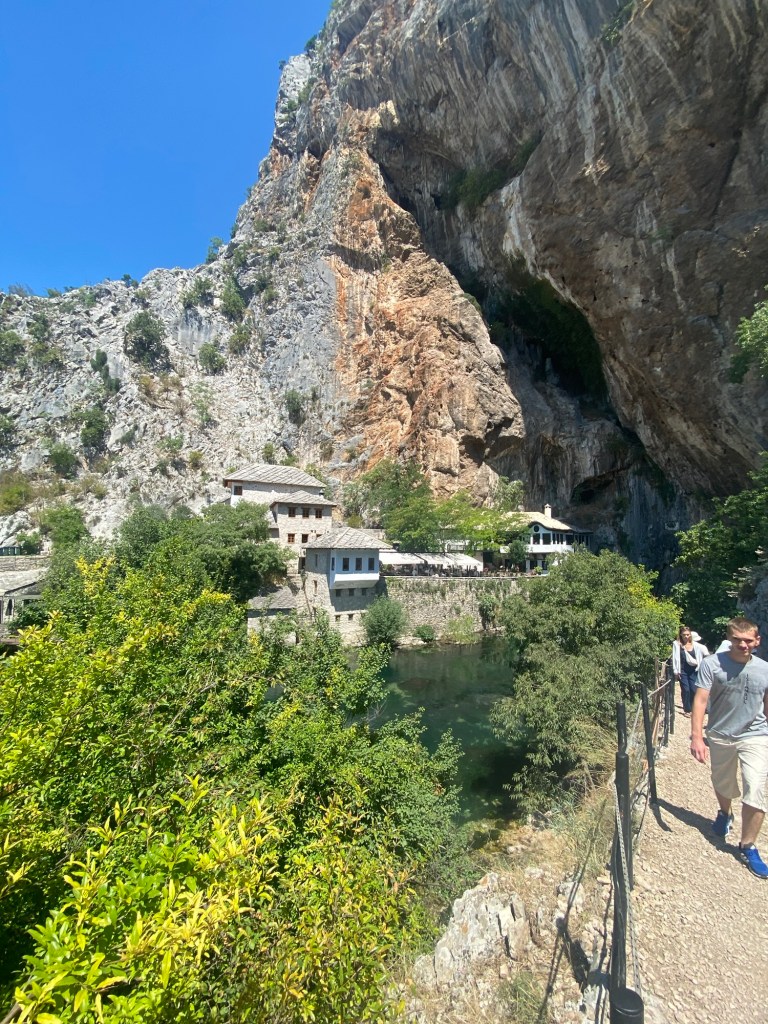
The next stop was a Tekija Dervish Monastery at Blagaj. This monastery was building in the 15th century and was once a centre of this branch of Islam in Bosnia. Overtime the monastery had diminished and was closed with the advent of Communism in Yugoslavia, although they did preserve the site and make it a monastery. Built at the source of a spring that fed a river through Herzegovina, the site has caves that would have served the early monks and remains a peaceful setting.
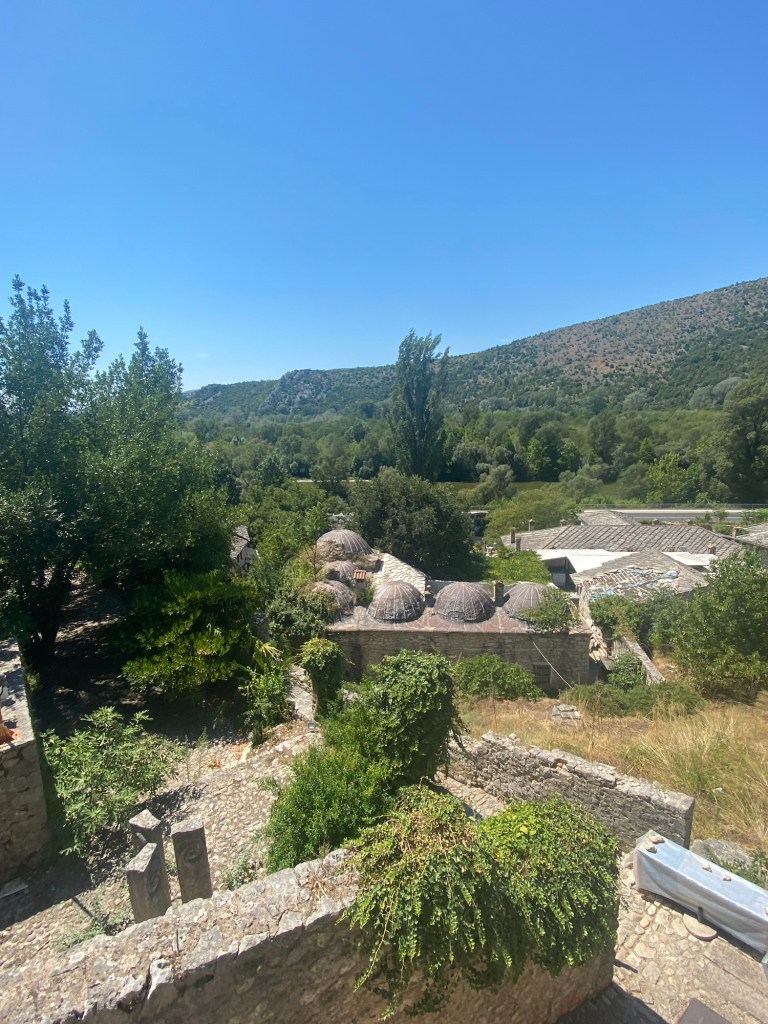
We went a bit up the road from Blagaj to visit an older Ottoman city that is now in a state of some disrepair. At one point this had been a major trade center for the Ottoman with its two fortresses—one military, the other administrative. A mosque, Madrassa, Hannam, and Caravasai building still remain cared for by the dozen or so families that still live in houses among the old buildings.
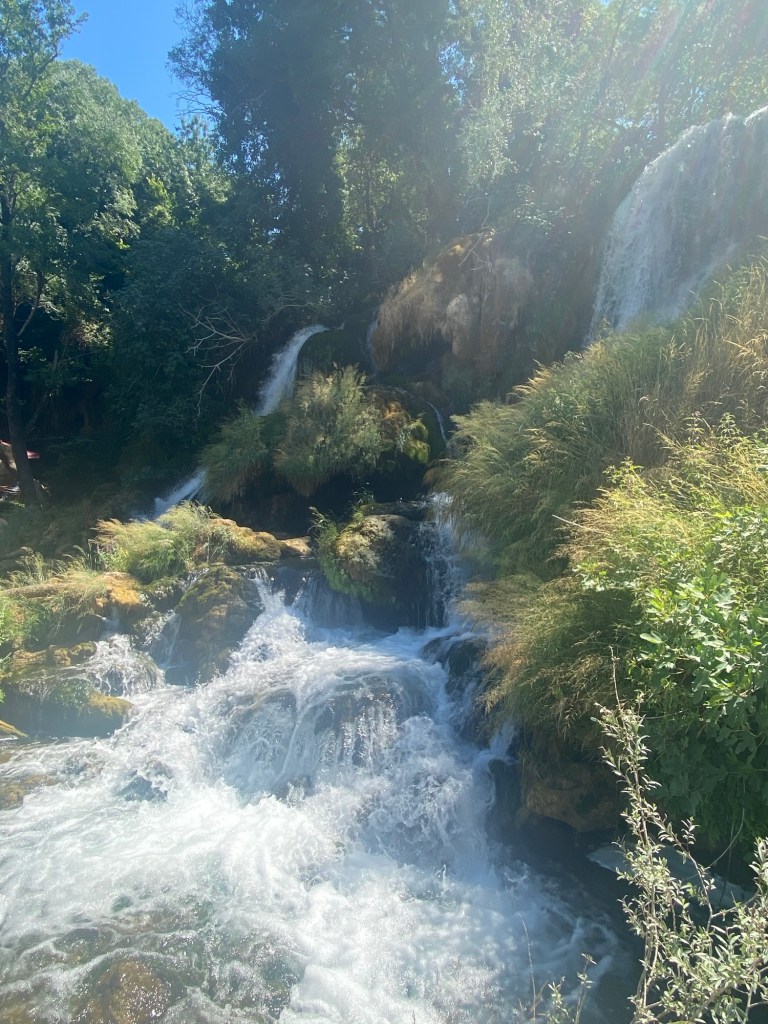
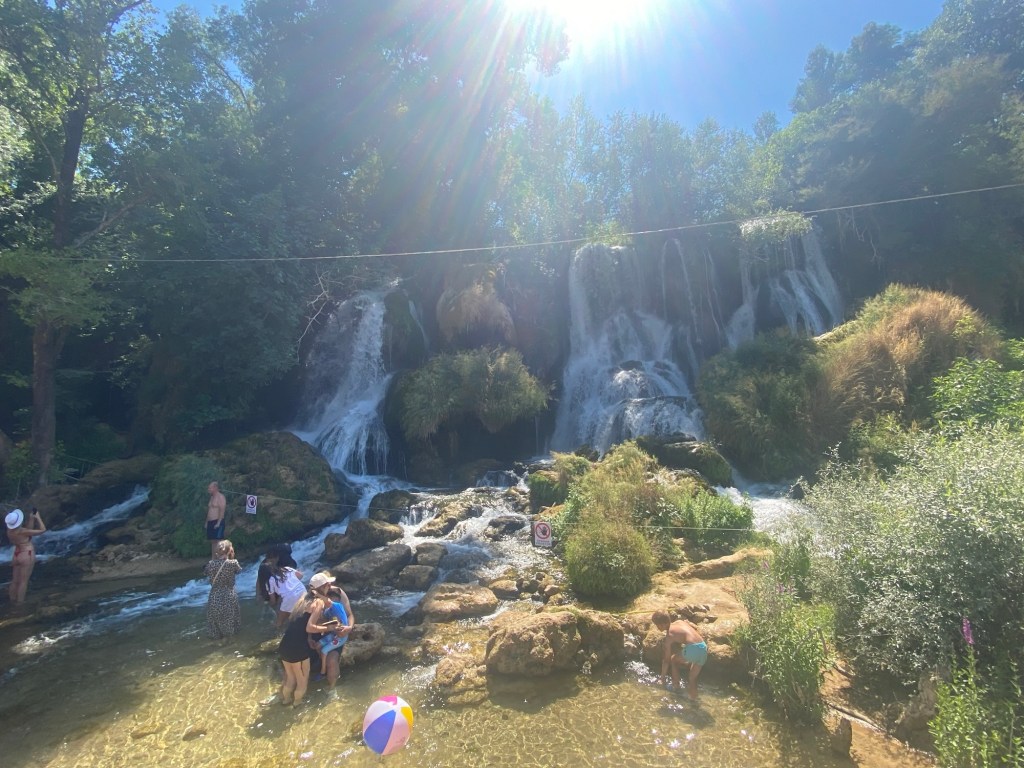
The Kravica Falls was the next stop. A resort time setting—particularly on a warm weekend when people wanted to swim—these Falls were described as being rated multiple times as the most beautiful Falls in Bosnia and Herzegovina. The multiple falls made for a beautiful setting. Finding a spot in the water or not he rocky beach to appreciate them was a bit more difficult.
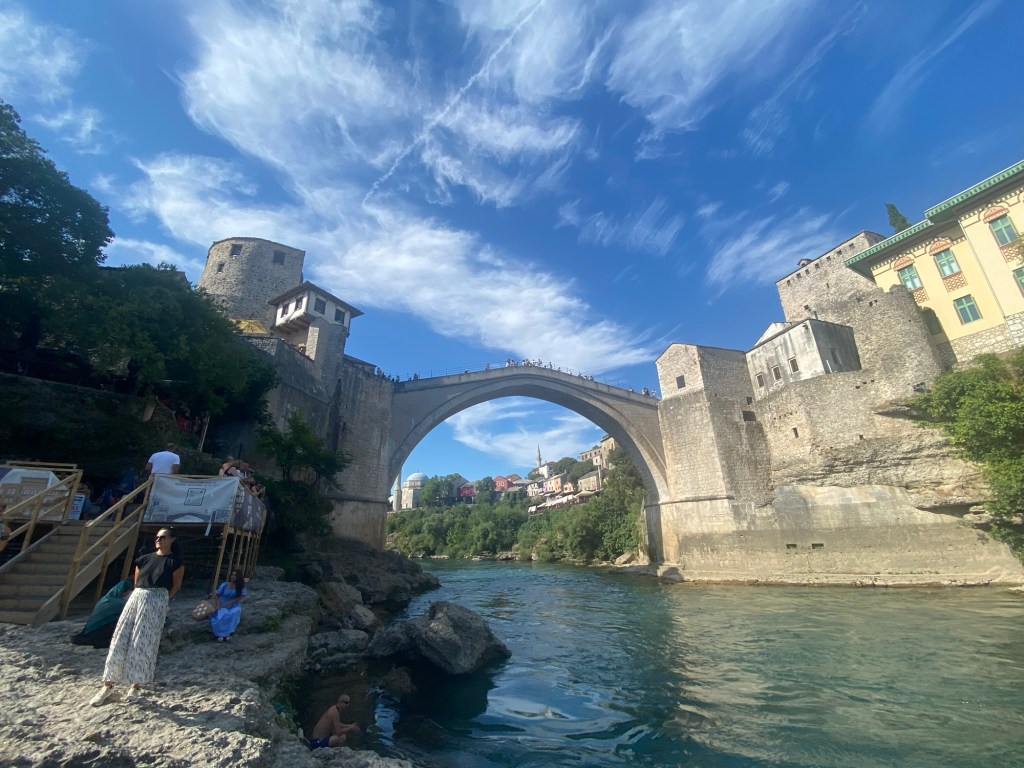
The final stop was in Mostar, the third largest city in Bosnia and Herzegovina. We were brought here to see the stunning visual of the Mostar bridge. This bridge was built in Ottoman days and had stood until the 1990s when the Serbian Army shelled it. The country chose to rebuilt it in the original style and it remains a symbol and main attraction in Mostar. A few narrow shopping and eating streets lead up to the bridge adding to the anticipatory nature of being able to walk over it. Youth still jump off the bridge as part of a tradition of showing your manliness in anticipation of marriage (although the latter part is less the modern focus). The visit was well worth it, although it had a whirlwind feel due to the quick visits to most sites.
 BorealHiker