With an alleged 365 churches around Lake Ohrid, Macedonia, it has been called the “Jerusalem of the Balkans”. I had wanted to visit this part of the world since I read Kapka Kassabova’s “To the Lake: A Balkan Journey of War and Peace”. Although my travels were never going to be as in depth as Kapka’s in this book, the intriguing nature of this part of the world with the connections to lakes, religion, and borderlines.
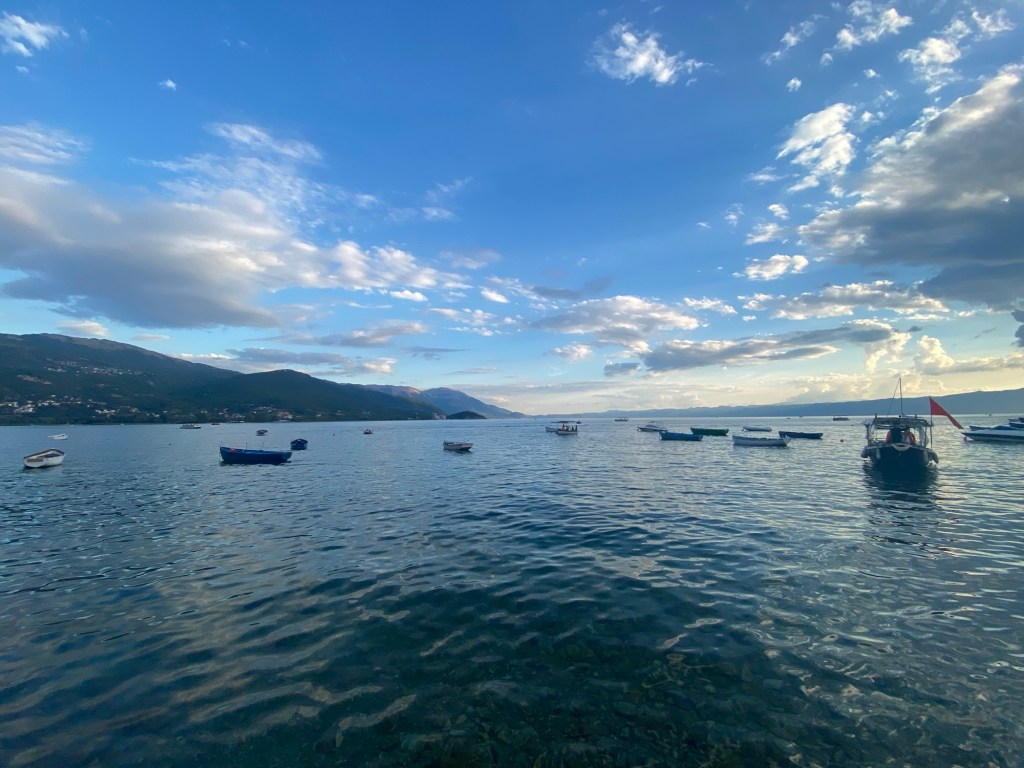
Ohrid is a picturesque city on the northeast corner of Lake Ohrid. In coming from Tirana, Albania, we drove east to the western side of the lake before taking a turn to make the clockwise turn around the lake towards Ohrid the city. I was on the wrong side of my bus to take full advantage of looking out the window and seeing the lake, but even through the other passengers, there was something magical on the sun glinting off the water as we made our way around.
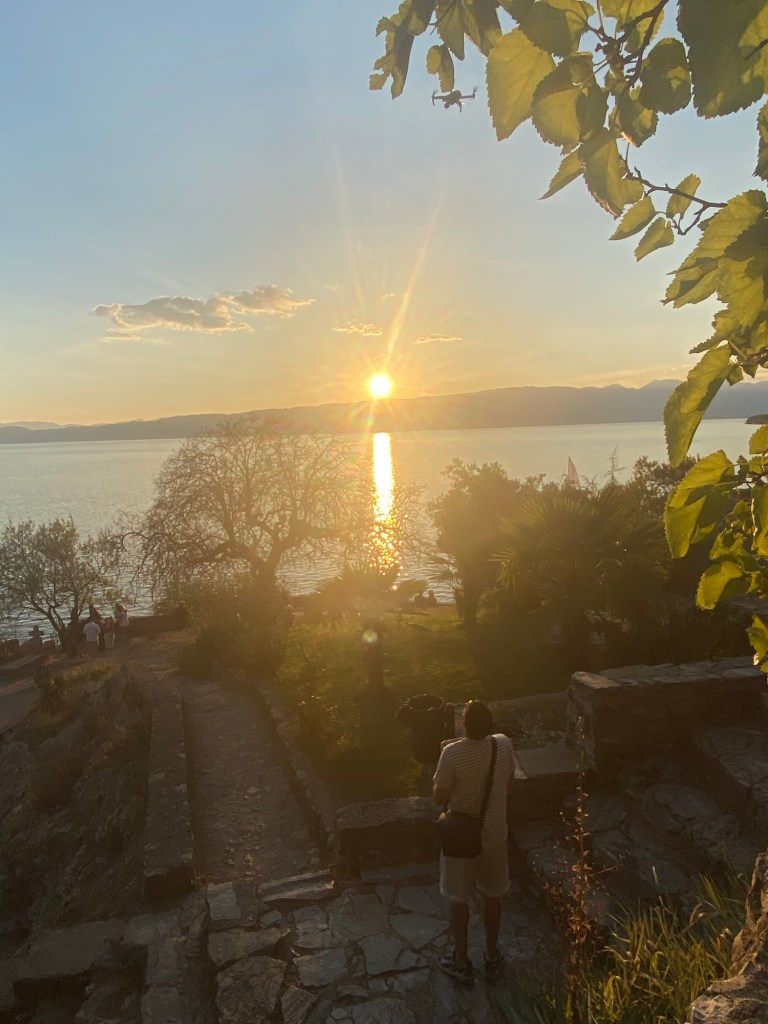
I booked the Blue Lake Hostel, just a few blocks from the waterfront, and 500 metres from the main wharf, square and the edge of the old city. It made the exploration of the city a lot easier.
Although I wanted to do some hiking, I mostly wanted to explore the sites within Ohrid and the area. Usually I would quickly look up the free tour of the city, but for Ohrid, I wasn’t able to find one for a couple days after my arrival. Although I booked one based on feedback from a Welsh man I met in Tirana, I looked to fill some time with a trip to the St. Naum monastery on my second day around Lake Ohrid. I had heard a few good things about this monastery and saw it advertised as part of a regular rotation of boat trips one could take from Ohrid. The tour took us down the Macedonia side of Lake Ohrid. We went by the old summer home of Tito, the Bay of Bones—a bronze area waterfront town that had been reconstructed from the remains of the posts that were left in the water at the Lake’s edge—before we came to the Monastery on the southeast corner of the lake, a few kilometres from the Albanian border.
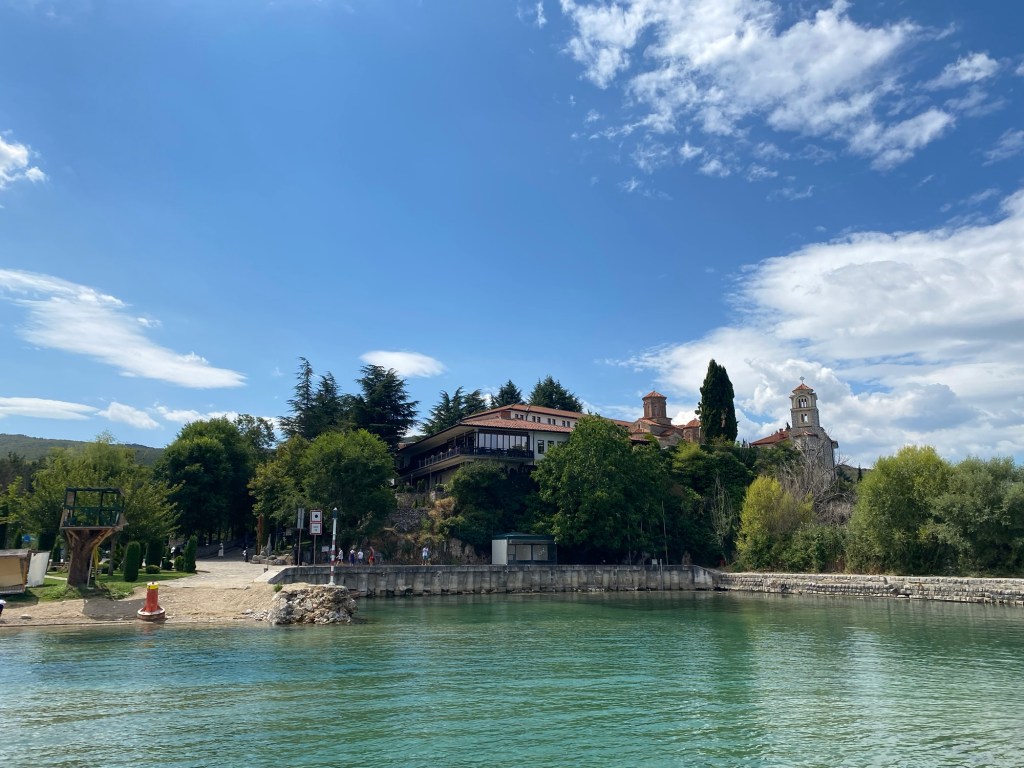
St. Naum’s monastery was deeply tied to the history of the Lake. In the tenth century St. Naum set up his monastery on the south end of the Lake at the same time that St. Clement was developing his monastery and school in Ohrid at the north end. These two were instrumental in developing a more functional Cyrillic text that the common person could read. They built on the work by their mentors, St. Methodious and St. Cyril (who the improved text was renamed after), and this endeared them to the people they served around Lake Ohrid. The monastery at St. Naum is no longer an active monastery although there are rooms and a restaurant to support people visiting from monastic traditions and pilgrims wanting to stay at the site. Much of the monastery has been rebuilt over time as it was destroyed by the Ottomans in the 15th century with the locals rebuilding shortly afterwards. Under the communist leadership of Yugoslavia it was a cultural site but not really supported. Post-independence in 1991, the cult of St. Naum came back in earnest with a redevelopment of the site occurring at the same time. This has made it one of the most popular tourist sites in North Macedonia. Adding to the setting is a clear river that connects Prespa Lake and is fed by multiple springs in the area and a sand beach that spreads out west of the stream along the shore of Lake Ohrid. Even on a “slow” day, according my guide, there were hundreds of people visiting the site.
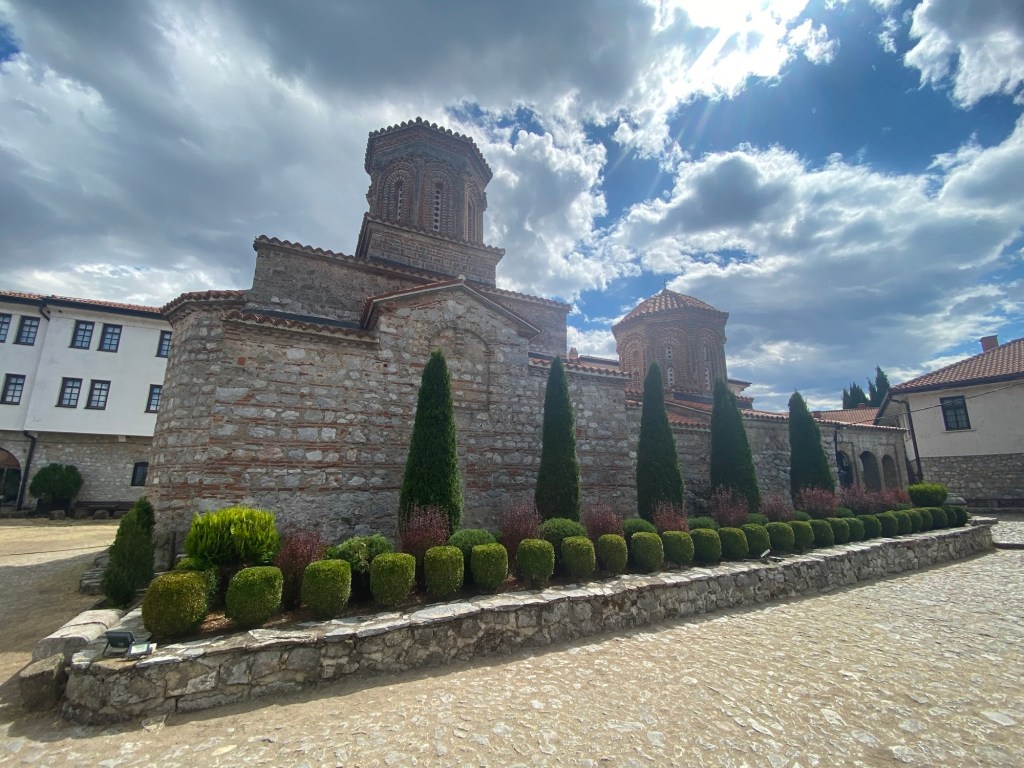
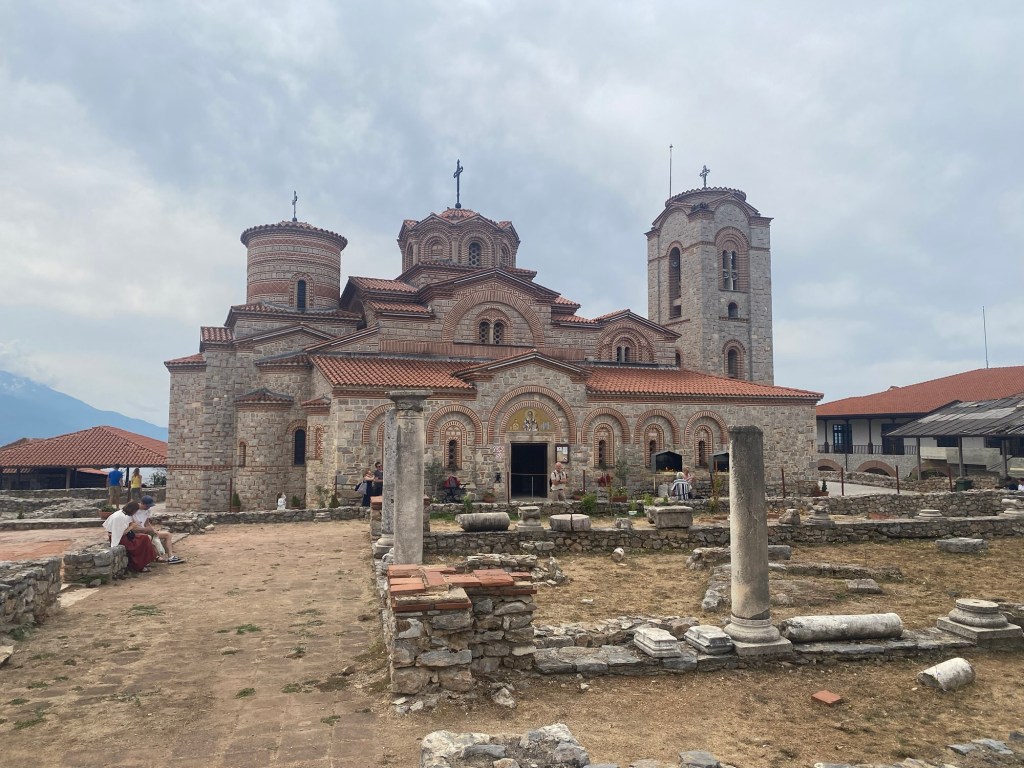
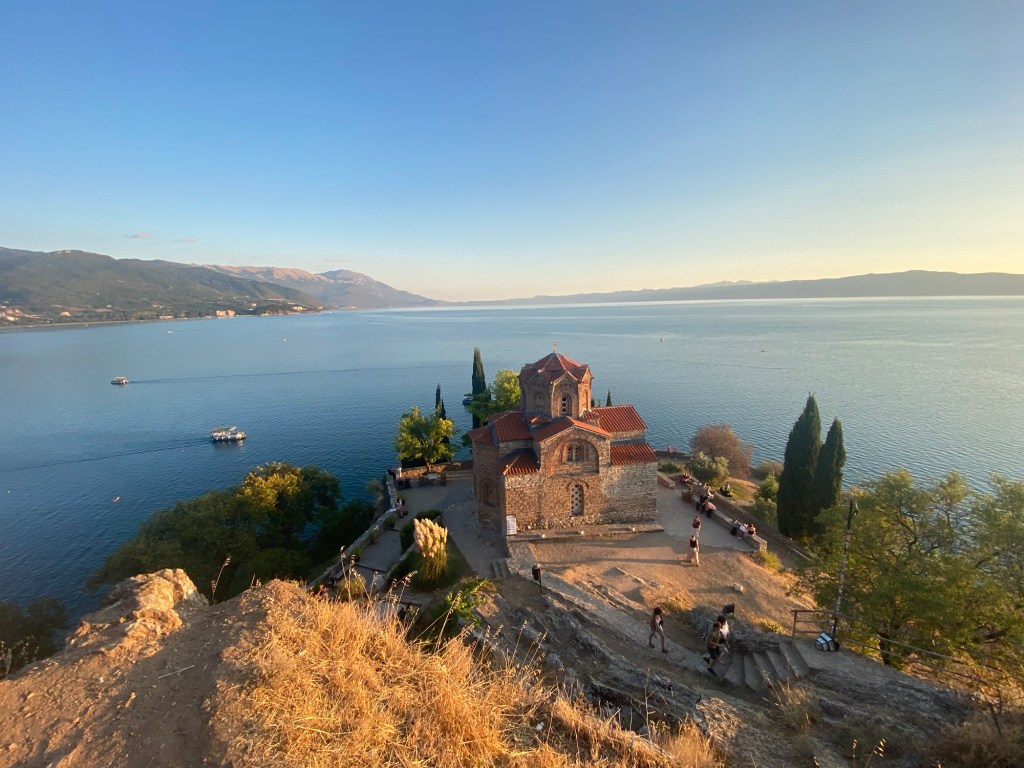
Ohrid earns it reputation for churches well. The tour took us to eight churches—some just in passing, others with more deeper history—but walking around the city there are churches around most blocks. Many have history that goes back multiple centuries despite the presence of Ottomans in the area. The cathedral of St. Clement is a rebuilt church on the site of a Roman area church that was four or five times its size. Macedonia is supporting the redevelopment of a college at the site after hundreds of years without a university, the new buildings can be seen stretching along the coastal area next to the cathedral. Just around the corner from the Cathedral one of the most scenic churches in Ohrid can be found. The Church of St. John of Kaneo is on a small peninsula that allows it to have water on three sides at the edge of Ohrid’s old city, just under the hill where the Cathedral of St. Clement sits. Despite its picturesque nature, the history of this site is not apparent. Along with many other churches the importance of why it was built in the first place is lost.
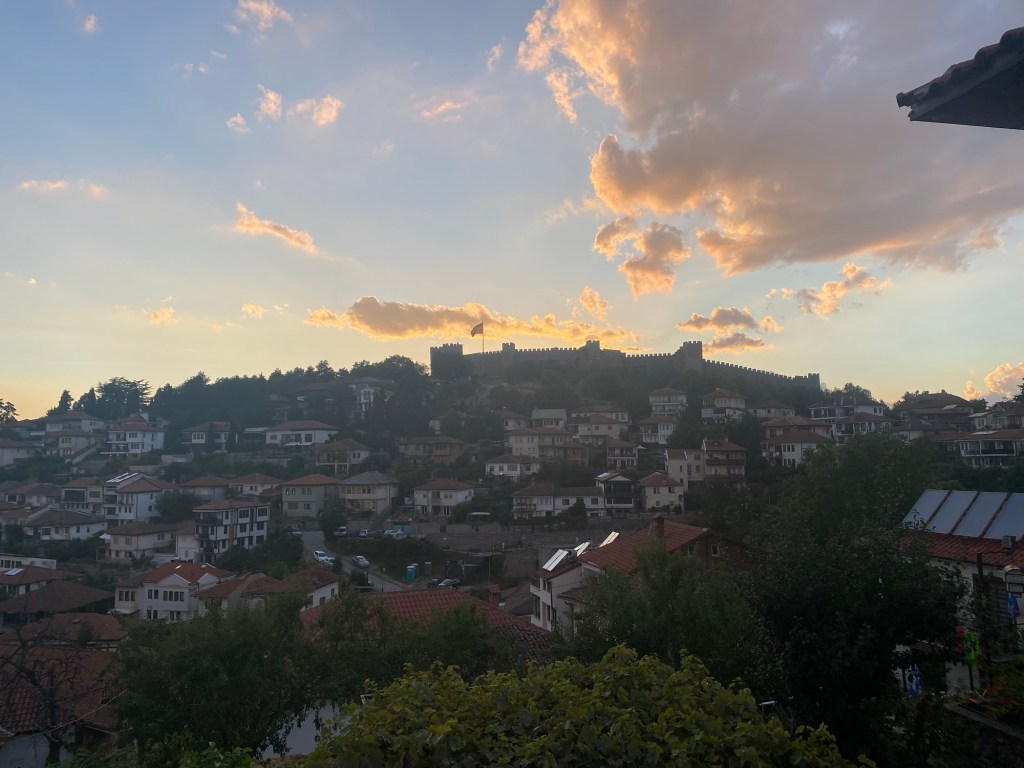
Beyond the churches the Old city has Roman ruins and a Fortress with history from Roman and Ottoman times. Much of this history is still being found. When I visited the fortress you could see a large archaeology dig occurring at the site to learn more about the history of a fort that appears to have some history going back two millennia, even if the main existing structure is from the 11th century.
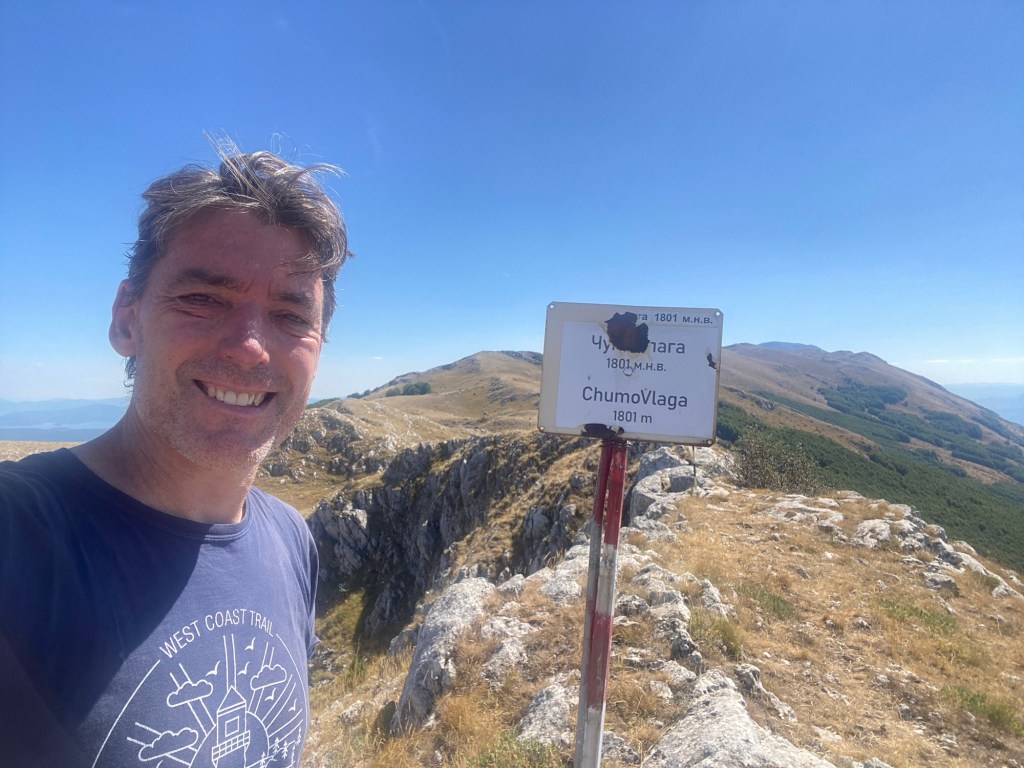
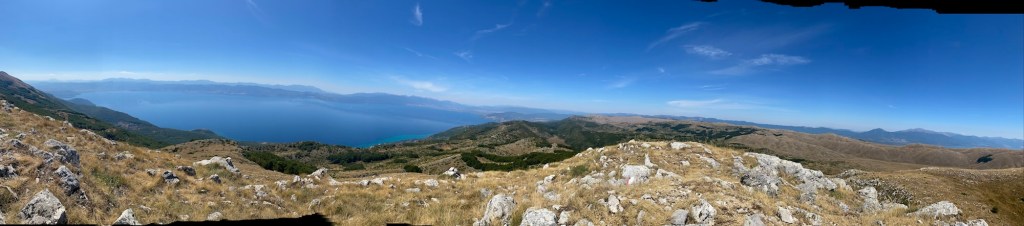
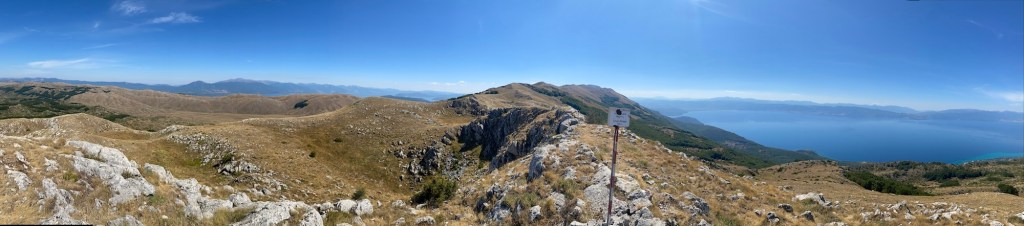
As well, east of Ohrid and stretching south between Lake Ohrid and Lake Prespa is the Galicaca National Park. From reading Kapka Kassabova’s history of the area, I wanted to get a visual of Lake Prespa. I chose to do this by hiking to the peak of Chumo Vlaga. Although there are higher peaks (six in the national park if I understood what I read) this was a healthy 16km from the park entrance near Ohrid and allowed a nice view of both lakes once I was at the top. A long hike back to Ohrid made for a tiring but satisfying day.
 BorealHiker