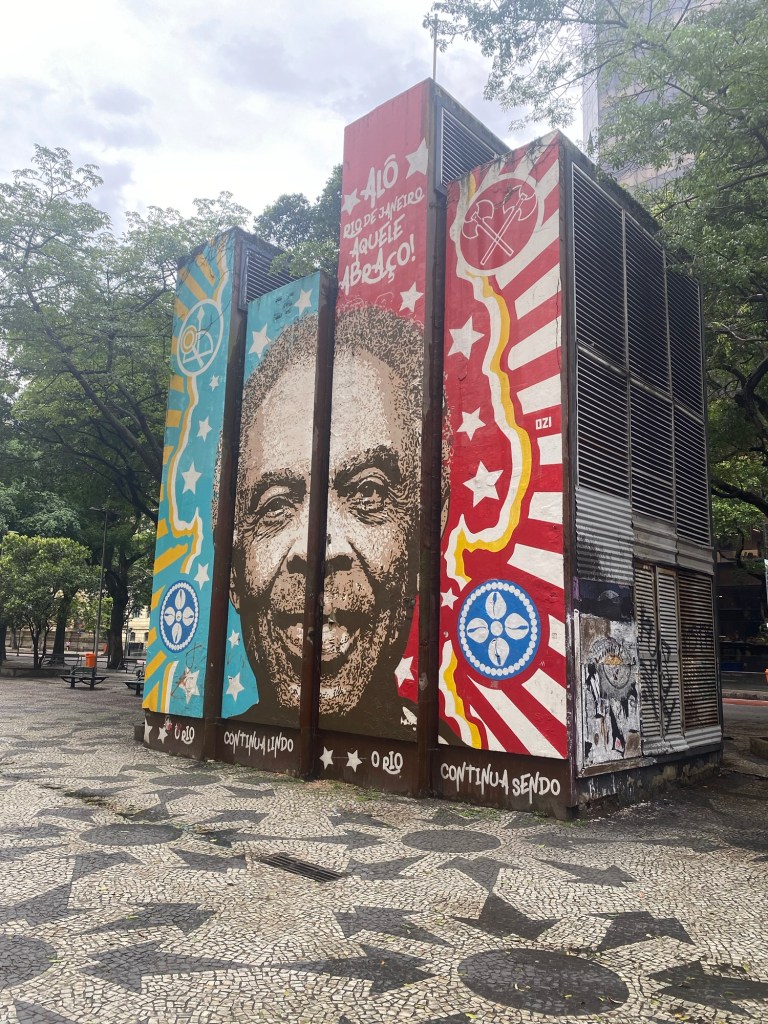
I spent four full days in Rio de Janeiro over the past week. It was a great experience and interesting to make the comparison to São Paulo. Although both were large Brazilian cities, Rio seemed more active and engaging. São Paulo seemed more urban and business-like.
Although I had wandered a bit my first night in Rio de Janeiro, particularly walking from my hostel to Paulista Avenue, a main shopping street, I really started my exploration with a free walking tour of the Old City. The tour was good at providing some historical context to the city. The Old City was where the Portuguese monarchs came to in the first decade of the 19th century and made it the capital of the Kingdom of Portugal, Brazil and the Algarves. Although pressure in Portugal forced the Kmadreturn to this country, one Prince remained in Brazil with his mentally unstable mother, and this Prince, John, would later set up Brazil as an independent country in 1822 with himself as the Regent. This change came with a strong move to create a more European-like culture in Brazil. The monarchy lasted until 1889.
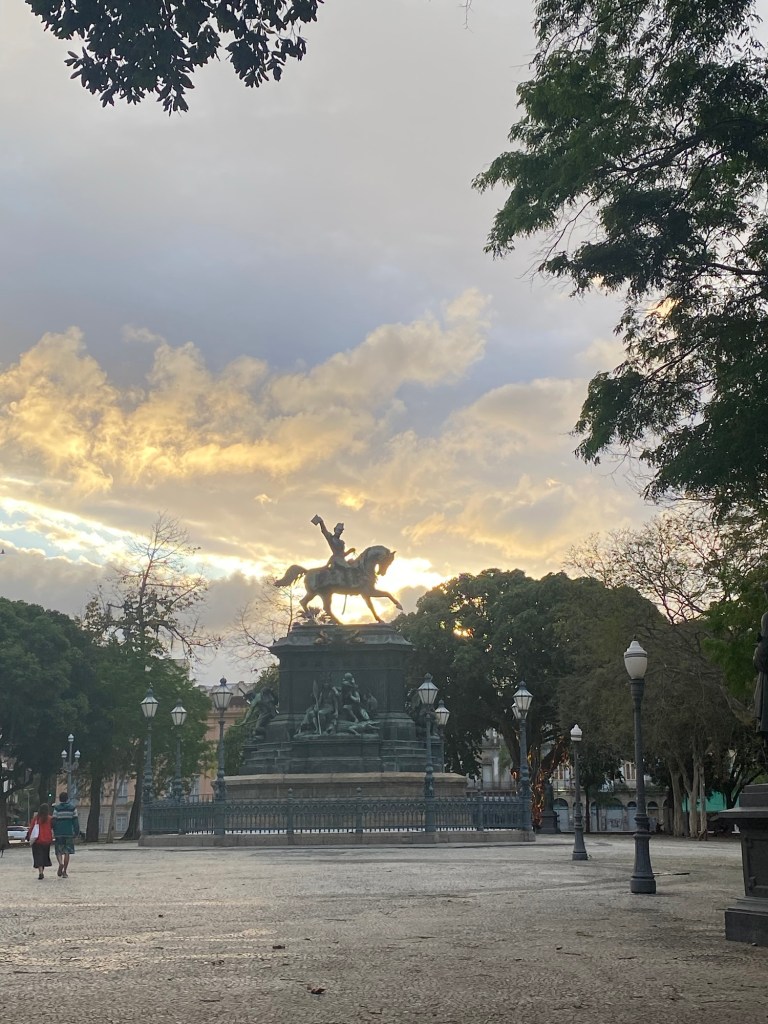
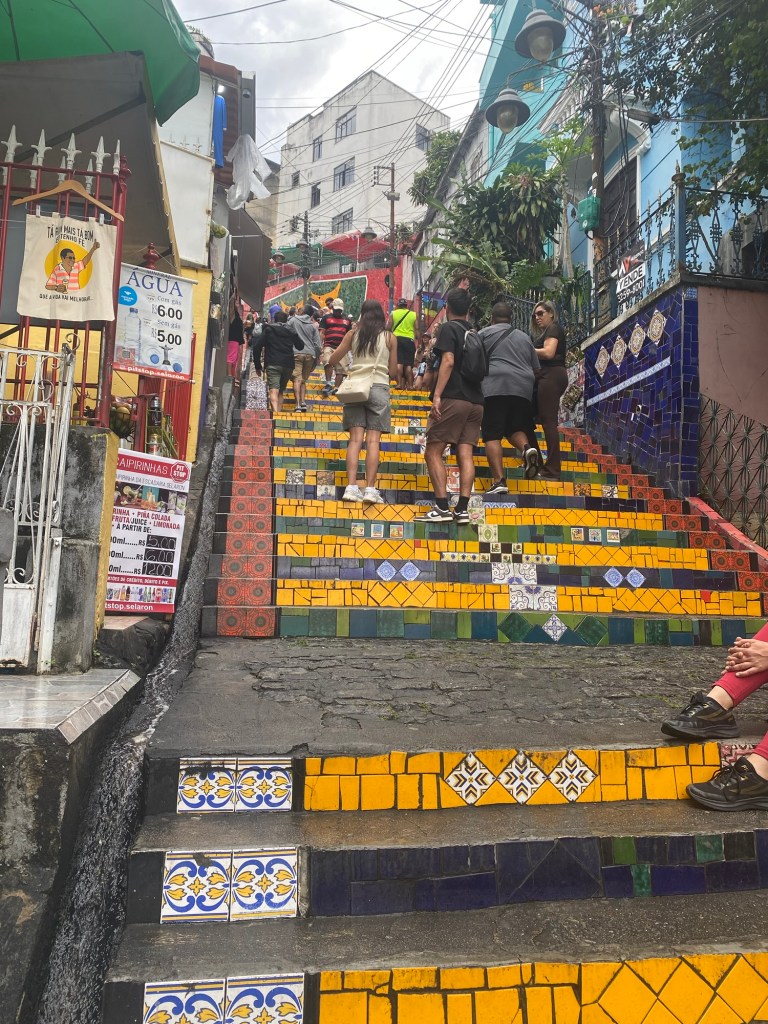
The tour took us past a couple palaces that the monarch would have lived in near the harbour, alongside a convent where the Queen Mother Maria lived, and the churches for the monarch and the commoners. Across the harbour was another palace built later during their time. The monarchy later moved further inland during their time to get away from the heat and humidity of the coast. Many of the buildings had a strong European look as the architects brought over their building styles from 19th century Europe. The theatre was a beautiful building with a golden roof built in the grand style of opera houses of the time. I didn’t get inside but heard that the inside more beautiful than the exterior. Around the Old city were a number of parks, many with monuments to the leaders of the time throughout. We wound through the streets to a stairway to the St. Theresa neighbourhood. These stairs were the connection from the Old city area to the first place where the city expanded beyond the waterfront, allowing largely the upper class to move to a higher location where the “air was clearer”. The Escadaria Selaron, as the stairs are called, have colourful tiles going the entire way up giving them a vibrant look. Many tiles have been contributed from various other countries so it was fun to see what you could see from Canada and other countries that added to the experience of experiencing the walk up these stairs. The tour also took us to the more recent buildings in Rio, built as the Old City expanded towards the bay by moving earth from hills to fill in the wetlands of the coastal area. Most of what is the present day harbour off the Old City of Rio used to be wetlands surrounded by small hills. The tour went by the Lapa Arches with the modern Cathedral of Rio de Janeiro, a cement pyramidal structure built to resemble more of a Mayan pyramid, and to an eatery where various Brazilian foods were baked to the obvious enjoyment of a crowded house of patrons that appeared to be both locals and tourists. The tour covered a lot of ground while only focussing on the smaller Lapa area of the city, the new name for what was the Old City.
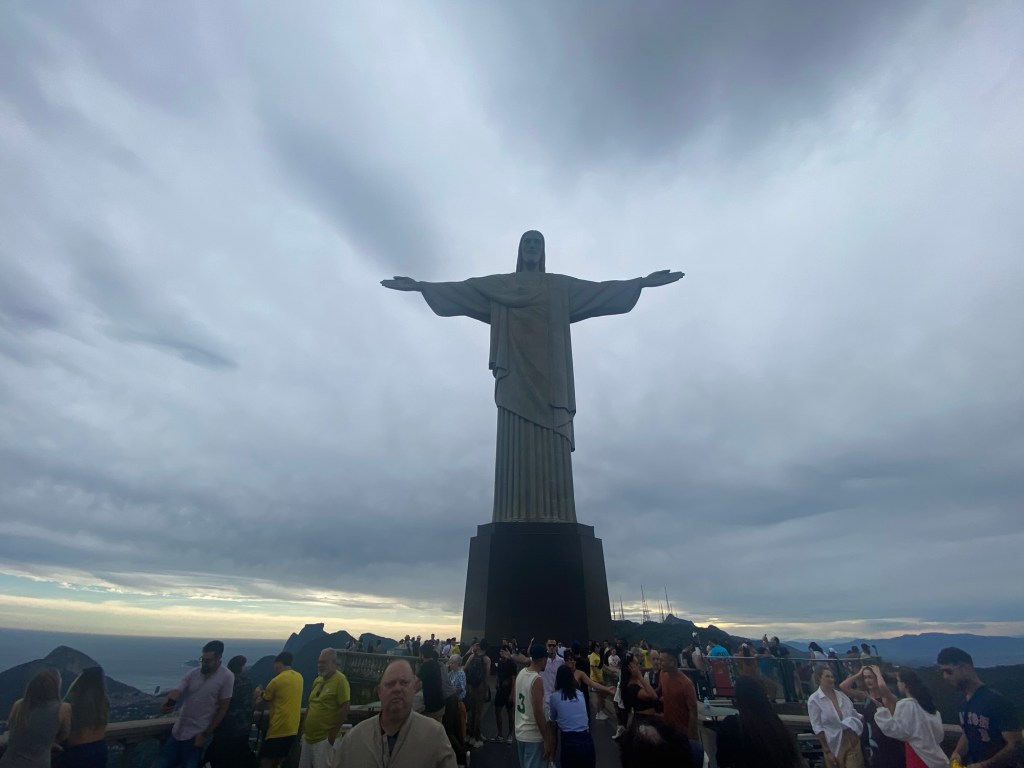
After this morning tour, I took my “pilgrimage” to see Christ the Redeemer. I had looked at hiking up to this World Heritage monument as I could see it from the window at my hostel looking over the city, but I had read a few things about risk to security on the path, particularly as a lone hiker. As a result I went up via the Corcovado train. Unless you choose to walk the Corcovado Hill to the site, the train or van are the only ways to access the platforms at the top of the hill where you find the Christ the Redeemer statue. The train wides up the hill through the forests until you get out just below and climb the last few stairs to the viewing platforms. Along the way are view of Rio de Janeiro spreading out through the waterfront on all sides. The 30 metre statue of Christ with his arms outstretched stands on an eight metre platform. Although it can be seen from many points below, it was impressive to get close and see the structure up close. A small chapel was at the back base of the statue, but from the crowds out front it was clear that many were coming to look up at the iconic statue. Although it was a relatively short visit—less than 30 minutes before I headed back to the train to come down—it was still worth while to see this site up close.
For my second day in Rio I explored some of the museums. During the Rio Olympics in 2016, I recall marathoners running around a waterfront museum called the Museum of Tomorrow. I was curious to see this and it did not disappoint. A newer museum it was filled with technology that could be activated by a card you were given at the start to get information in your language of choice. The displays went through various informational sections about what will drive the future of humanity with sections on population, biology, environmental change, technological advancement, and human behaviour. It was a fascinating museum that felt like you could go back and learn more on subsequent visits. From here I went across a square to the Museo do Art de Rio de Janeiro. The four levels of art in this gallery included exhibitions on Afro-Brazilian art, retrospectives on artists from Brazil, and some general art collections. It was a good way to end the afternoon.
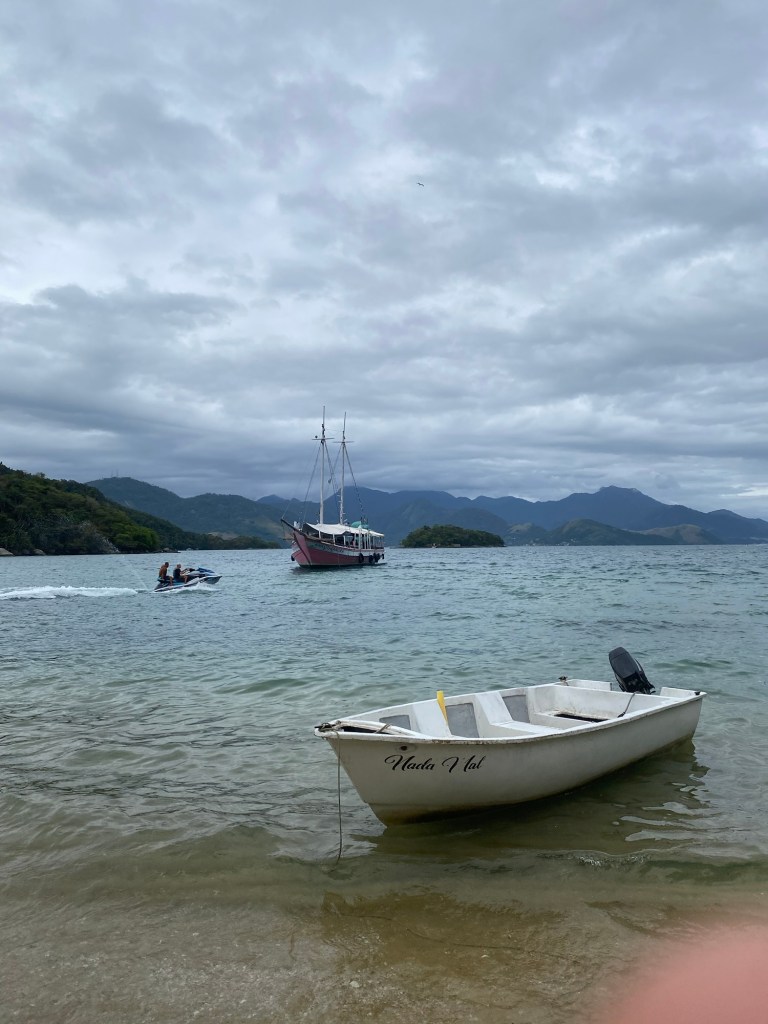
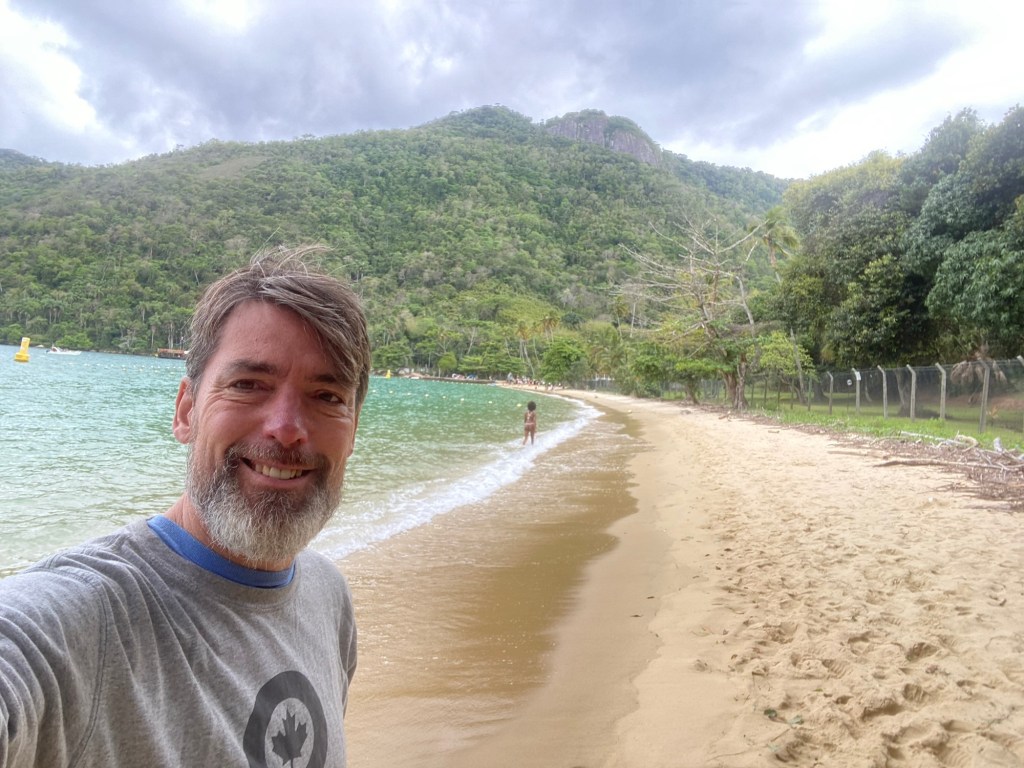
For my last two days I decided to do day trips to see things around Rio. Many people at my hostels had mentioned enjoying the trip to see Ilha Grande, the largest of the 360 plus islands off the coast around Rio de Janeiro. I went with a tour group to see it. The bus took about two hours to make this trip to get on a boat to take us to the island. There were four, stops on this tour, one to swim in the clear blue waters in a protected cove off the island, then a chance to explore a nearby white sand beach, a stop near one of the early churches that you could walk inland to see, and lastly a stop for lunch at a small ocean front community. Although I didn’t have time to hike into the island on the stops, the scenery and relaxed feel was very enjoyable.
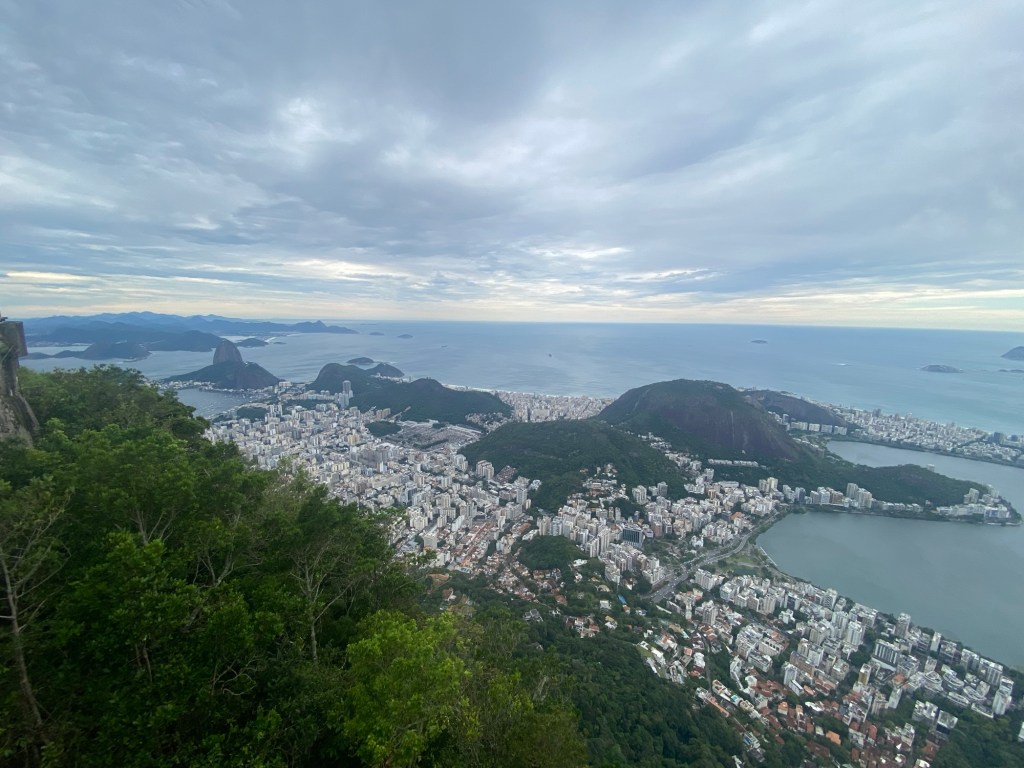
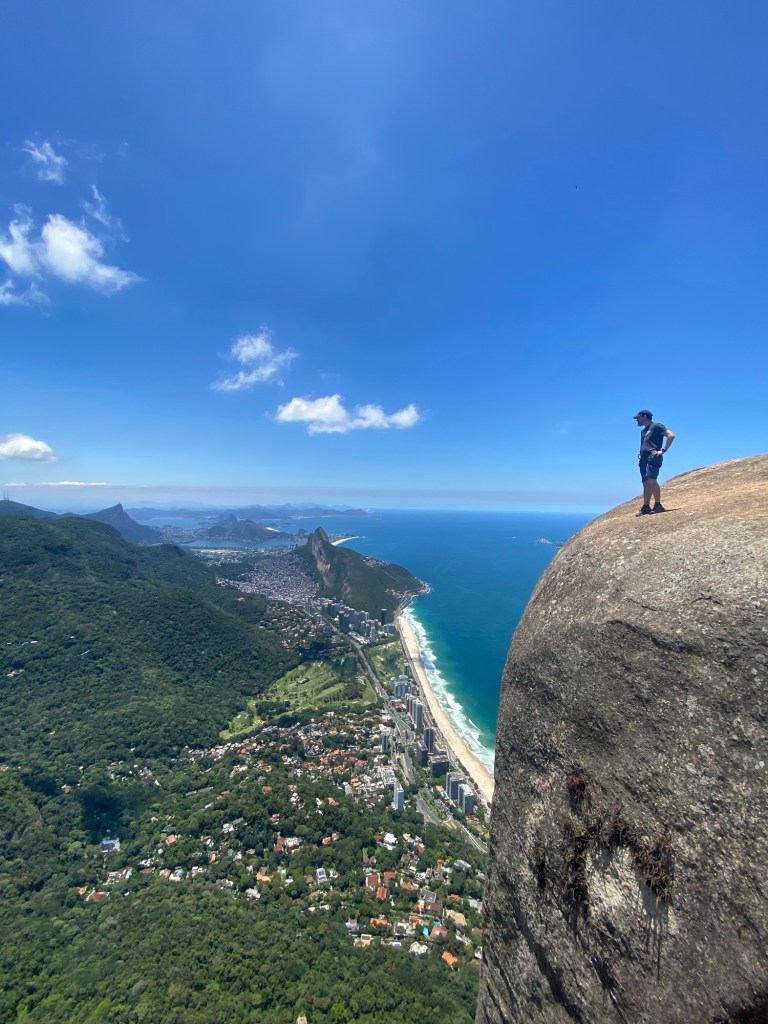
On my final full day in Rio, I booked a hiking tour to climb Pedra da Gavea, a peak in the Tijuca Forest, a large park with the confines of Rio. The climb was about four kilometres, mostly steep hiking trails with some scrambling. At one point we were given climbing belts to clip into ropes to ensure safety on a steeper, smooth 75 degree section of the cliff face going up to the peak. The views looking northeast over Copacabana and Ipanema beaches and the city surrounding them was magical. I could even see Christ the Redeemer looking over the city from a new angle. Definitely this was a worthwhile way to end the time in this amazing city.
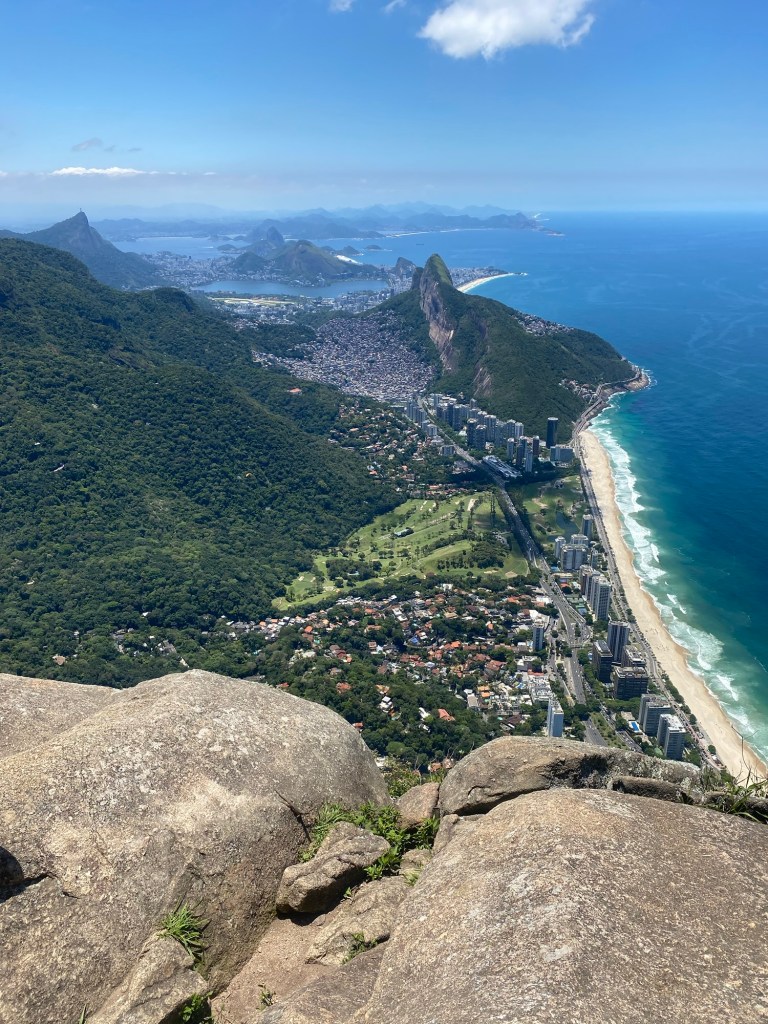
View from top of Pedra da Gavea.
 BorealHiker