I came to Argentina as I am joining a hiking tour to Patagonia. But first I wanted to explore the capital of Buenos Aires.
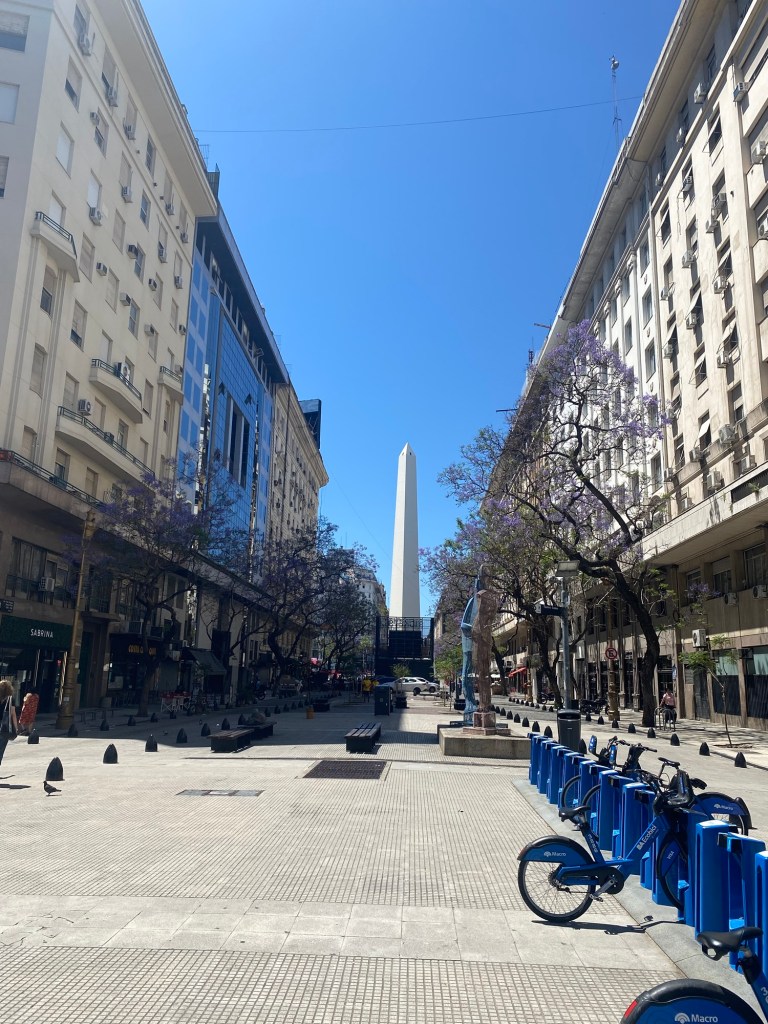
In wandering the city, I had the feeling of being in a European city. Lots of wide streets, imposing buildings, and parks with monuments spread through the city. My first day I joined a walking tour that promised some history of the city and country. It was a great way to get a sense of the place.
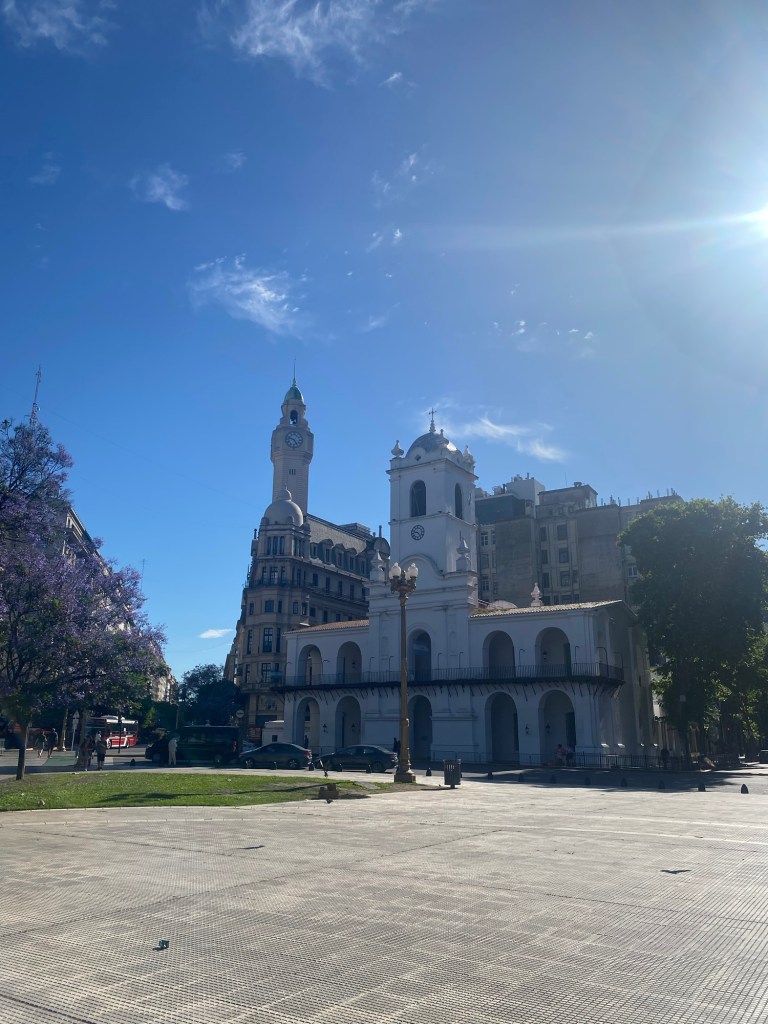
The connections to Europe are obvious when I heard about the various flows of immigration. From the Spanish conquest of the Buenos Aires area and the Indigenous people of the area, to the push for immigration after Independence resulting in a 400% growth of population largely from Eastern and Southern Europe, to the post-World War II push to bring over skilled labour as the Argentine economy boomed as they funnelled natural resources towards the reconstruction of post-war Europe.

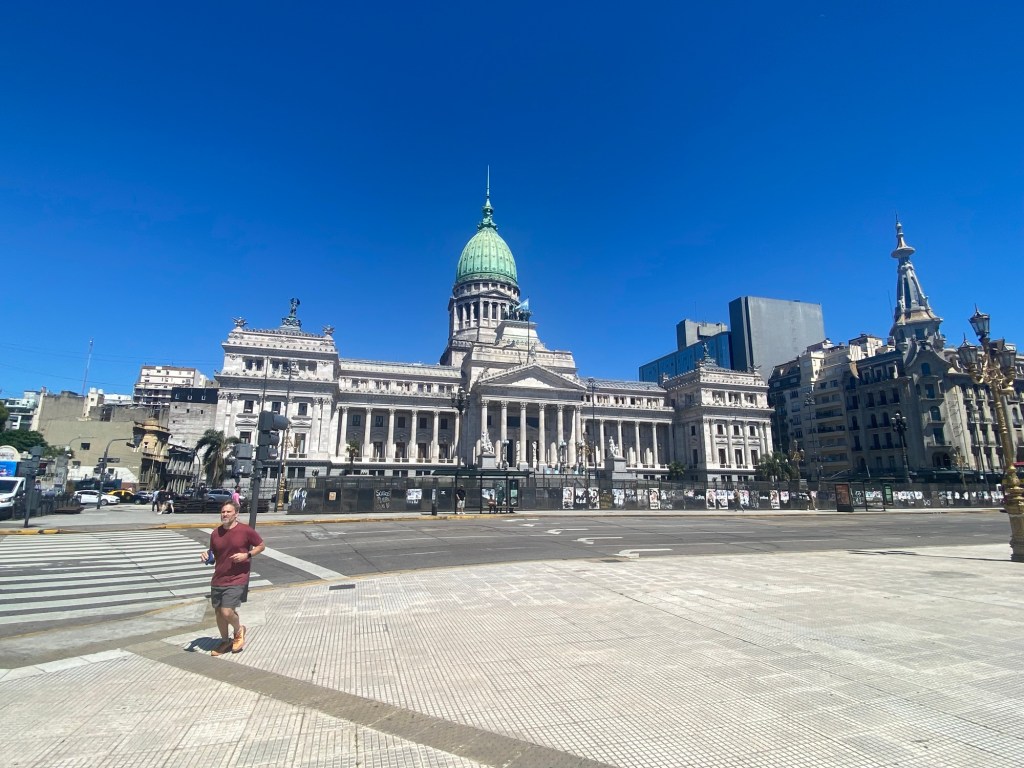
The walking tour started at the Library of Congress that stood kitty corner to the imposing Congress building. The three branches of parliament are linked by a triangular connection of street. The walking tour largely followed the Main Street between the Congress and the Pink House, the Presidential offices across town. The tour meandered off this road but stayed nearby while showing various sites and providing history. Of interests was the Barolo Palace, a tall and ornate building with a white facade. A wealthy family of Italian origin had built it in the early 20th century with the hope that they could protect the remains of Dante Algheri, the Italian Author of the Divine Comedy. The building was built with interior art depicting hell, purgatory, and heaven in line with Dante’s famous works. Although I didn’t do the full tour of the tower, the lobby—part of the “hell” section had gargoyles and dragons along with quotes from the works of Dante on the walls.
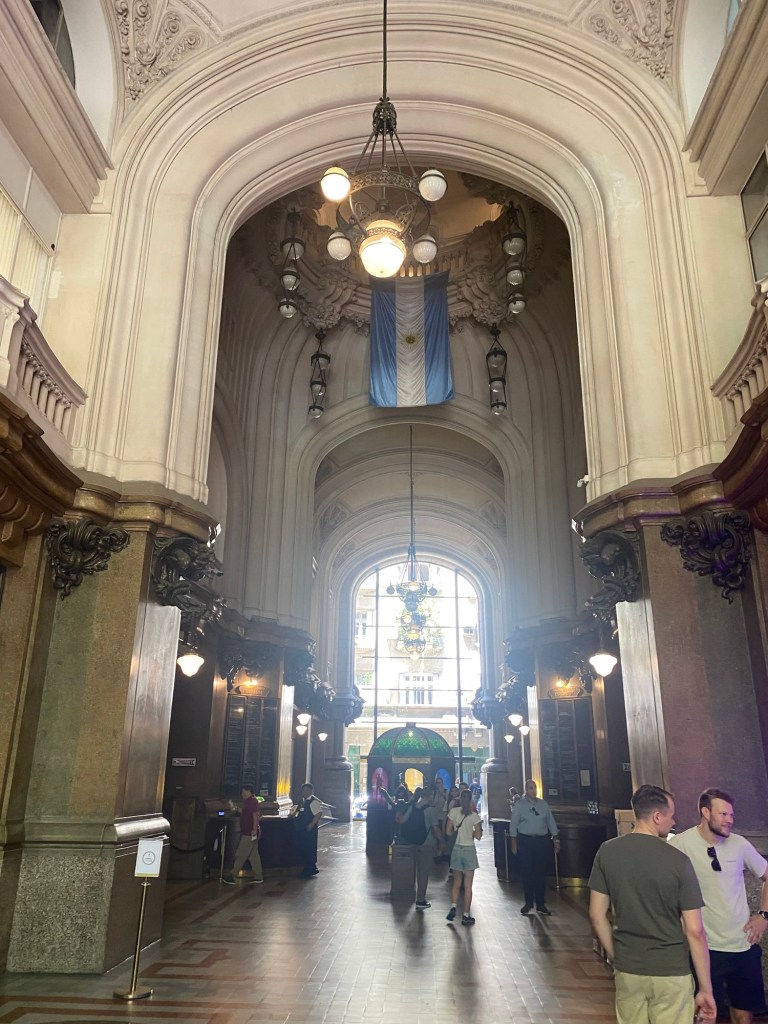
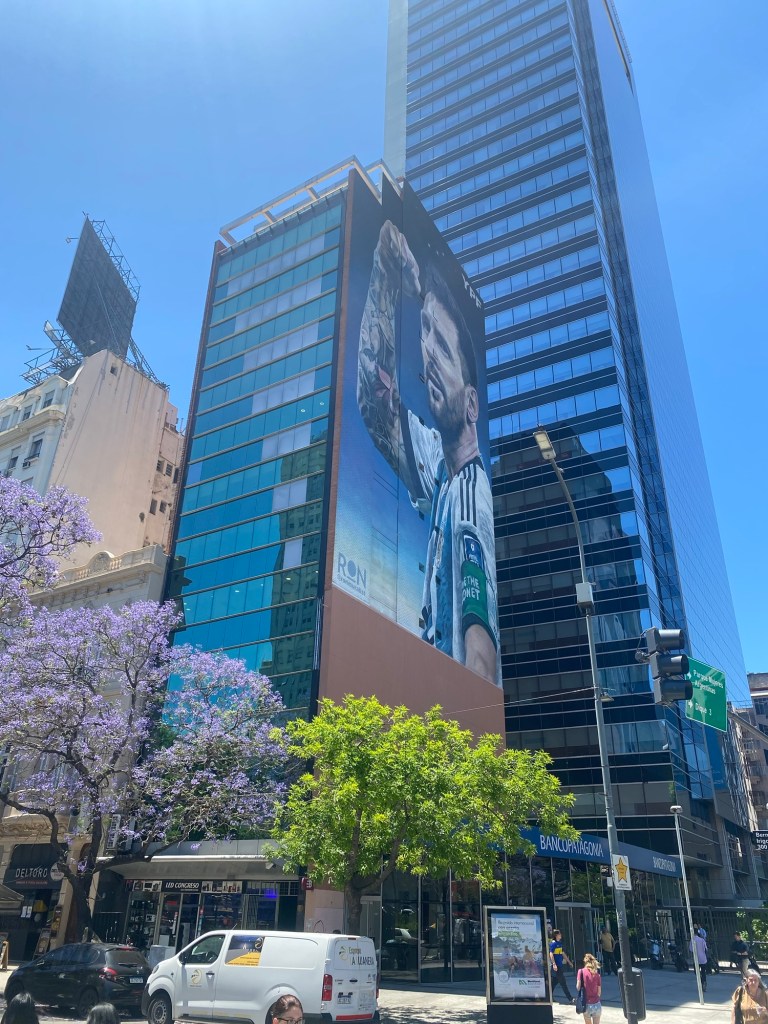
I learned that Buenos Aires has fame as having the widest street in the world. The July the 9th street celebrates their Independence, but also was created by knocking down a section two blocks wide to create space for a fourteen lane road. When Argentina won the 2022 World Cup more than five million people filled this three-kilometre long street to celebrate. Along the street are a few monuments and a building with Eva Peron art works on both sides. The architect of this building also put a small statue denoting his frustration with corruption in one corner of the building. Our guide laughingly told us this was the only statue to corruption in the world.
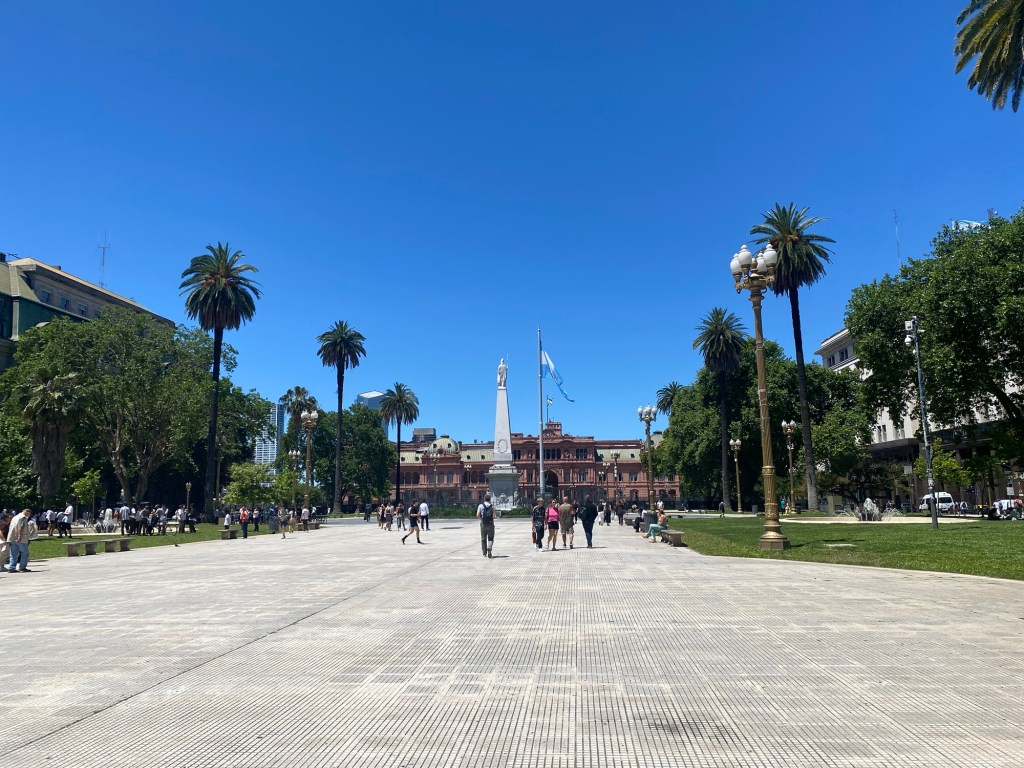
Beyond the tour I visited the National History Museum and a few art galleries. It provided a solid storyline of how Argentina went from a colony of Spain to Independence of its provinces in 1822, to forming a unified country in the 1850, to navigating the ups and downs of pro-capitalist and pro-socialist governments through the next 100 years until Presidents Peron’s ousting in 1955. This helped solidify some of my understanding of the country that I learned about from the walking tour. At the suggestion of the tour guide I visited the Modern Art Gallery which was interesting and enjoyable to see.
Buenos Aires felt like a relaxed city despite its size and busyness. It was good to spend time there before taking off for Patagonia.
 BorealHiker