We had two nights in El Calafate. After the first night we were up early again for a drive to the Pedito Moreno Glacier.
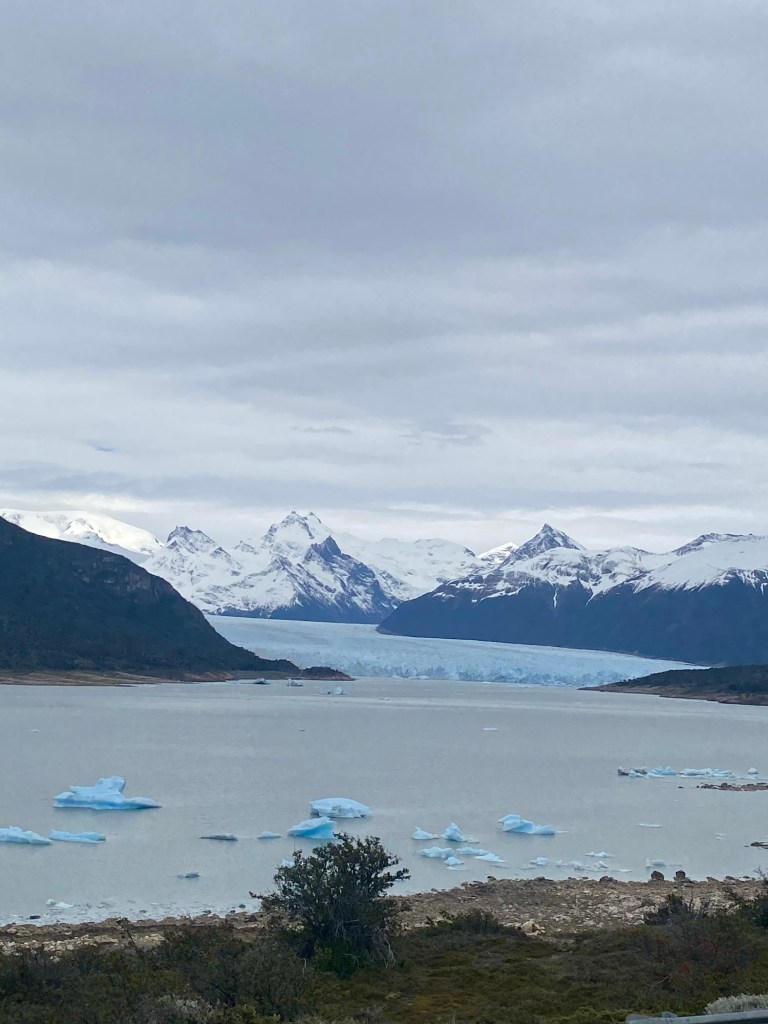
The site was about an hour and a half down a peninsula from El Calafate. It was named for the Argentinian Explorer who had been instrumental in navigating the Andes in Patagonia and naming many of the peaks. His work helped determine where the border between Chile and Argentina ended up. Ironically he never did see the Glacier that bears his name despite his time in the area.
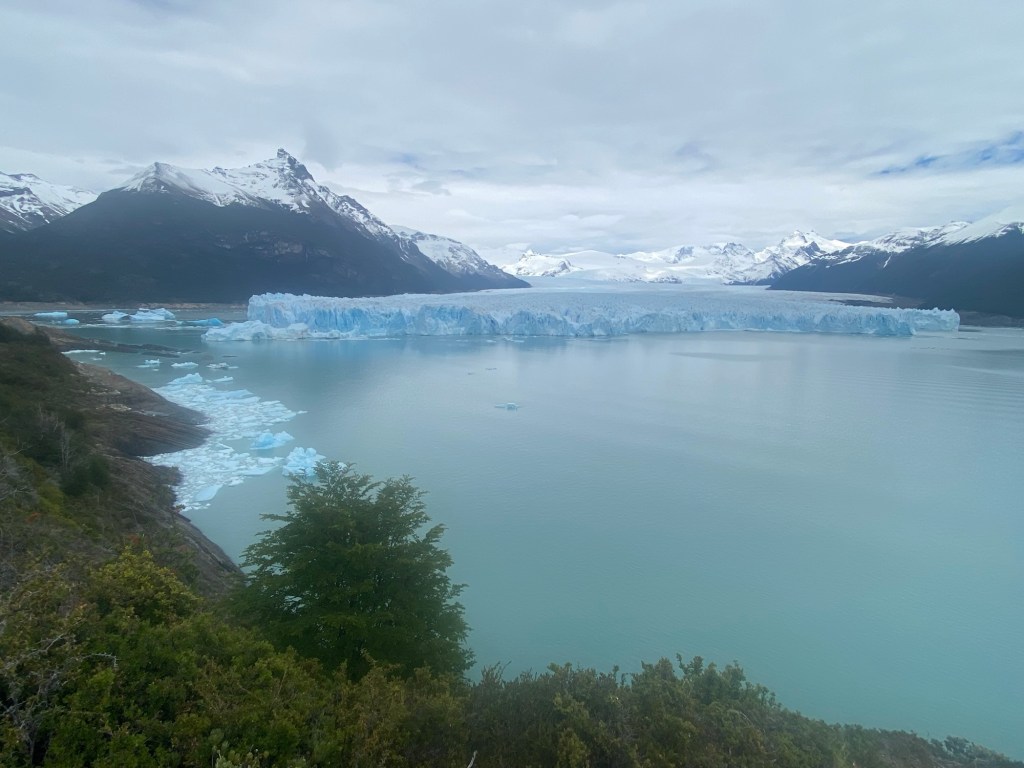
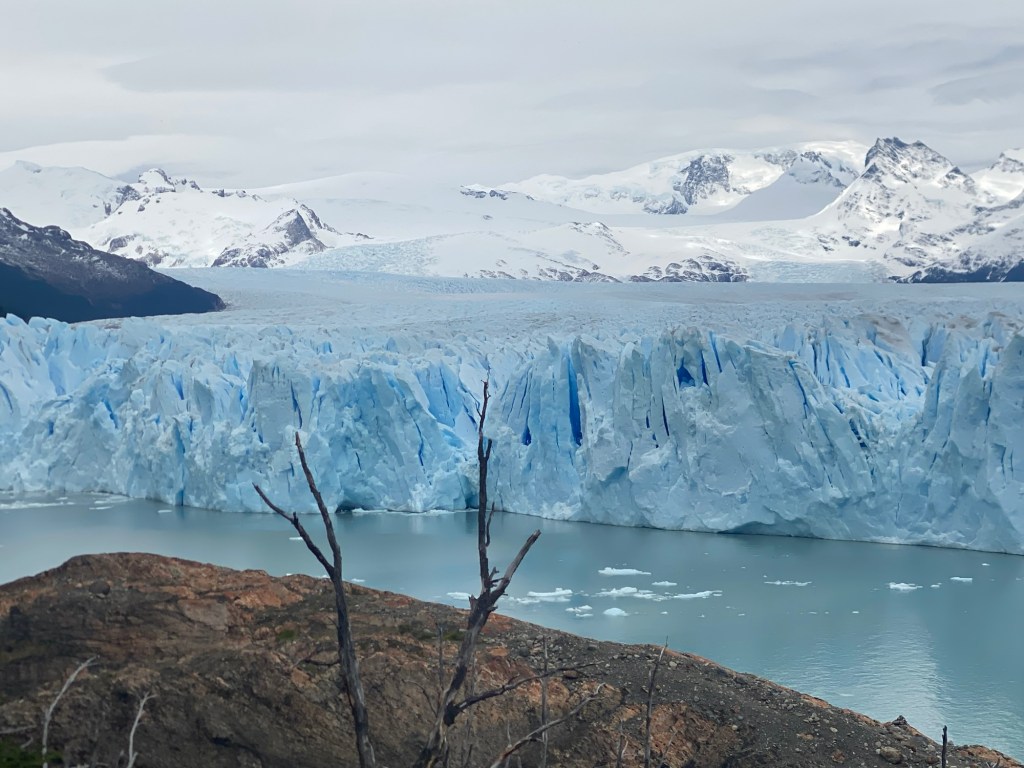
We were dropped off at a visitors centre just above a number of walking paths with viewing platforms in front of the glacier. Very quickly walking towards the platforms the views of Pedito Moreno Glacier spread out before me. For the next four hours, I wandered the paths and read the signage about the glaciers. We had a guide who provided some background to this glaciers that, until the last decade, had for a long time been a steady state glacier. We would learn that the same glaciers we would see in Chile a few days later and the Moreno glacier were all connected by the ice shelf in the Patagonian Andes. This is the second largest ice field in the continent. At its widest the Moreno Glaciers was five kilometres across and had a depth up 40-70 meters at its front. For over five kilometres it wides through the Argentinian mountains to this shared ice shelf.

Bluish ice shone across the Glacier and a number of calved icebergs floated in the lake in front of the glacier that curled on both sides of the peninsula. An ice bridge had at one point crossed over to the peninsula from calved icebergs that the water flow between the two sides of the lake. This had collapsed over a decade ago but remnants of the ice remained.
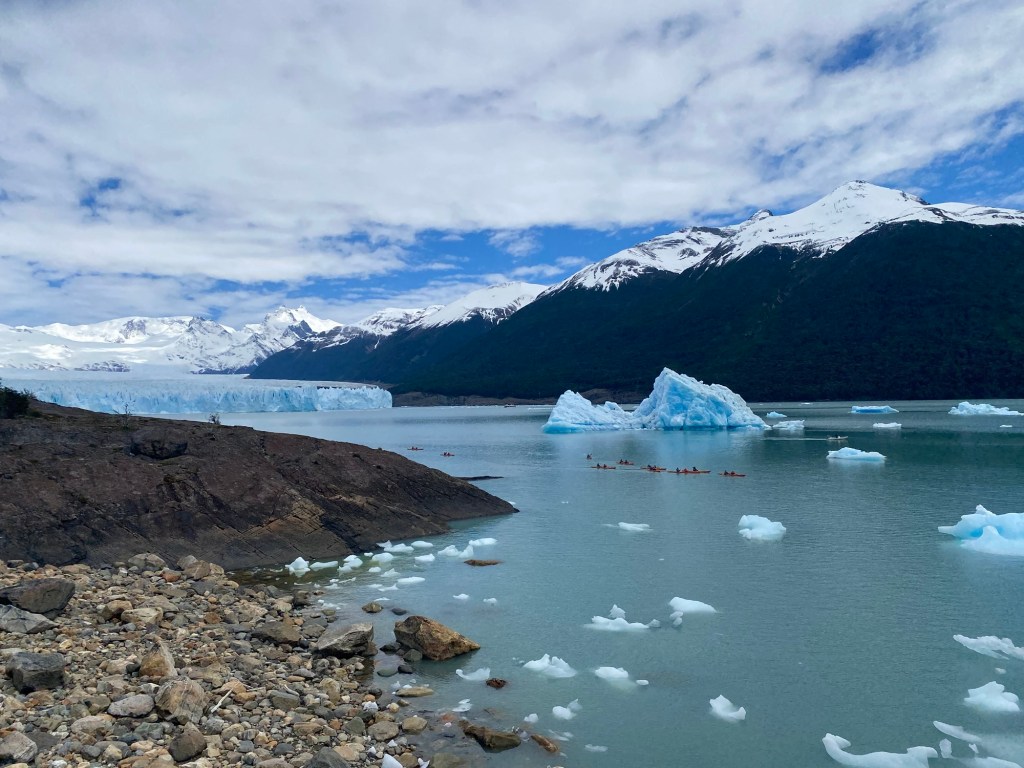
Walking around and seeing the glacier from various angles was well worth it and it was definitely one of the highlights of the tour.
 BorealHiker