Back in the Land of the Eagles

After my detour through Italy, I was heading back to the Balkans with a plan to see the capital of Albania, Tirana, next. I arrived by ferry in the former Albanian capital of Durres and quickly found a bus to take me to Tirana, about an hour inland.
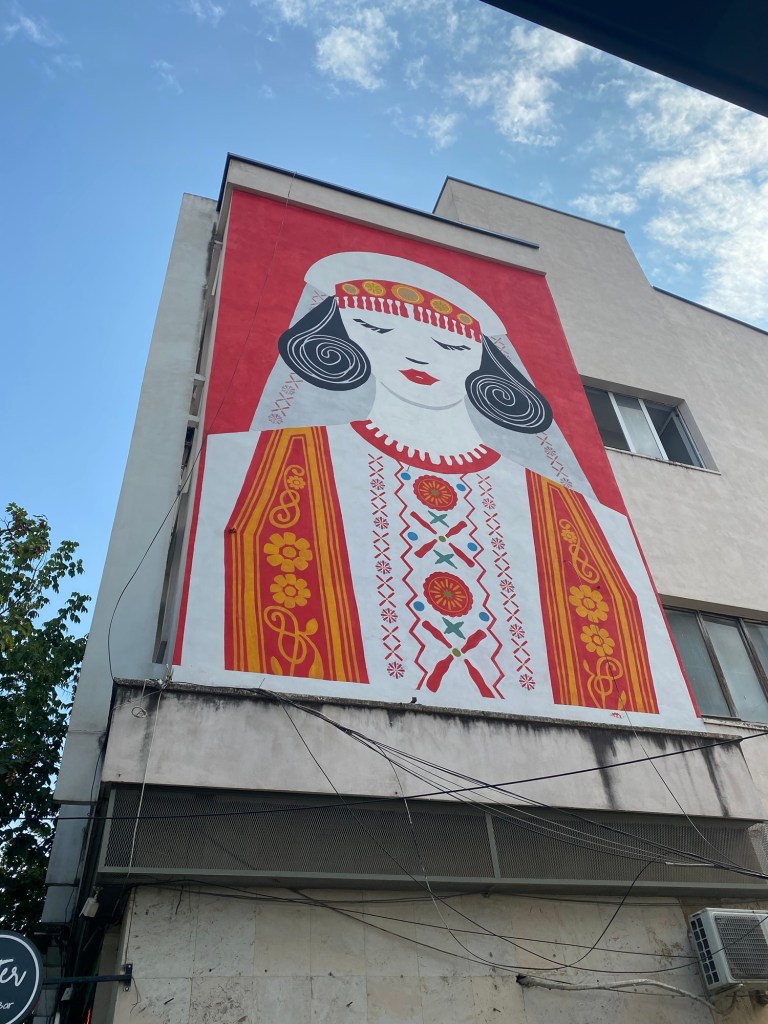
Mural in Tirana.

It may be a bit of a bias that I chose a hostel called the Bearded Dad Hostel, but it had good ratings and was relatively close to the central part of town. Arriving just before noon, I was still able to get things dropped off in the hostel before heading out exploring. I had signed up for a 1600 tour of central Tirana through the Free Tour app. This has become a bit of a first stop for me when I am looking at how to orient myself to the geography and history of new places I am visiting. Before the tour I visited a few of the sites in the central part of Tirana, the Et’hem Bey Mosque and the Orthodox Autocephalus Church of Albania. The former is an older building, with murals on its walls making it an attraction for people visiting Tirana. Closed during the communist era as a religious site, it retained the special historical designation that kept it from being torn down. The Orthodox Church is relatively new, having been constructed after the Fall of Communism. When I visited a painter was still working on one of the murals in the main sanctuary of the church.
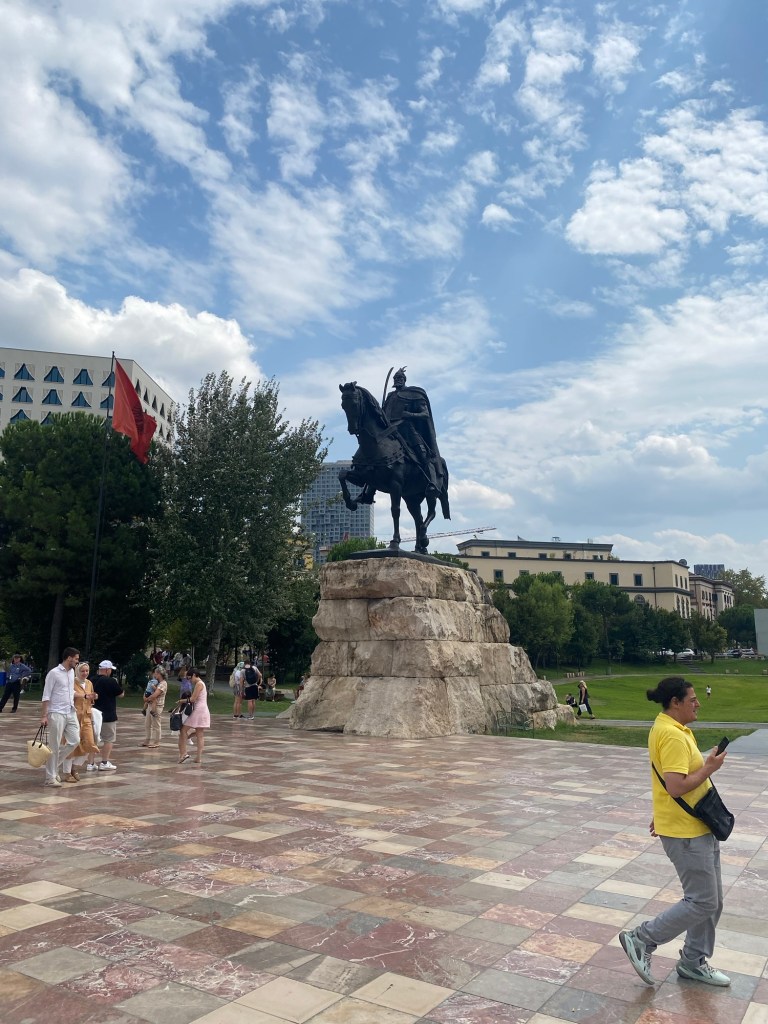
Skanderbeg Statue.

The tour explained a lot of the history of Albania, going back to the Illyrian and Roman times. It started in Skanderbeg Square which allowed for the hero of Albanian Independence whose statue adorns a central part of the eponymous square. Skanderbeg, or Gjergj Kastrioti, was a warlord who rebelled against the Ottoman Empire in the 15th century and was able to keep the Ottomans at bay for the entirety of his life. After his death the Ottomans were able to take the area over again, but the period of his life highlighted the sense of identity and territory for the people who would become Albanian. Most of the tour talked about more modern history post the Second World War with the impact of one of the most restricting Communist regimes and the thirty years of post-war life. The tour took us past current and former government houses, explained why there were so many bunkers in Albania, and allowed us to a good swath of central Tirana.
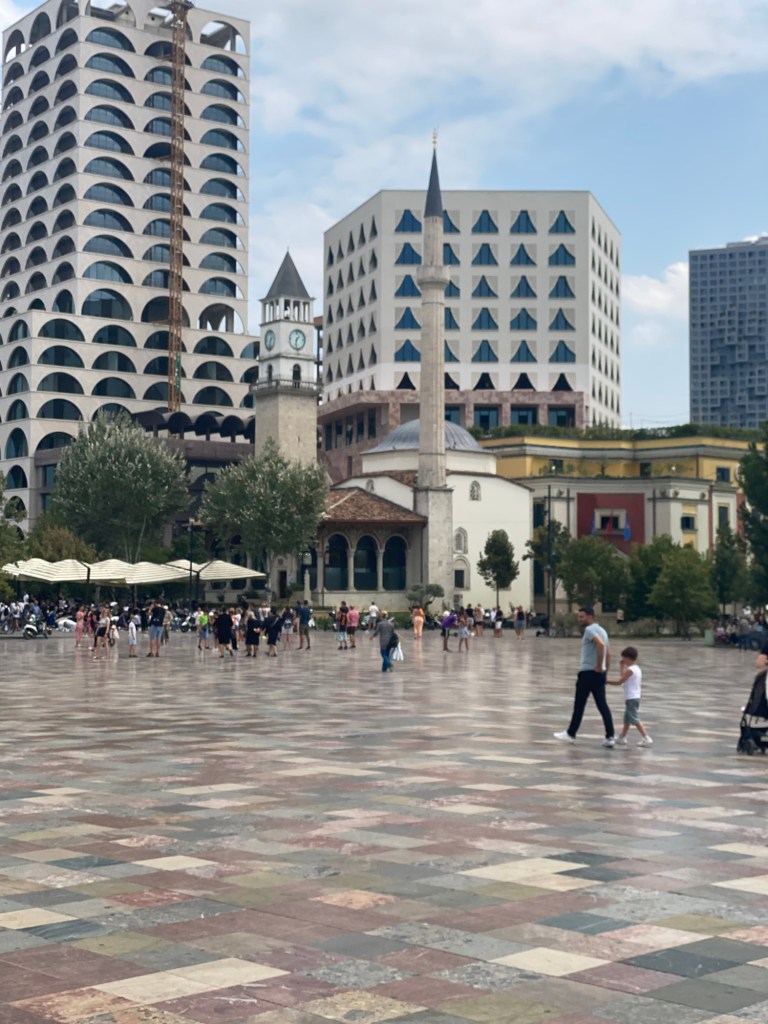
Et’hem Mosque.

The guide of the tour had suggested a few things to get a more fulsome view of Tirana. In particular two things outside of the central area were recommended: a visit to Bunk’art One and a trip up the cable car at Mount Dajti. For my second day in the capital this was what I did.
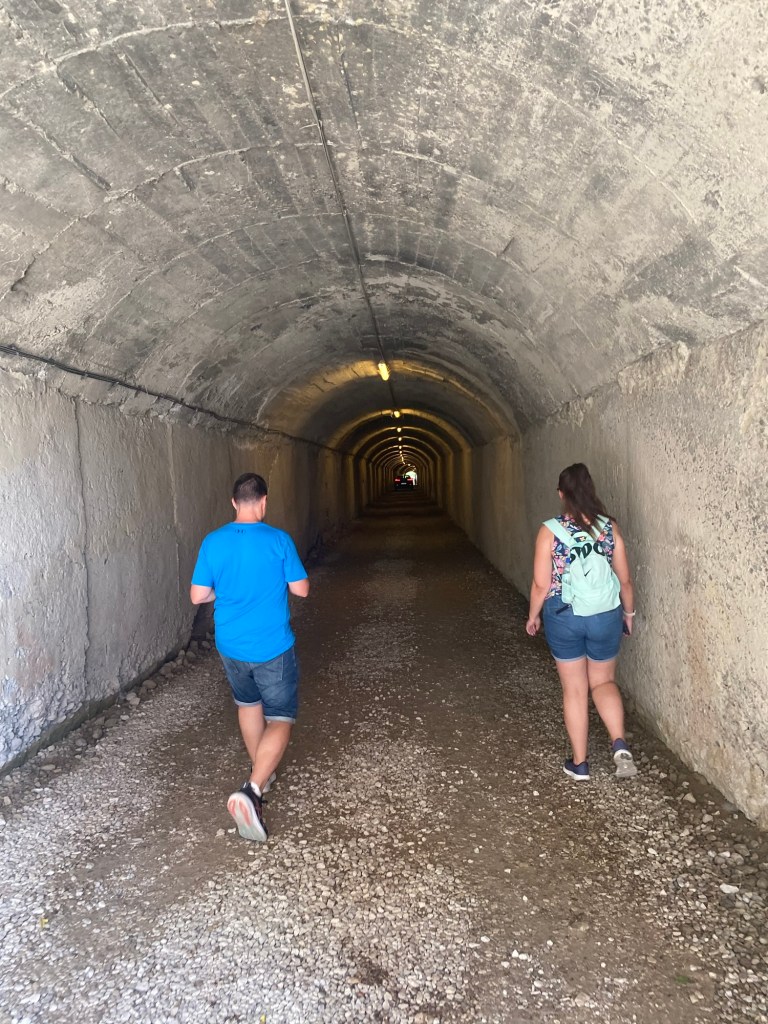
Entry passage to the Bunk’Art One.

In 1970s, President Hoxha of Albania had alienated himself from the West, but also from Communist leadership in the USSR. As a result he was paranoid that one or both of them would attack Albania. A plan was hatched to build somewhere between 220,000 and a million bunkers—I have read and heard various numbers so I am not entirely certain—and by 1983, after Hoxha’s death, just over 173,000 were actually built. Bunk’Art One is the site of one of the larger military bunkers that had space for the leadership of Albania to operate. You get to walk through the multi-level structure that has a wide range of information on the history of Albania, how WWI played out for the country, and the rise and leadership of the Communism party and Hoxha, and the intention with of the bunkers that were built. It was an interesting read and fascinating to wander.
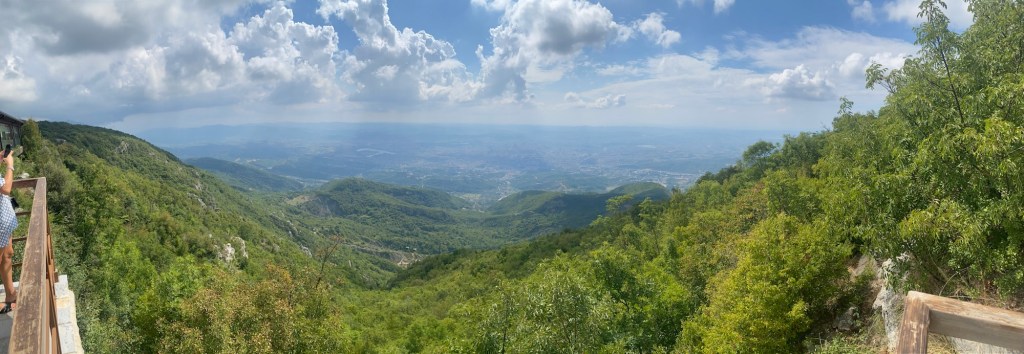
View of Tirana from Cable car vantage point.

From there I walked a few blocks to the cable car station and caught a ride about two-thirds of the way up Mt. Dajti. It gave great views of the city and had a range of activities at the top from hiking, horse riding, mini-golf, paint ball ranges, and others things, on top of a hotel and a couple restaurants and/or bars. I chose to walk to the peak of one of the mountains and take in a slightly higher view. Although the valley that Tirana was in was fairly concealed by clouds it was still great to see it from above.
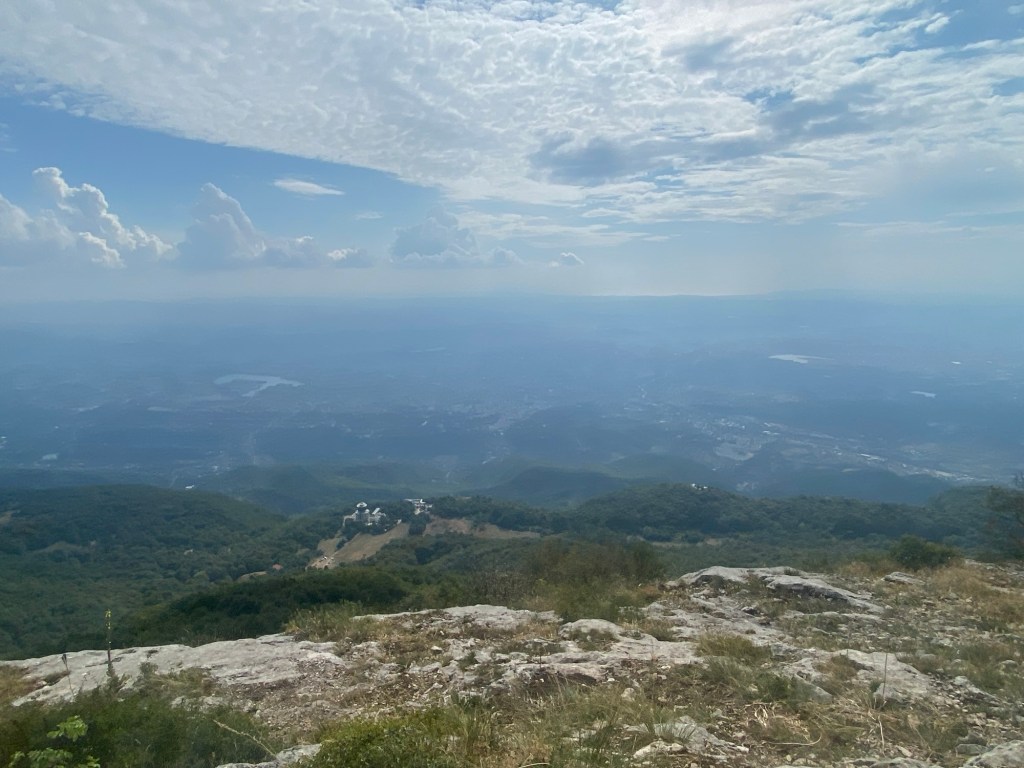
View from the peak.

Tirana was an enjoyable city to visit and one that brought a lot of history. It sounds like there is an active building program with the intention to build twenty-some sky scrapers to provide housing and business space in the central part. I anticipate that Tirana will look very different if I visit again in the future.
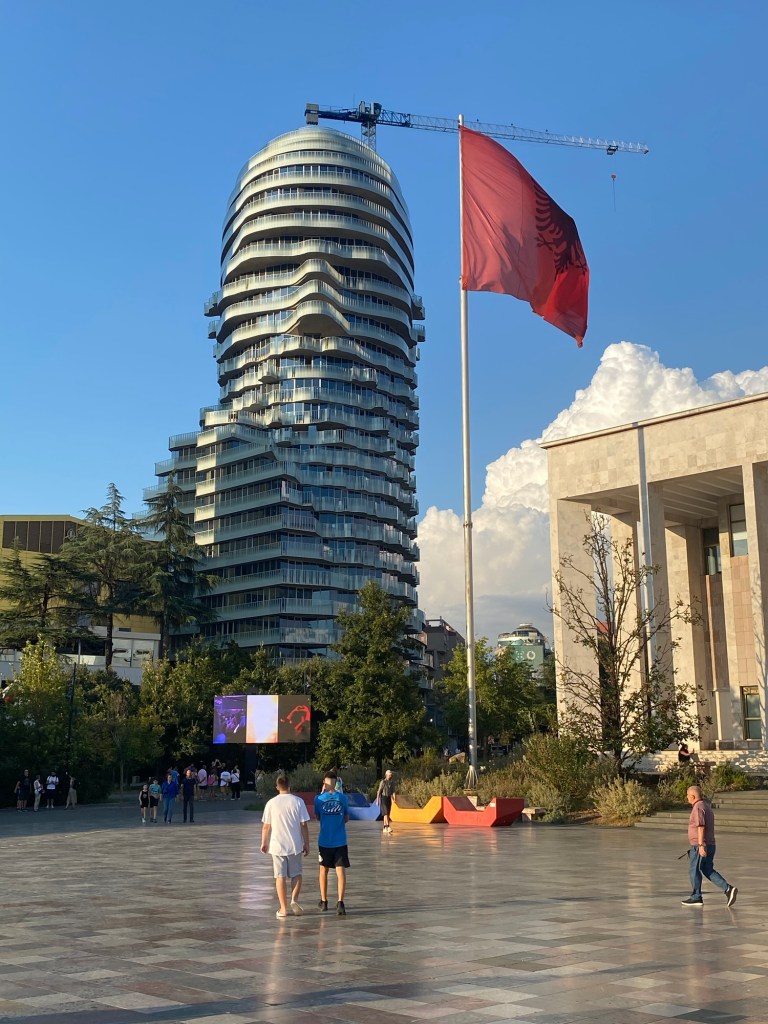
New skyscraper just off Skanderbeg square being built in the shape of the bearded warlord’s head.

The extra night in Bari

I booked my train from Rome to Bari, and a ferry from this Italian coastal city to Duress, Albania. The train ride through the Italian countryside was enjoyable and I arrived with five hours to spend before my ferry was to board.

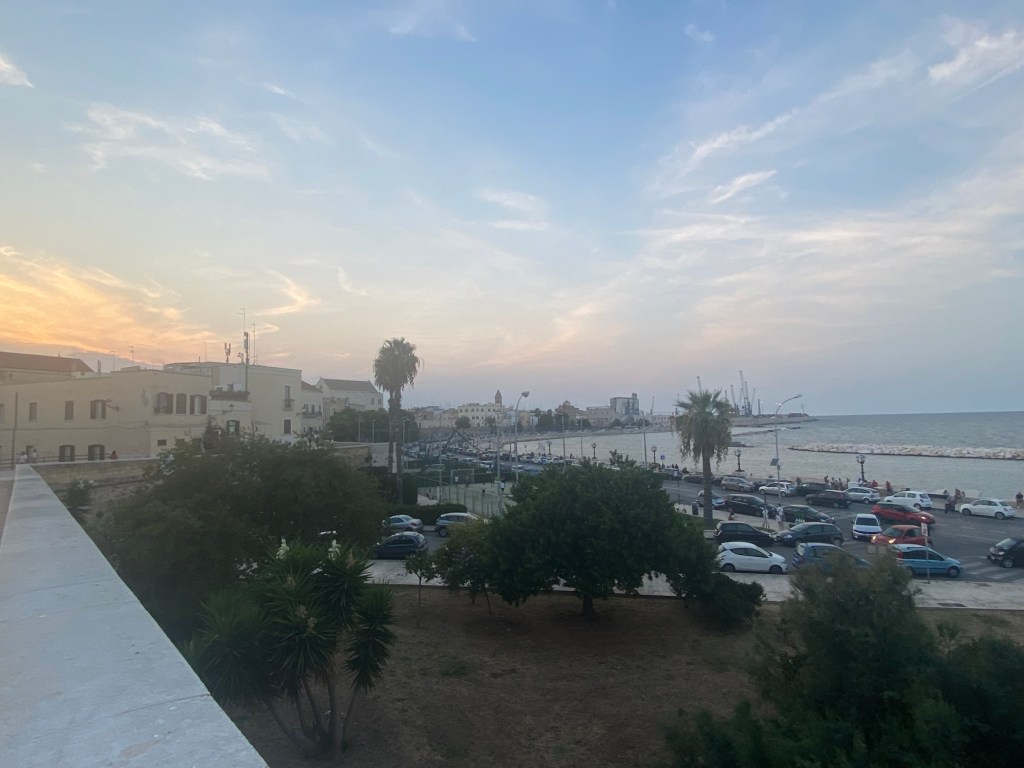
The port of Bari from the Old City Wall.

Bari has a nice old town built alongside a fortress that dates back to the tenth century. The fortress/castle has seen adaptions over the past millennium based on what the owners of the fortress saw as its strategic importance and use. I wandered the old town and waterfront, having a nice supper, before heading to the port.

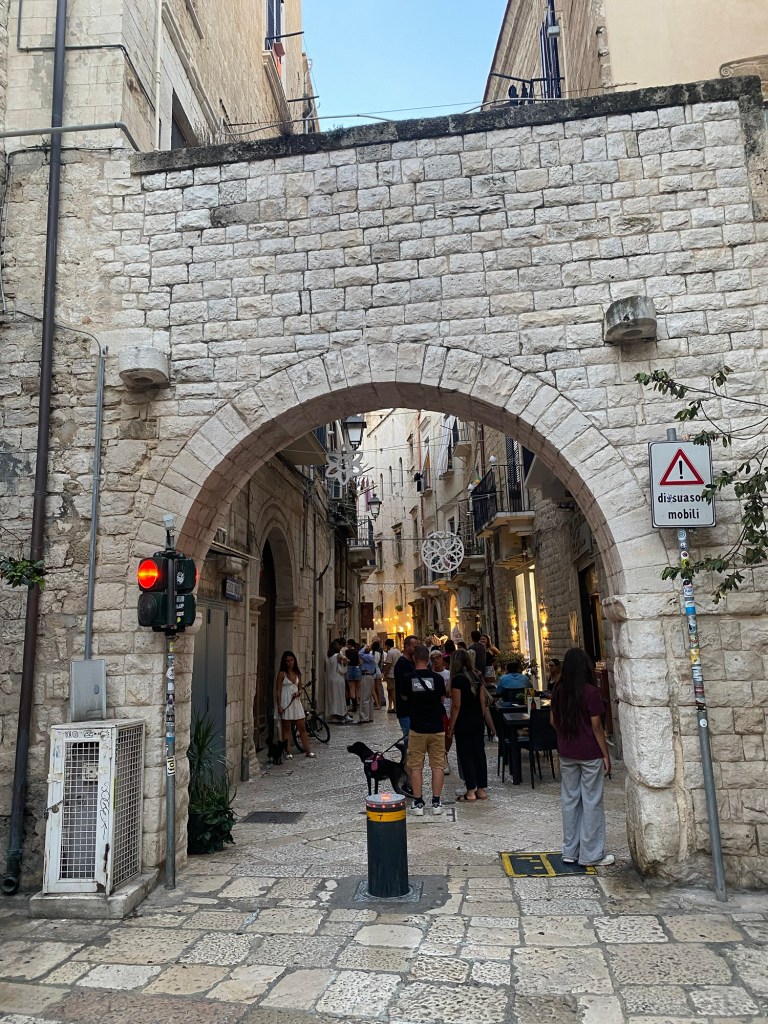
One of the Old City gates in Bari.

I learned that I should ensure I get the translation of the Italian in the confirmation emails from ferry services. I had what I thought was a ticket, but in fact was a receipt of the transaction. I needed to go, at least three hours before my ferry departed to another part of the harbour—two kilometres up the coast in fact—to get the ferry offices to provide a ticket and to validate my passport as a pre-check for border security. Having not seen this in the fine print, I was told I needed to check with the company the next day. I was not alone in this predicament, but that was not much solace. With the ferry offices closed until 0900, I had not much of an option than to spend the night in Bari.

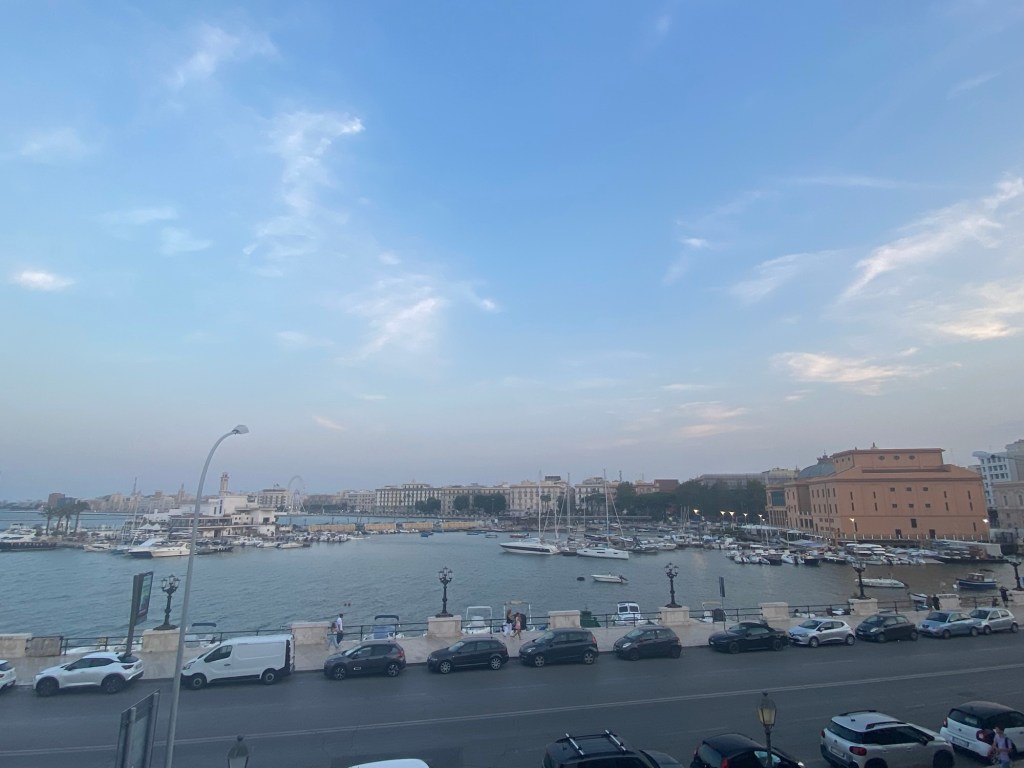
View looking south from city wall. Opera House on the right.

I looked up accommodation and booked a hotel online that came up through Hotels.com. When I arrived at my destination just after midnight, I learned that the hotel I had booked no longer existed and that the new hotel that took it over did not have the booking. Fortunately this was resolved the next morning after some communication with Hotels.com—although through what I thought was predominantly a chatbot—and the hotel proper. At any rate, I was able to get a good rest and have a great breakfast before looking at how I needed to handle the ferry passage.

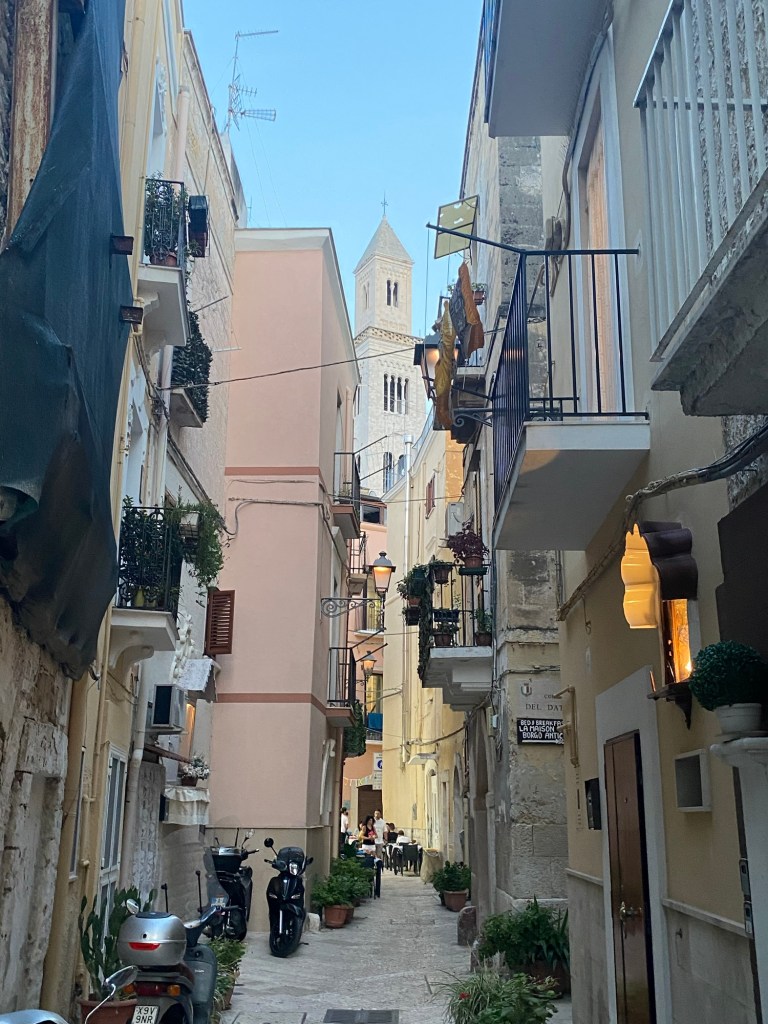
Cathedral tower through Old city streets.

I received a fairly quick response from the ferry in the morning. I worked through the details of where I needed to go and what I needed to do to get my ticket. They weren’t charging me extra for my error which was nice, but I did have to figure out how and when to go their office across the harbour and come up with a plan for the day ahead.

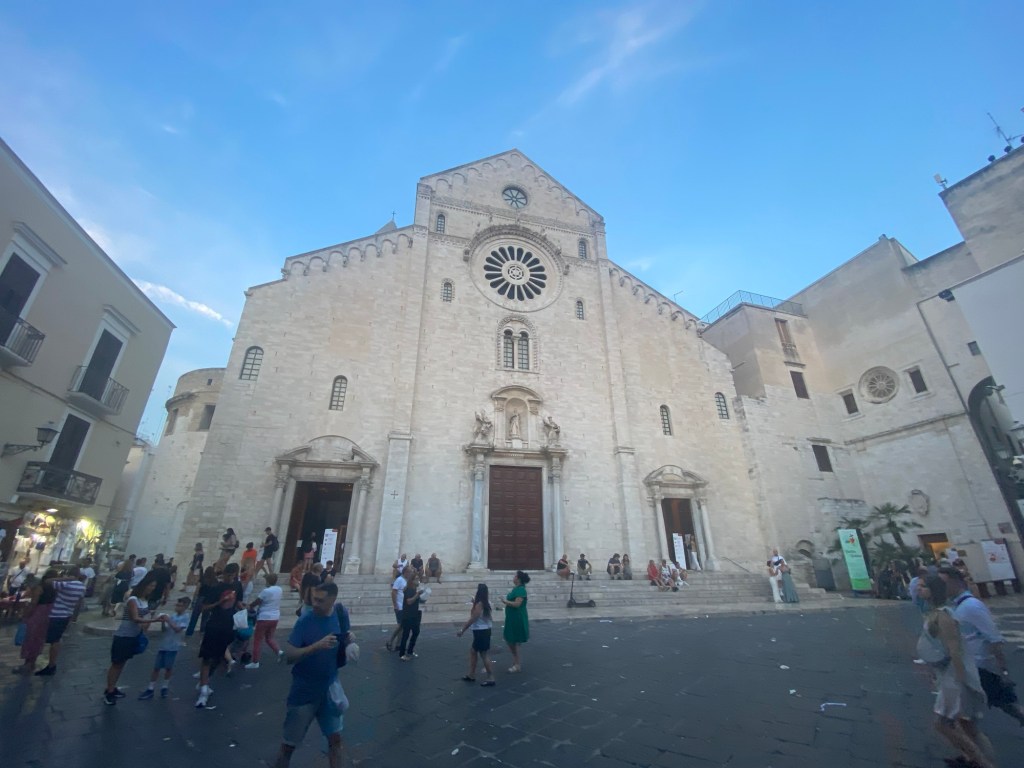
Cathedral of Bari.

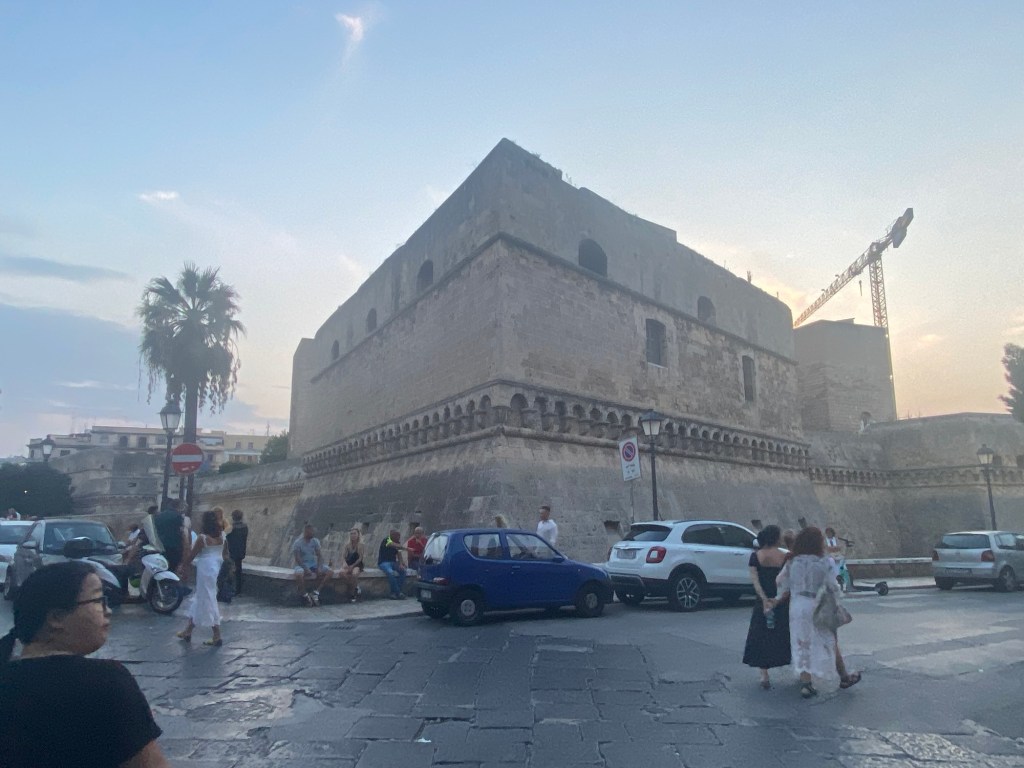
For the morning I chose to visit the Swabian Castle, the official name of the Fortress in Bari. It had been built on the Roman castle on the waterfront in the 10th century. Expanded by the Swabians in the 11th century and made into a castle for a prince tied to the Kingdom of Aragon in the sixteenth century. Finally in modern times the port was built along with a road circling castle and old city making the fortress no longer on the waterfront. It was fascinating to see the changes over time and hear more of the history as I toured the site.

Swabian Castle from new road.

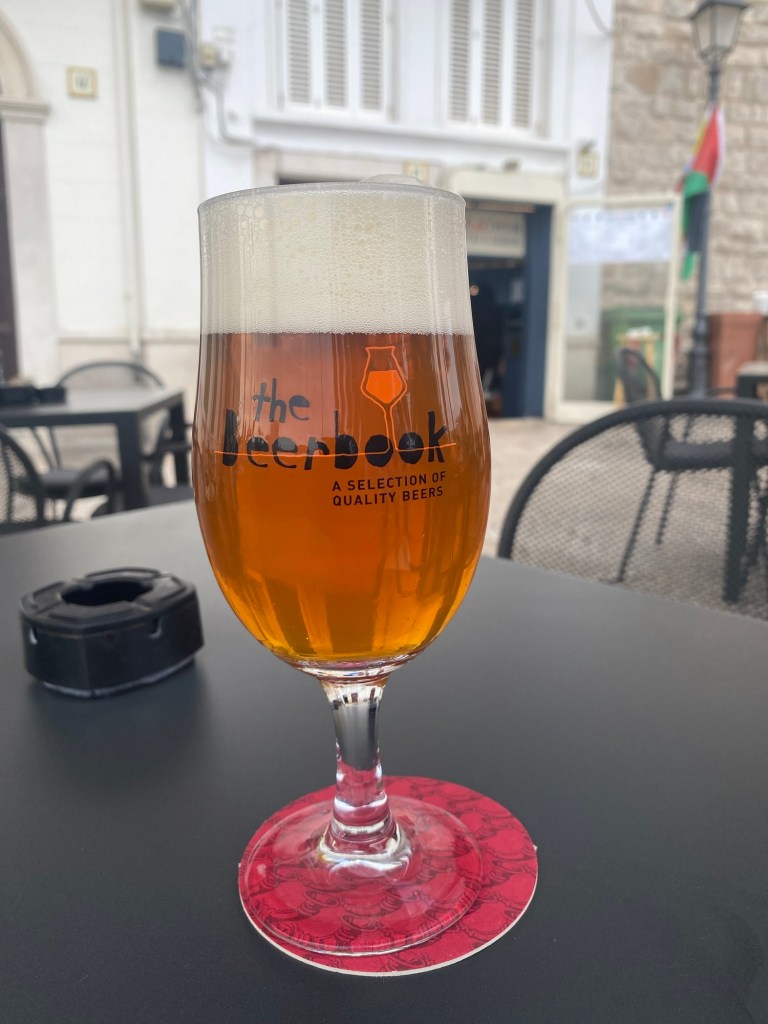
In the afternoon, I thought I should ensure I had an early sense of where I needed to get my ticket. I walk along the coast brought me to the part of the port of Bari that had the ticket office. Still a bit confusing but a guard pointed me in the right way. Getting the ticket was easy and a bus was available to drive you up the port to the end where you could get on the ferry. With a few hours to kill, but with my ticket in hand, and temperatures according to one store’s board at 40 degrees Celsius, I primarily took it easy. Having a coffee, then a fruitless search for a book store, followed by a couple beers and a supper at a craft beer restaurant I had passed by earlier in the day at the end of the old town.

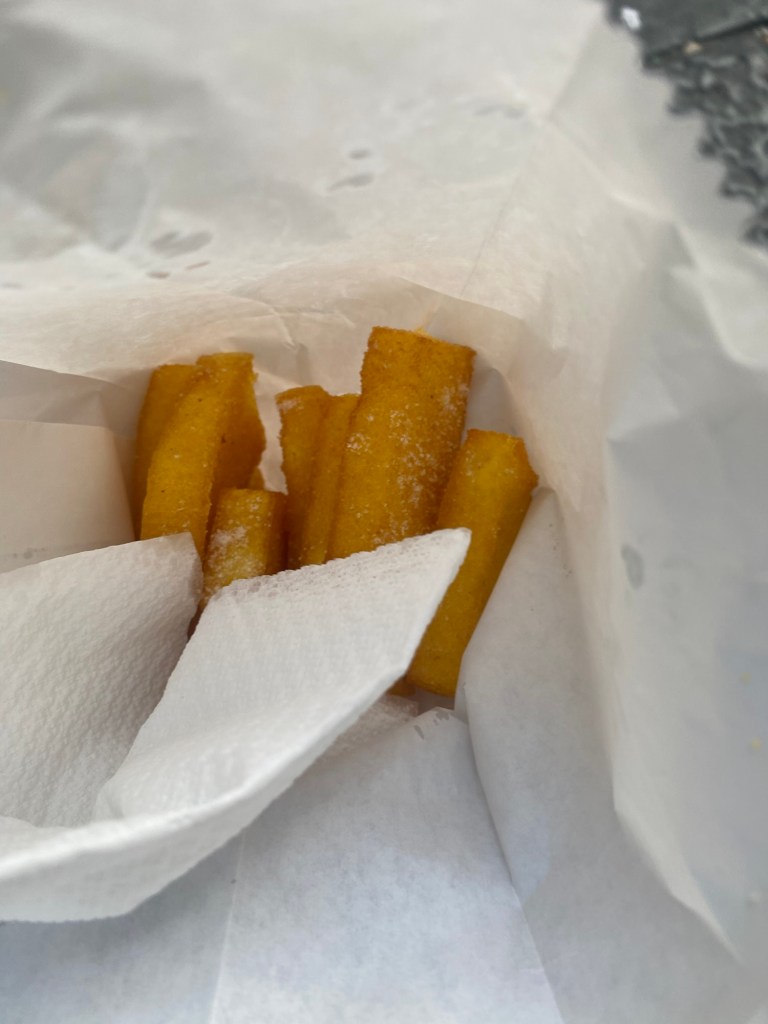
Deep fried polenta.

Around 2100, I picked up my bag from the hotel and headed to the port. It was a bit early but I wanted to ensure I got on the nice ferry to Duress. A few hours later, I was boarding the ferry and heading back to Albania.

Side trip to Rome

Jenny’s daughter joined our travel in Croatia later than her other children. As a result she had planned to travel with her boyfriend to Italy. Jenny and I joined them for a few days in Rome.

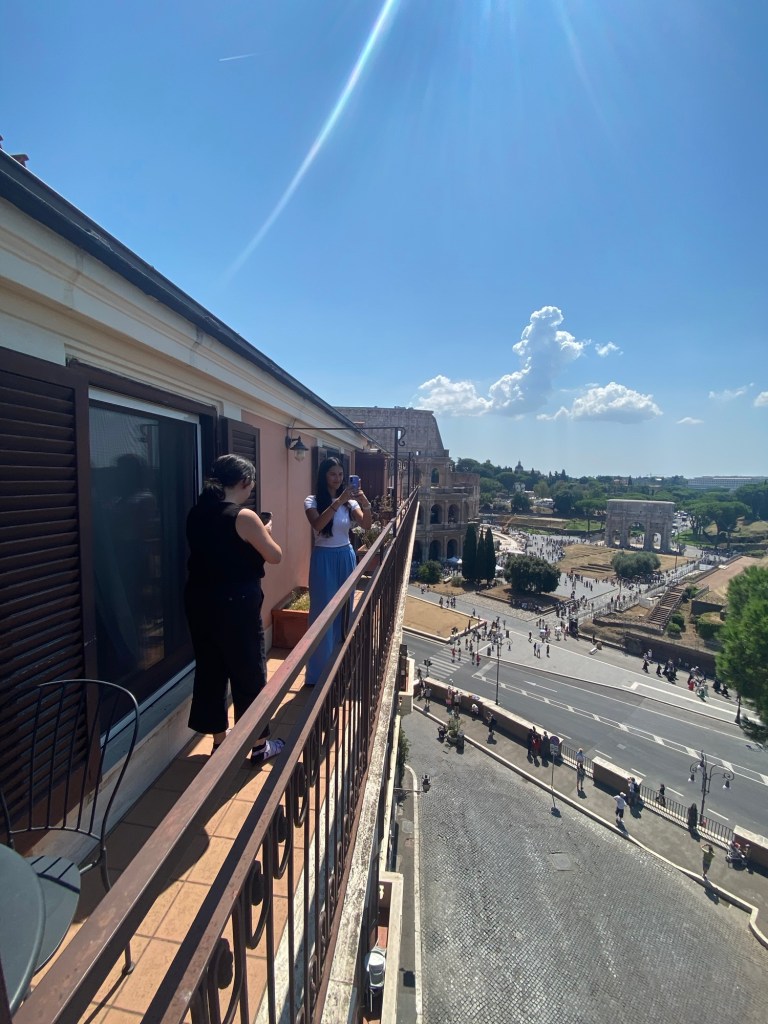
The view from our AirBnB in Rome.

As it had been the first time that her daughter had been to Rome—and it had been over 25 years for both Jenny and I—we took a more standard tourist approach with getting a Rome Card and setting up visits to the Coliseum and Vatican, along side plans to wander the city and take in the culture and history.

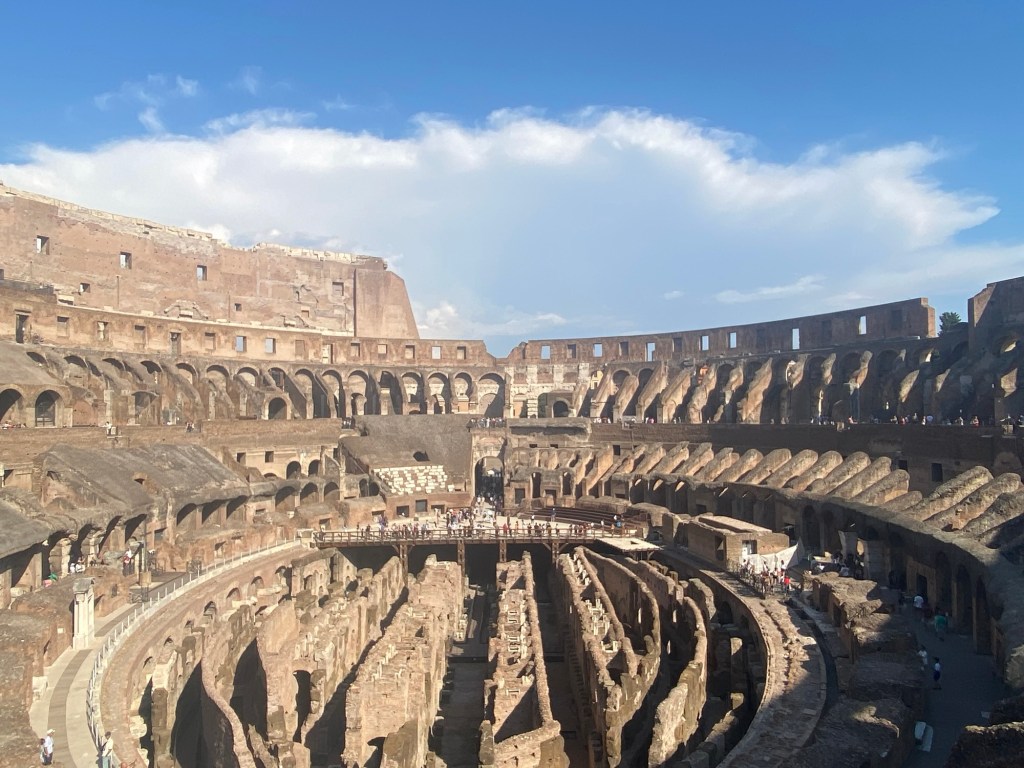
It was very warm in Rome for the days we visited. I read after our visit that a guide had died, in part from the heat, the following day at the Vatican. Despite the heat and challenges we did get to see the beauty of Old Rome. The edge of the Coliseum was visible from our AirBnB, which made it a relatively short walk to get to the site. We chose to do an audio tour with two of us sharing some of the information we had with the others. Although tracking where we were on the tour with the audio guide was a challenge we did get some substantive information to better understand what we were seeing.

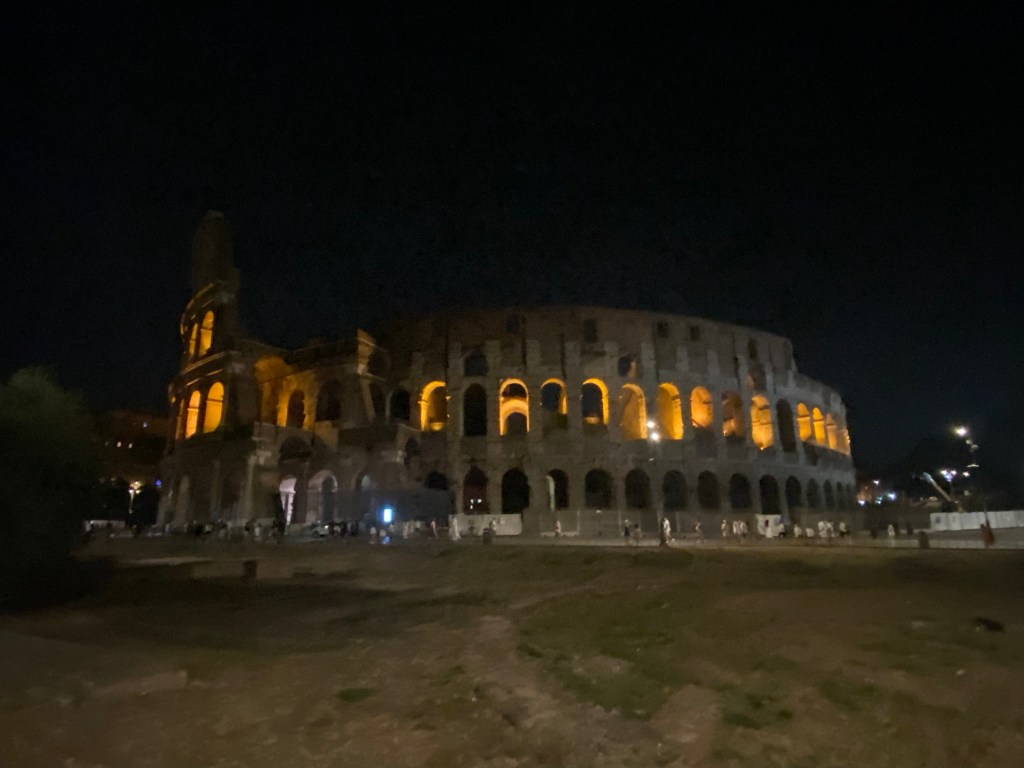
The Coliseum at night.
Inside the Coliseum.

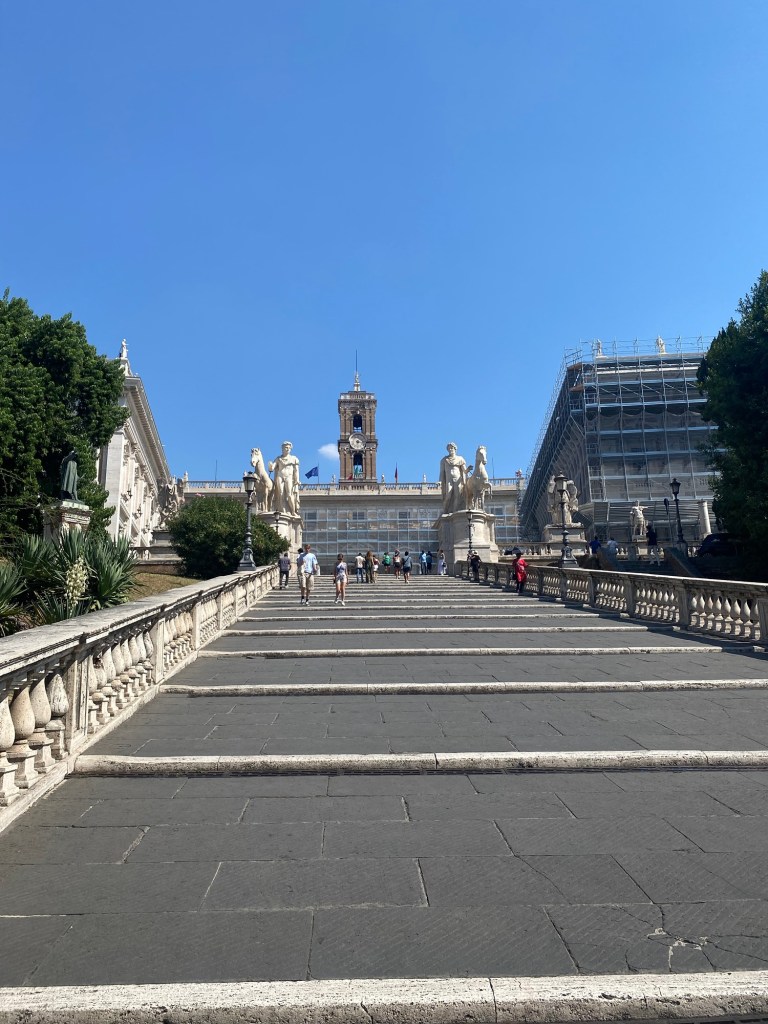
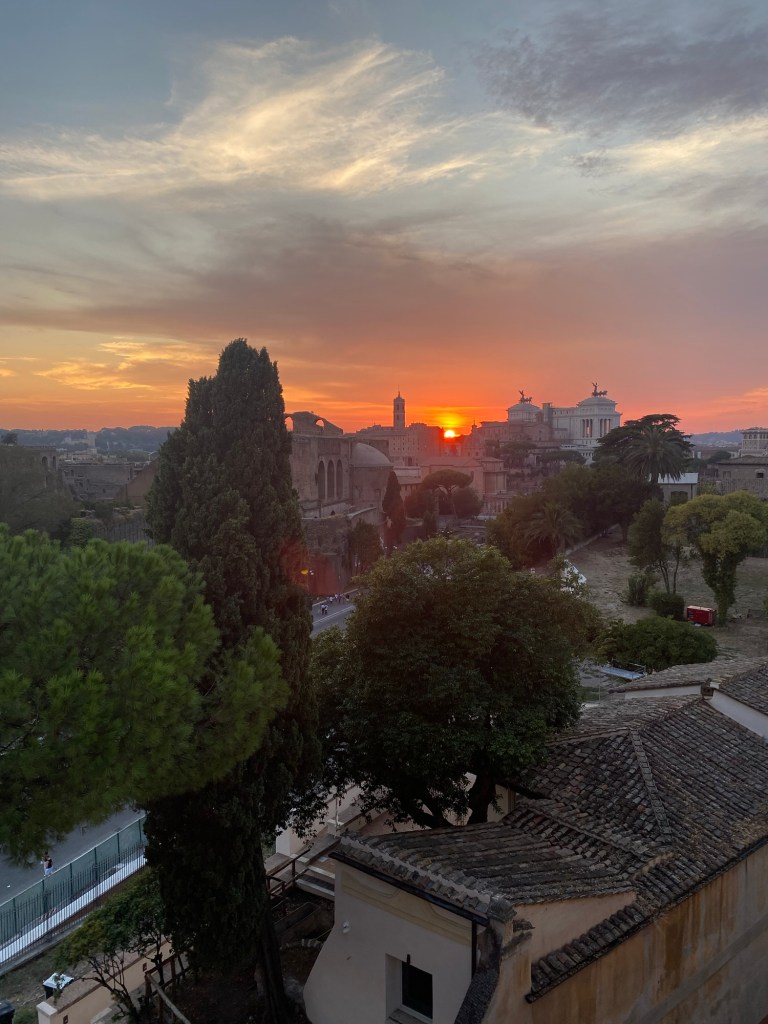
We also wandered the streets around the Coliseum, taking in the Victor Emmanuel II monument and the Basillica Santa Maria in Arcoelli and the Capitoline Hill. We ate a delicious five course meal at a restaurant nearby our apartment.

Evening view from the AirBnB balcony with the Victor Emmanuel Monument in the background.

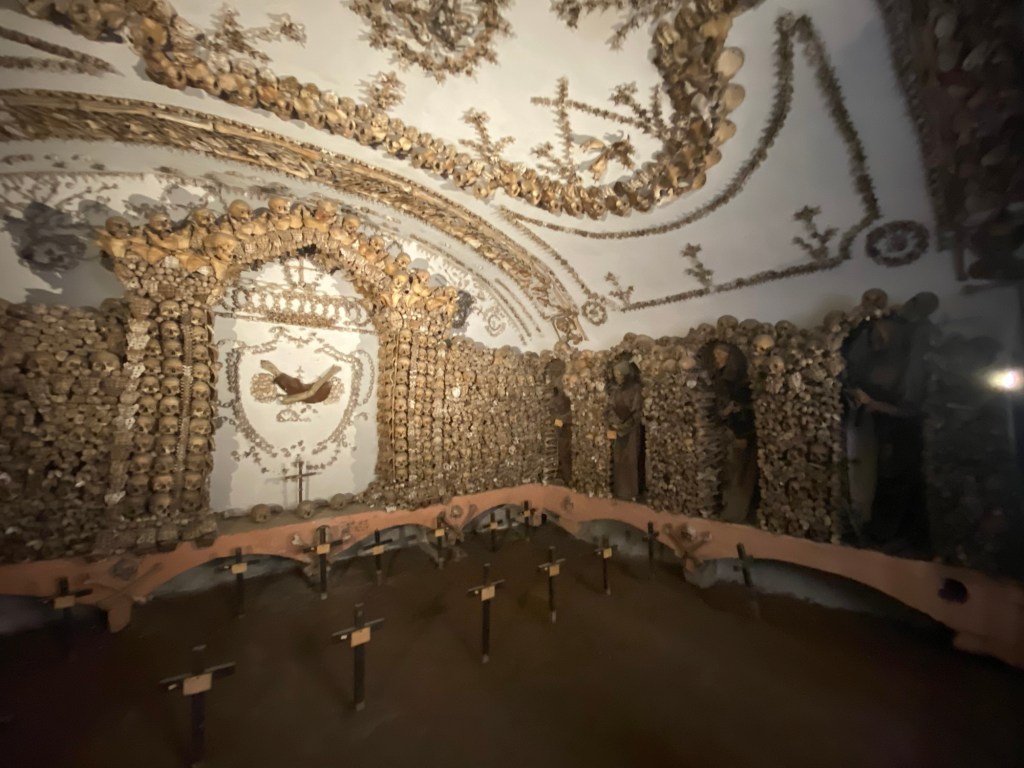
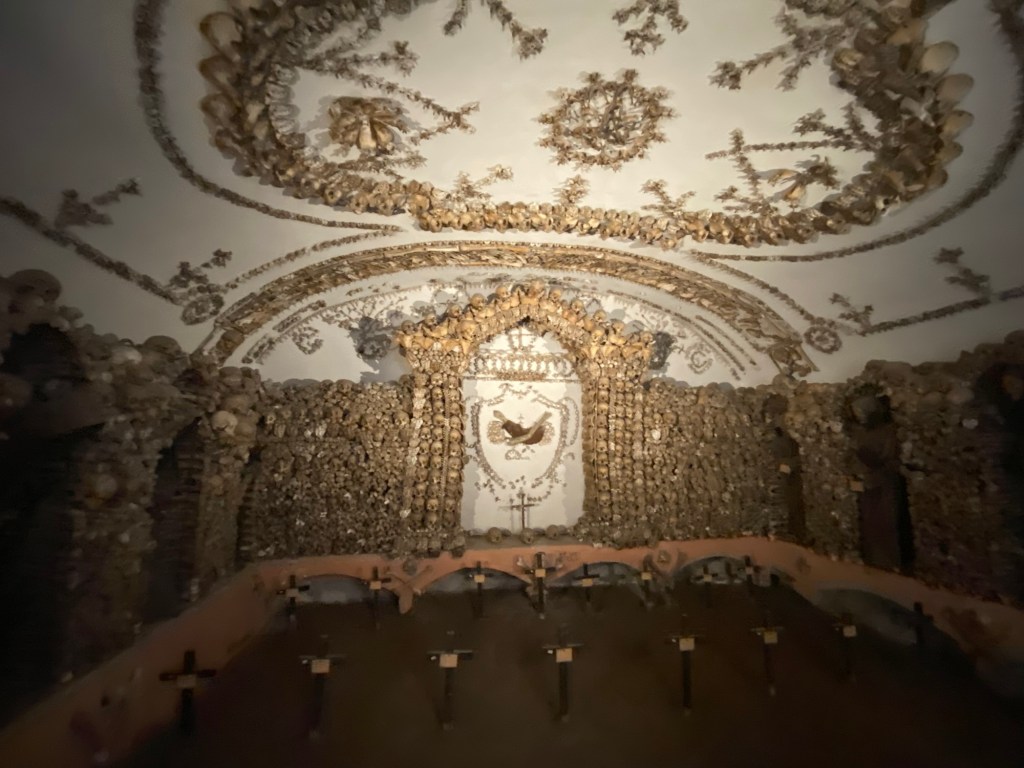
The following day we had tickets to the Vatican. As this tour started around noon we wandered the city on our way to the Museum and Crypt of the Capuchin Friars. It was an interesting stop as this was the site of a Franciscan monastery that gave a lot of history of the Catholic order but was also home to a crypt where one member had reorganized the bones of the deceased in their crypts into artistic patterns. It felt both sinister and impressive all at once to walk through the five chambers where this art work with human remains had been placed.

One of the five crypt rooms.

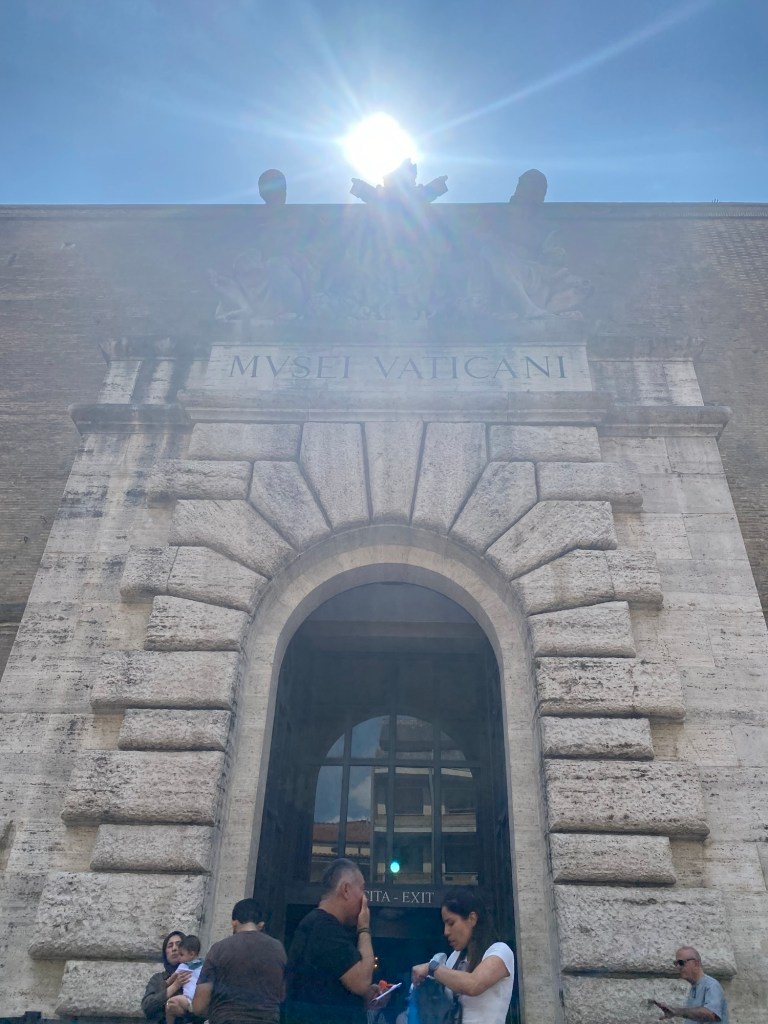
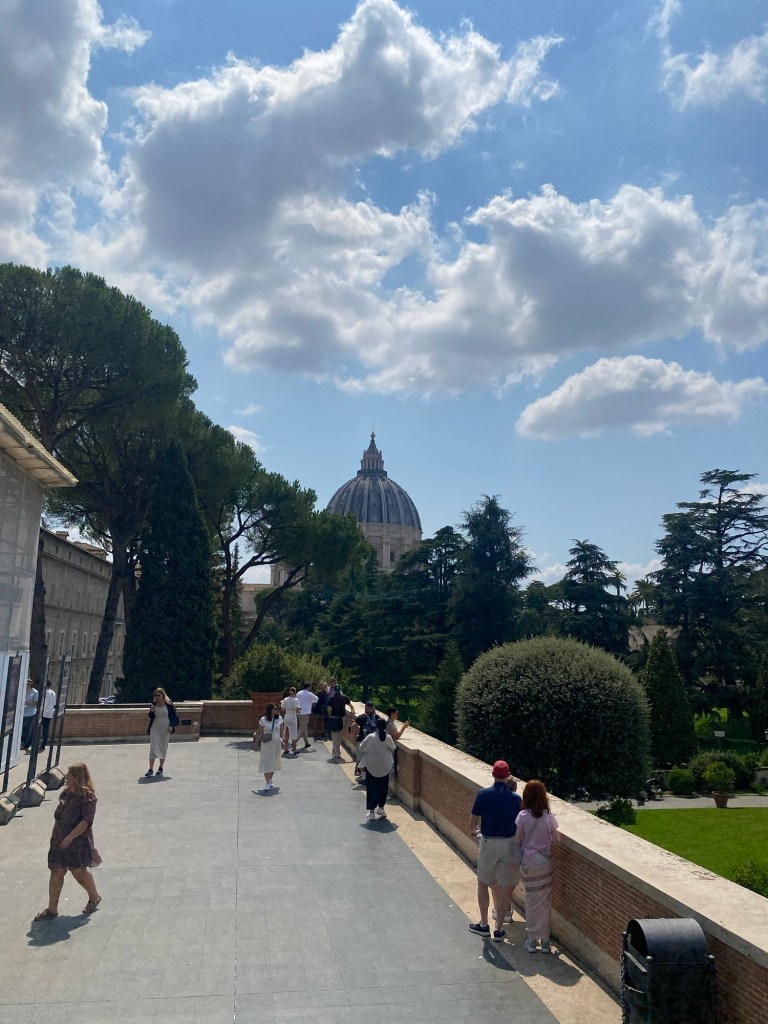
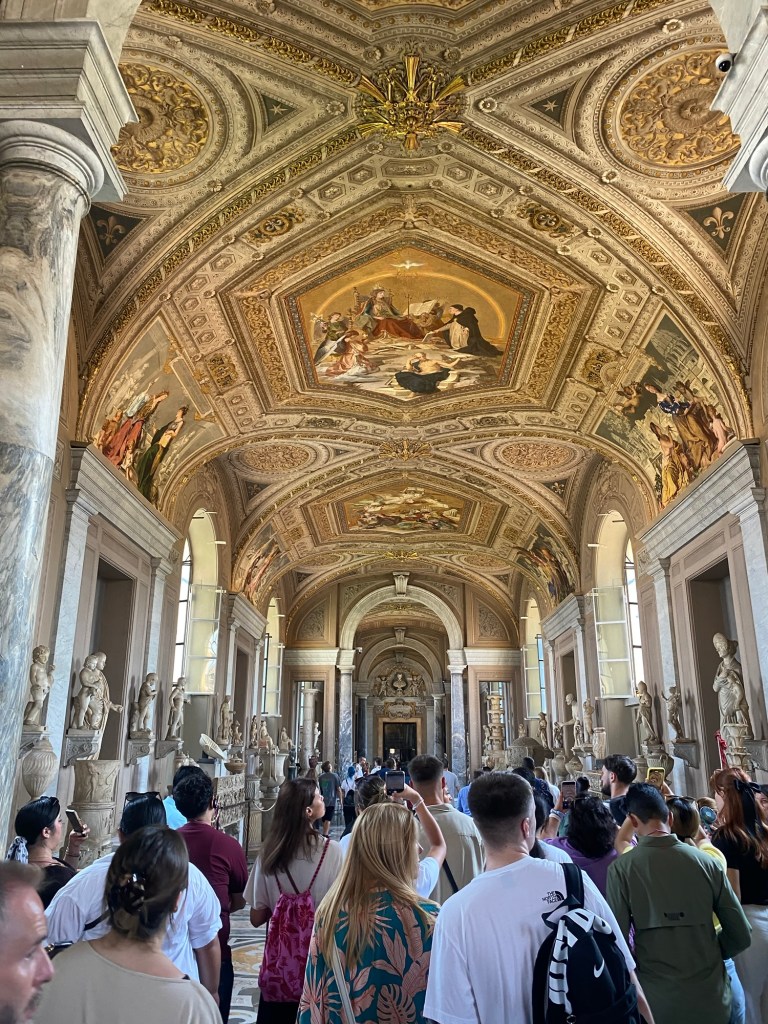
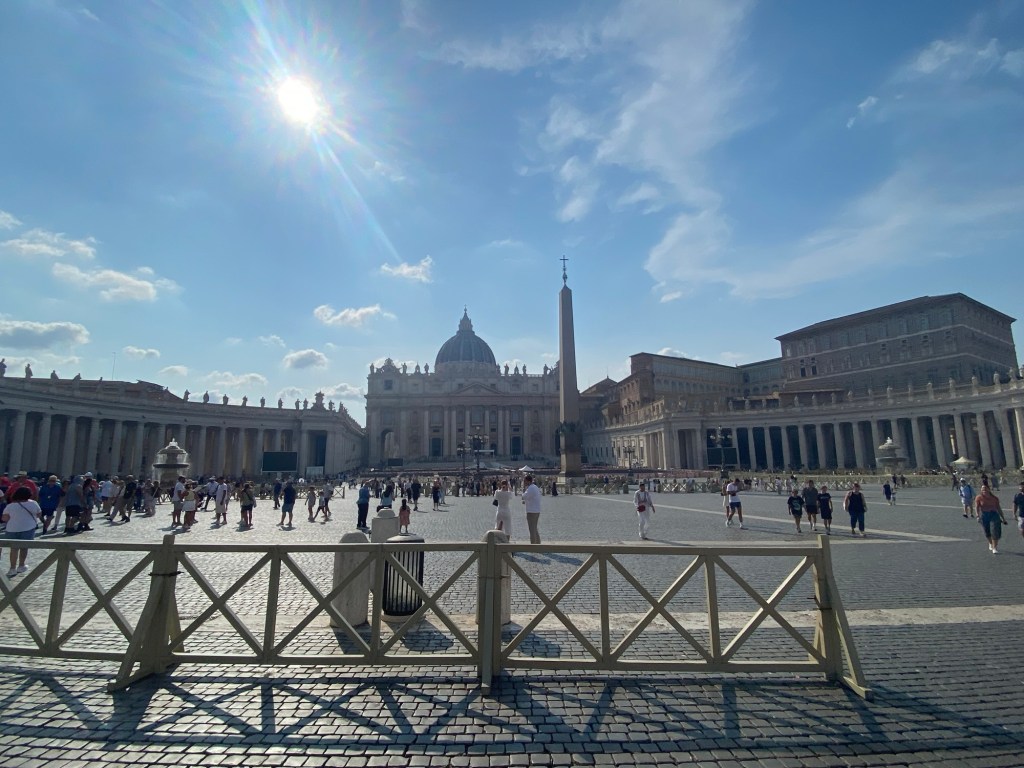
On the tour of the Vatican we went with a group of around twenty people. Having a guide was helpful to provide context to what we were seeing. Although it had been 26 years since I last visited, it felt like I got more out of this tour than I had simply wandering through as a tourist in my early twenties. The tour allowed for about an hour to visit through the various museums with the guide providing frequent input on items of note, about a fifteen minute stop in the Sistine Chapel, and a final stop at the Basilica of St. Peter. Definitely the magnificence of the art collection and historical artifacts was apparent. Being the Jubilee year we walked into St. Peter’s through the entrance that would apparently absolve us of our sins (if you believe this). I will admit that I did it primarily to get a closer view of Michelangelo’s Pieta statue and to see the resting place of Pope John Paul II. I was glad for the visit as it does feel like a place that everyone should see if only to understand the historical power of Catholic Church.

Vatican Gate.
View of St. Peter’s Basilica across the Vatican.
Inside one of the Vatican museums.
St. Peter’s Basilica.

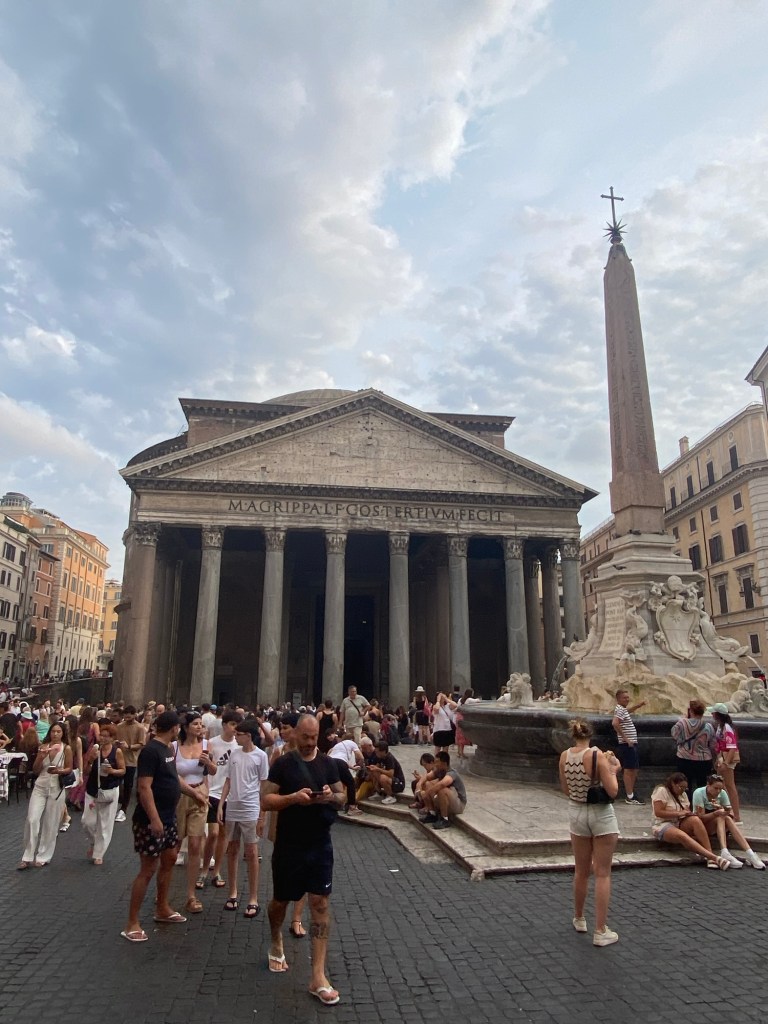
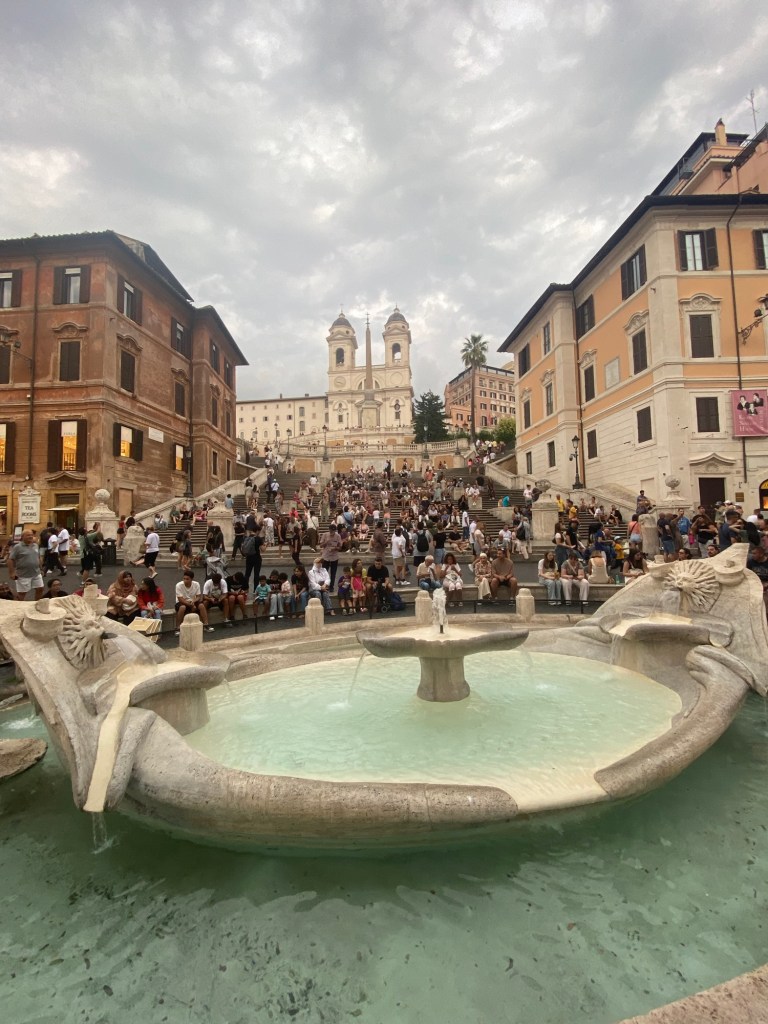
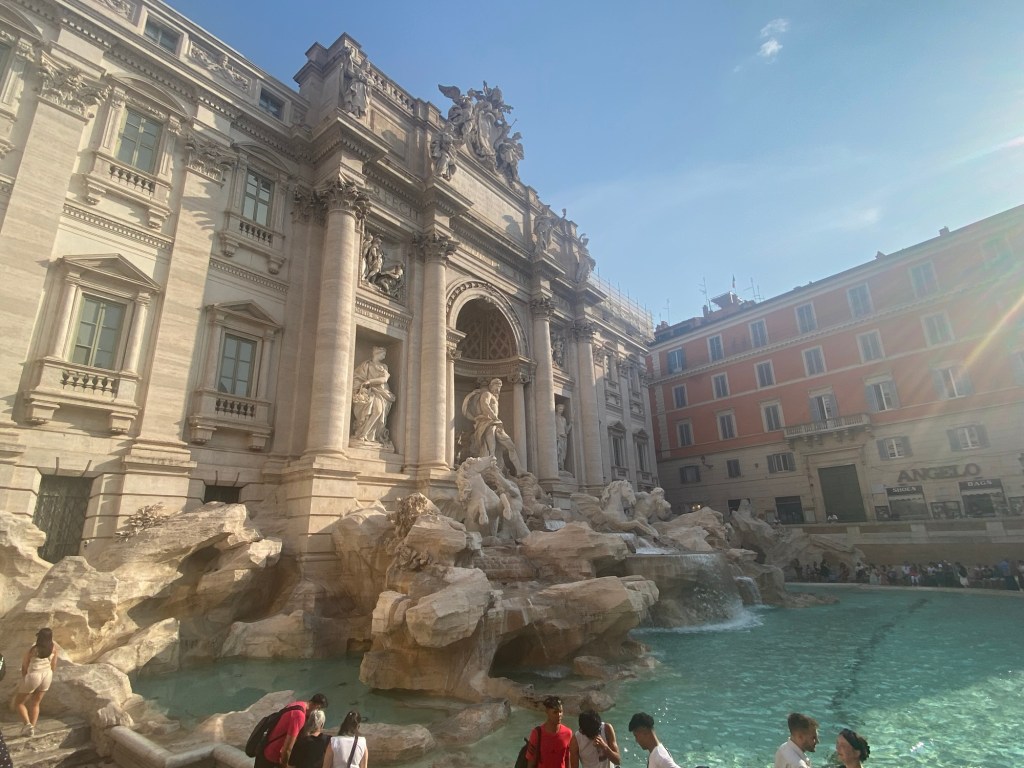
We wrapped up our time in Rome wandering, allowing Jenny and her daughter to do some shopping, and taking in the sites that we came across. This included the Pantheon, Hadrian’s Temple, the Spanish Steps, and the Trevi Fountain among a few others lesser sites. It was interesting to see the sites of Rome again after a quarter century gap. Definitely Rome remains one of the great cities of the world where you could spent much more than the three days we had and still have more to see.

The Pantheon.

The Spanish Steps.

The Trevi Fountain.

Croatian Travels

I met up with my partner and her family in Budapest and then missed providing any updates for the past two weeks. We had a good time exploring Croatia but I realized that there are less lag times when you are travelling in a group than when I am alone in my travels. Likely this is why I am writing now that I am alone again.

Plitvice Lake view.

Croatia was one of those countries I had heard a lot of positive things about but did not really know much about. In learning about the country I ended up focussing on two parts: the Plitvice Lakes National Park and the Dalmatian Coast. The former was due to brilliant pictures of the blue lakes and magical waterfalls; the latter was due to my partner’s family wanting to see the coastal areas so they could spend time on beaches.

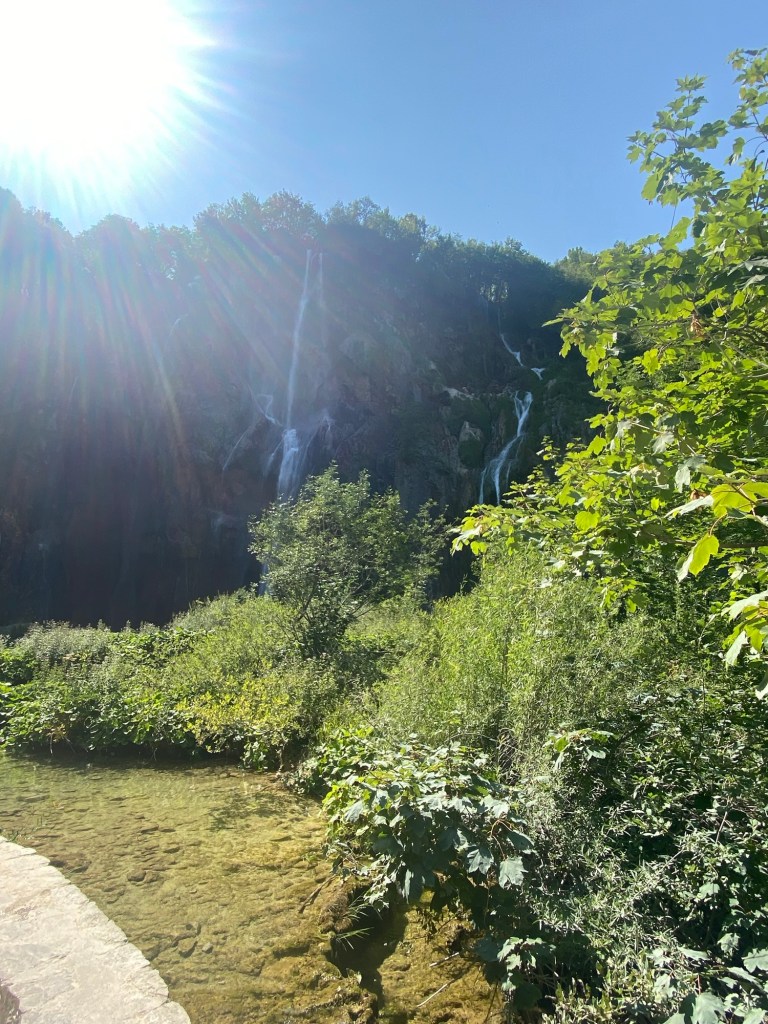
Plitvice did not disappoint. Arguably we rushed a visit by having it be a stop on a drive from Budapest to Split. This meant that we had two hours to see what we could. We chose to do the recommended path B that the park has. This allows you to see the lakes and the waterfall. What we didn’t know was that it was best to do this clockwise, heading to the top of the lakes (there is a bus you can take for part of the way if you don’t want to walk). Then taking a ferry across the upper lakes and walking down to the waterfalls. As we hadn’t done our homework, we followed the crowds and, although the brilliance of the part was still very apparent, we had a thirty minute wait in the line to catch the ferry across the upper lake. Despite this, the visit was rewarding and the brilliance of the clue blue lakes and misty waterfalls was a highlight of my time in Croatia.

Waterfalls of Plitvice Lakes National Park.

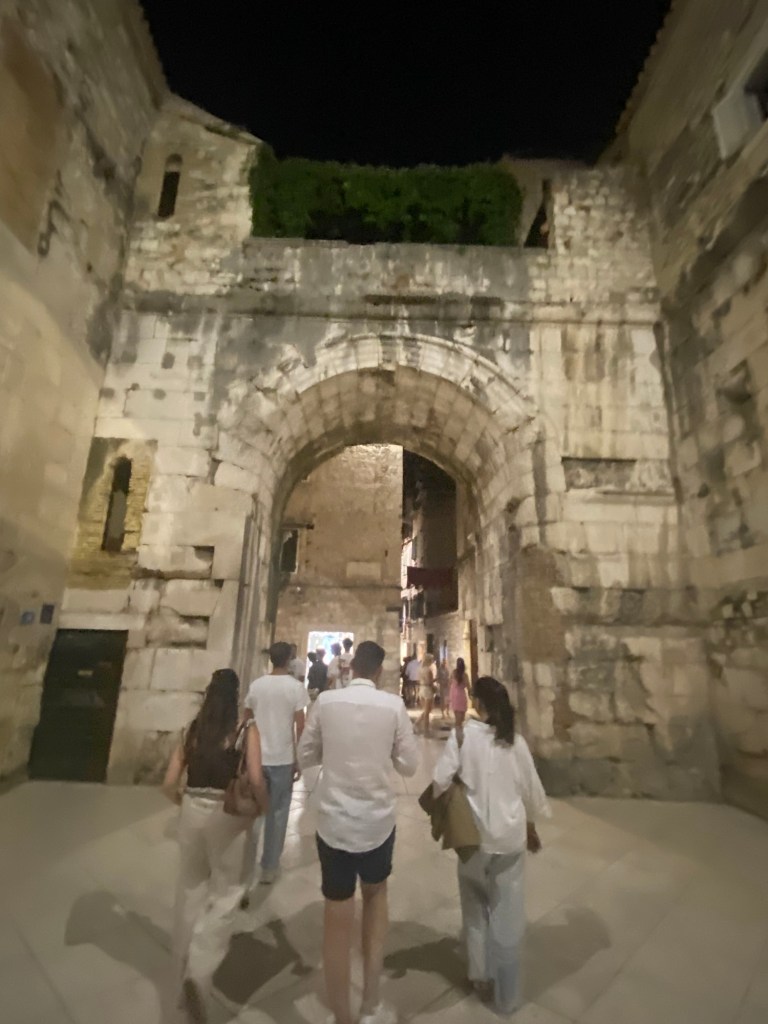
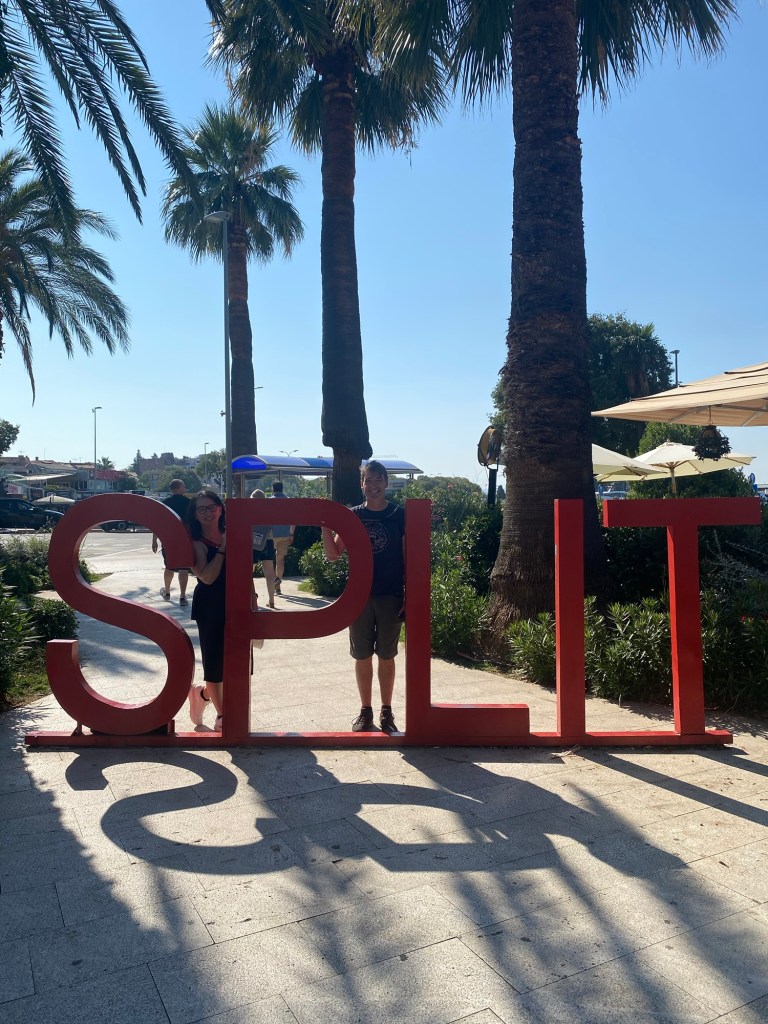
Split was our next destination. We had an AirBnB that was about twenty minutes walk from the Diocletian Old City that is on the Sp[lit waterfront. The well preserved old town was great to walk through despite being a bit of a warren of streets that had us lost for a while. A tour the following day allowed for Jenny and I to learn more about the city and the history of Split and the Dalmatian Coast. The history went back to Roman times with the peak being when Emperor Diocletian built his retirement castle on the Split Coast. The tall fortress like Old City is still a remnant of the Roman Town that was Diocletian’s home. The movement post the Romans to embrace Christianity ended up with many of the temples and buildings that Diocletian, a strong opponent of the young Christian religion, to be repurposed once this change had taken hold. This included the loss of his mausoleum which his body was removed and lost to history.

Gate to Old City of Split.

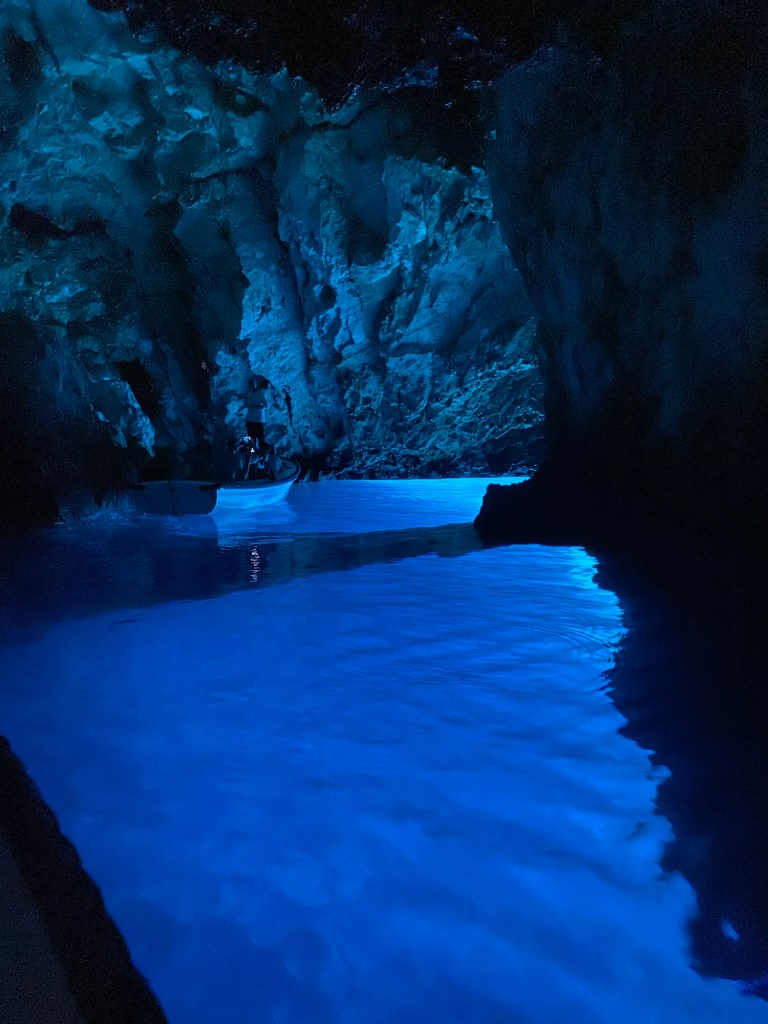
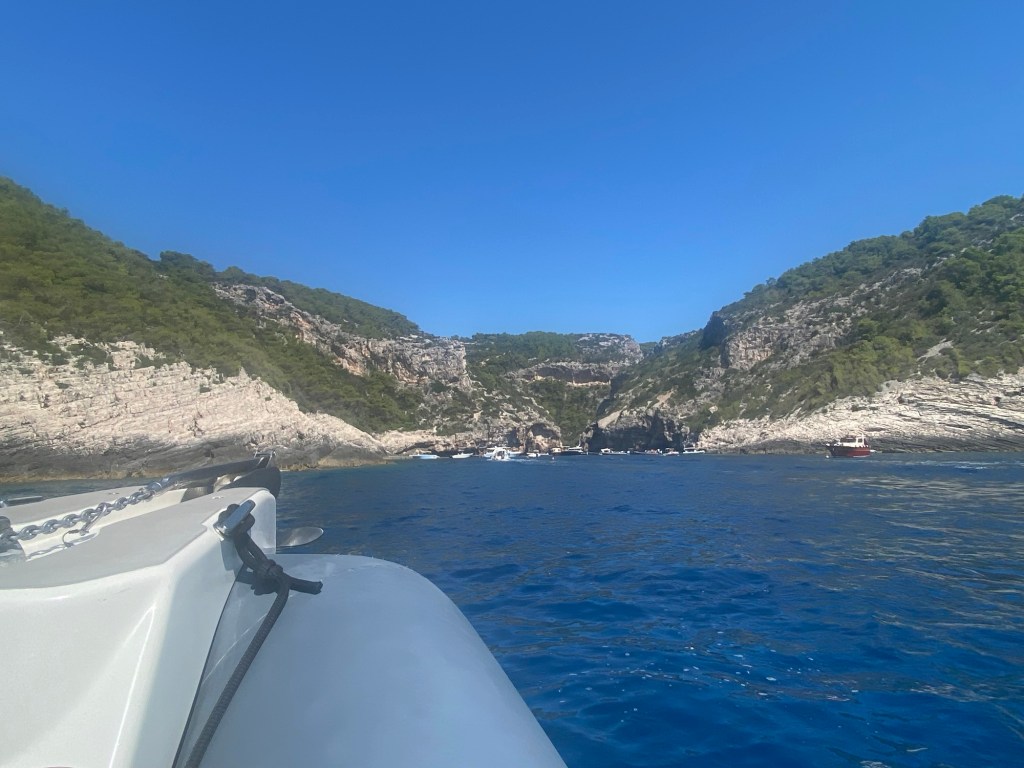
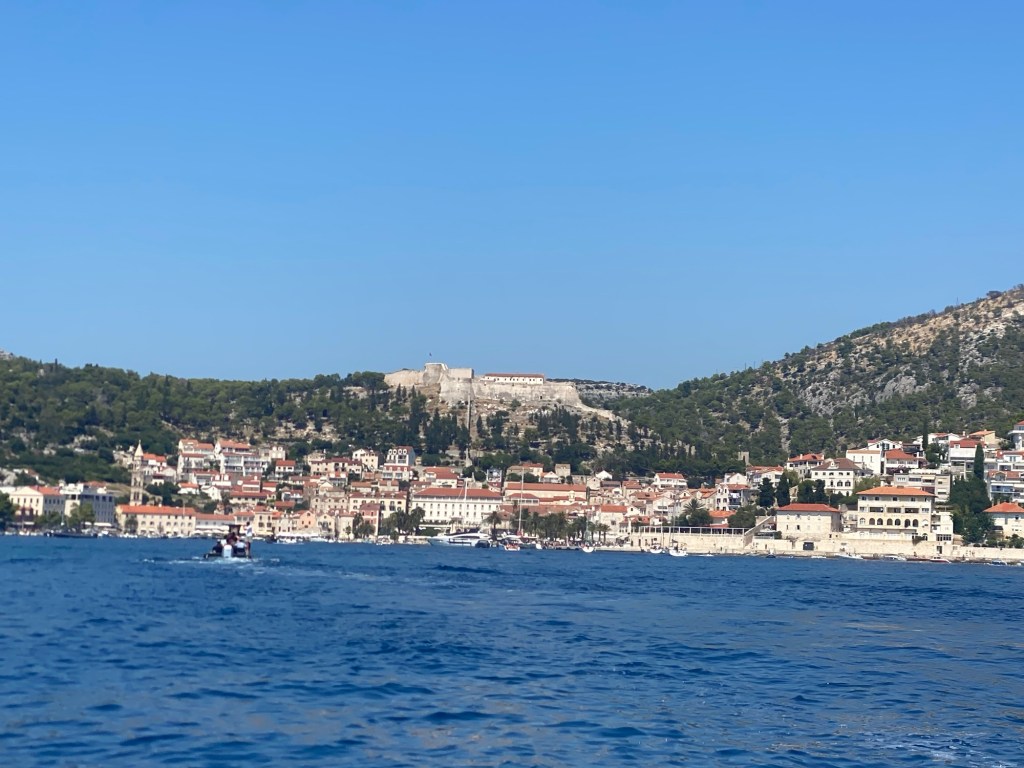
From Split we did a day trip to some of the islands. This included an early morning start to beat the rush to the Blue Cave, a cave that you have to enter by boat on a small island just past Vis. The cave is lit up in blue from an underwater cave where the the light bounces off the floor of the Sea where crystallized glass send back the rays to the cave giving the cave its colour and light. Although the time in the cave is brief given the demand, the experience was impressive. From here we went for breakfast in Komiza, a small town on the island of Vis. Our boat then dropped us off at a couple beaches to swim and get out of the heat in the Adriatic Sea. At the end we went to Hvar for a couple hours to see this town on its eponymous island. It was a full but good day.

Inside the Blue Cave.
A beach on Vis we swam at.
On approach to Hvar.

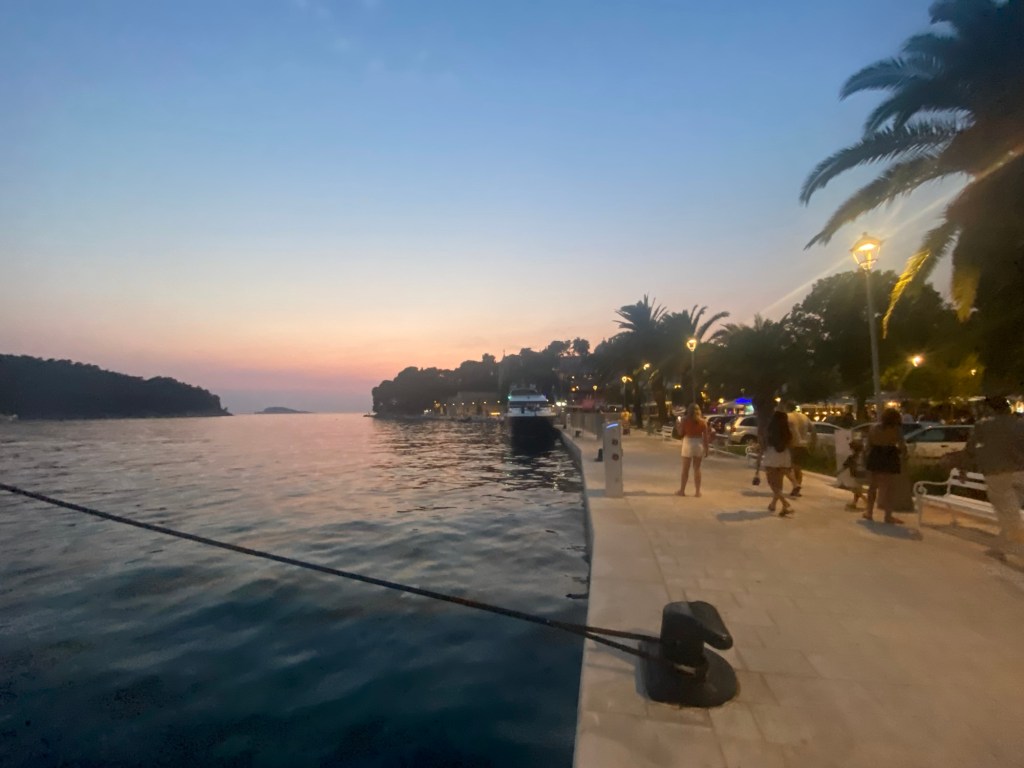
We headed south in Croatia to stay at the small coastal town of Cavtat. This location was chosen as Dubrovnik was nearby but we had heard that this town was often very busy with tourists. Jenny found a beautiful AirBnB with a pool that allowed for us to have respite from the 30 degree weather even if we didn’t want to walk down to the beach. We were a 10-minute walk from the waterfront and 30 minutes from the old town of Cavtat. From the waterfront we were able to catch a ferry that took us around 40 minutes to get directly into the harbour of the old City of Dubrovnik. It was a great place for some relaxation and to do the site seeing into the town of Dubrovnik.

The waterfront in Old Cavtat.
Cavtat waterfront on path back to AirBnB.

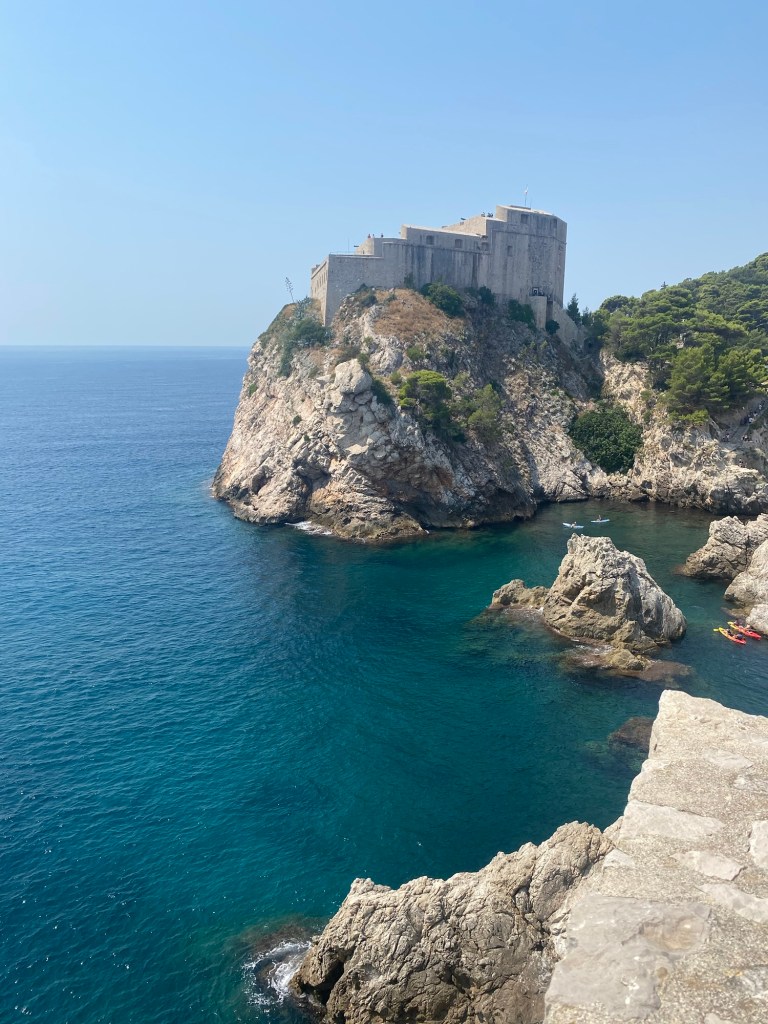
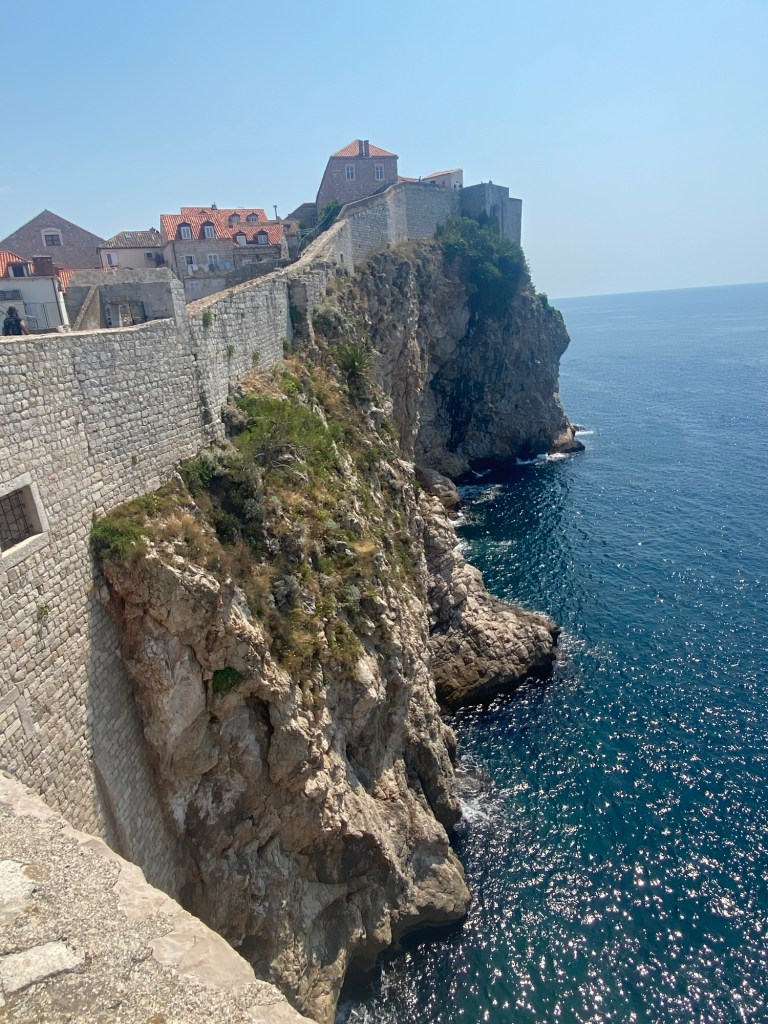
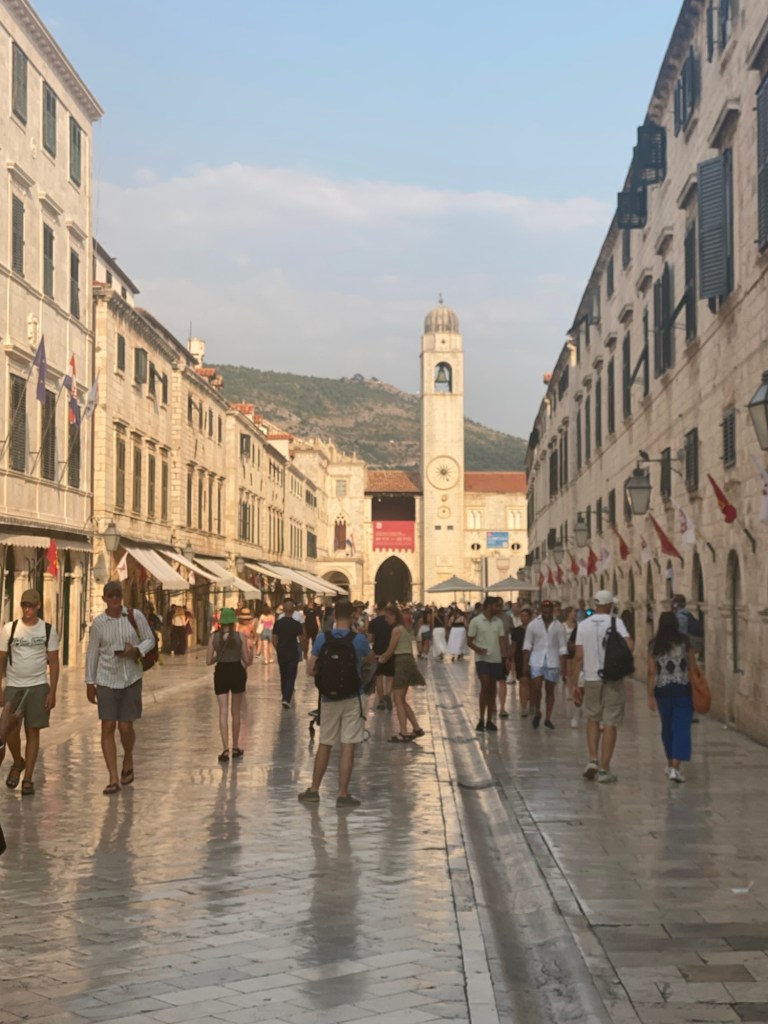
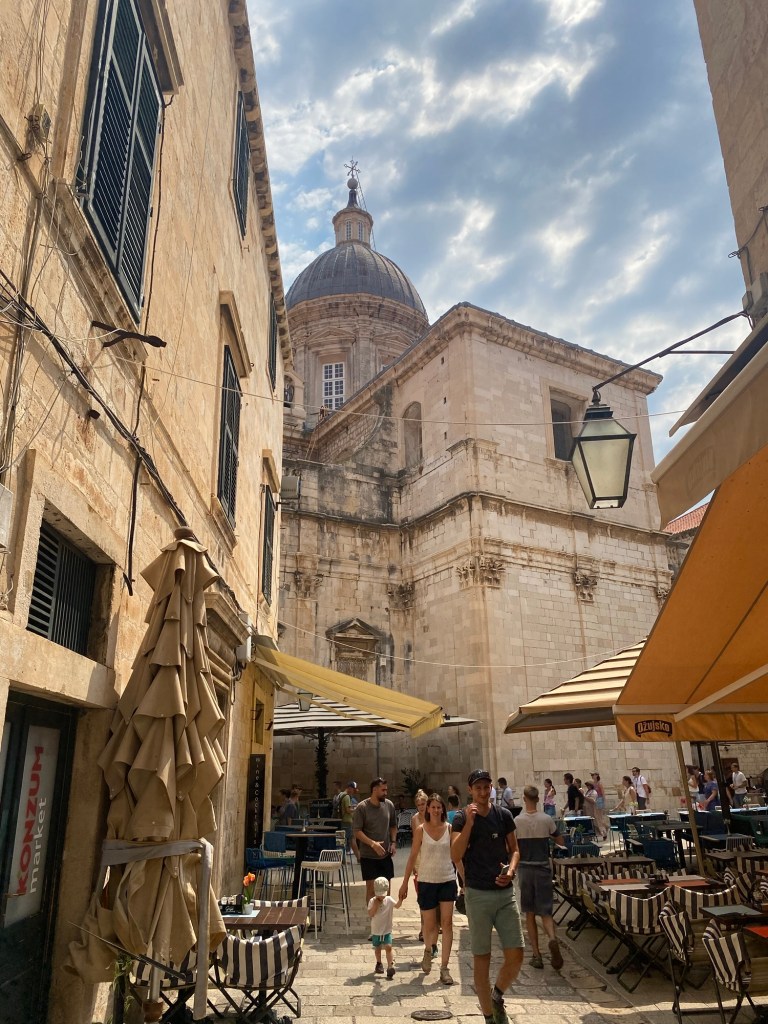
Dubrovnik was a fascinating place to wander. We walked the city wall using an audio guide to provide background on the history and key events in the town’s history. Definitely the city’s history has been highlighted as a key location in the Adriatic Sea and as a know place for commerce and trade through the centuries. Many countries fought over the Dubrovnik but shrewd local leadership often allowed the city an independence not seen in other places, even as they were technically protectorates of Venice or the Ottoman Empire. The old city still has scars from the recent Balkan conflicts but has recovered from the shelling that damaged many of the buildings in the old town.

Eastern wall of Dubrovnik
Central street in Old Dubrovnik
View of cathedral spire on streets of Dubrovnik.

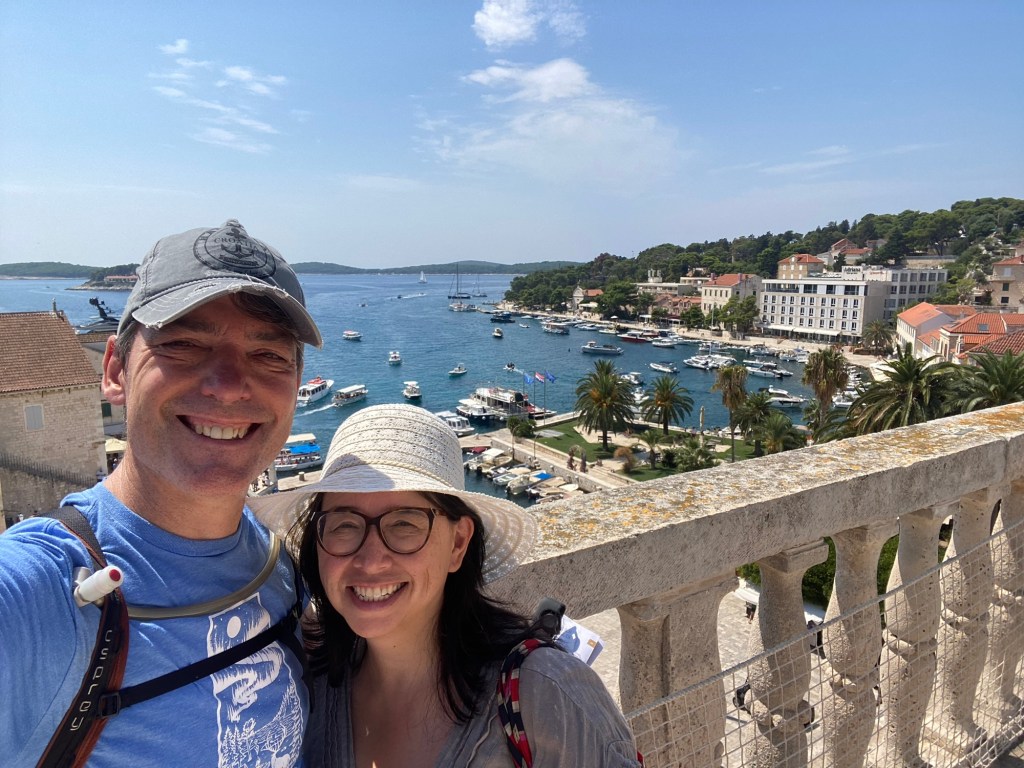
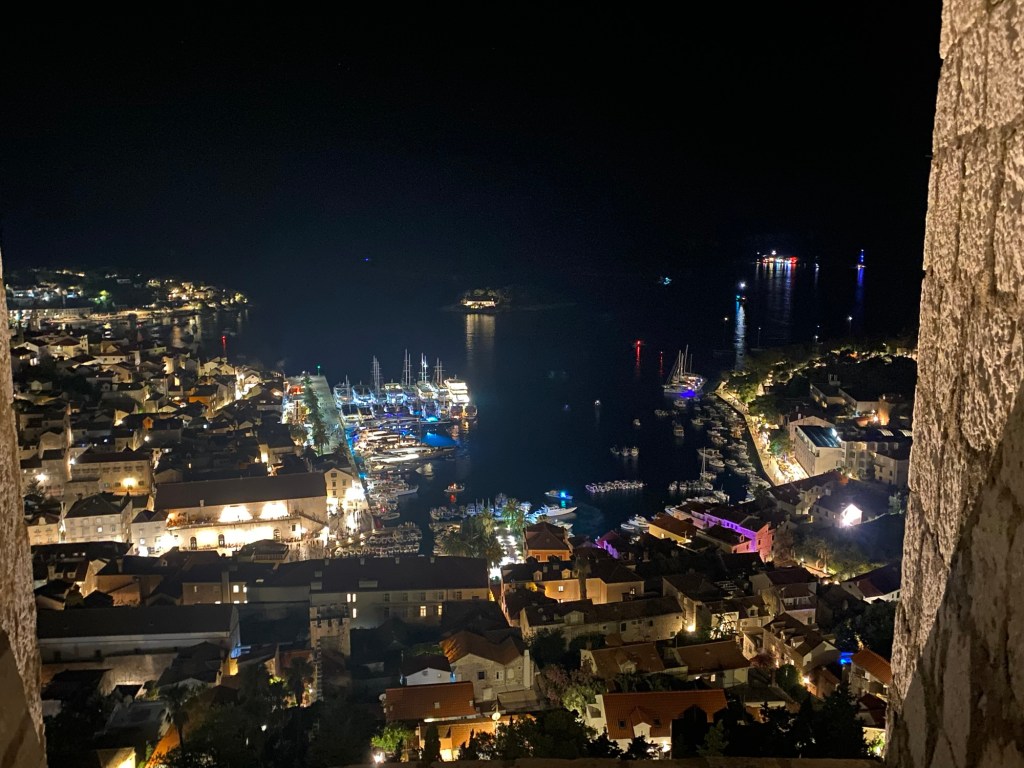
Jenny and I returned for a short visit to Hvar before we left Croatia. Jenny’s daughter had joined us but missed the initial visit to this island town. We were able to better get acquainted with what the town had to offer. The mixture of history, shopping and good food, alongside the coastal entertainment made this a relaxing way to end our time in Croatia.

Hvar harbour at night from Fortress.
From Empress Elizabeth Hotel balcony overlooking Hvar harbour.

Exploring Budapest

After travelling by myself for most of the past month, I had a change as I met my partner and two of her kids in Budapest. I will spent time with them for the next few weeks as we see Hungary, Croatia, and possibly some of Italy.

Budapest was a central connection point for them coming from Vienna and me coming via Belgrade from Bosnia. I had recalled travelling Europe in my youth and deciding to forego Budapest in favour of Prague in my travels in 1999. I was sorry that it took me a quarter century to get back to see this city as it was a stunning location.

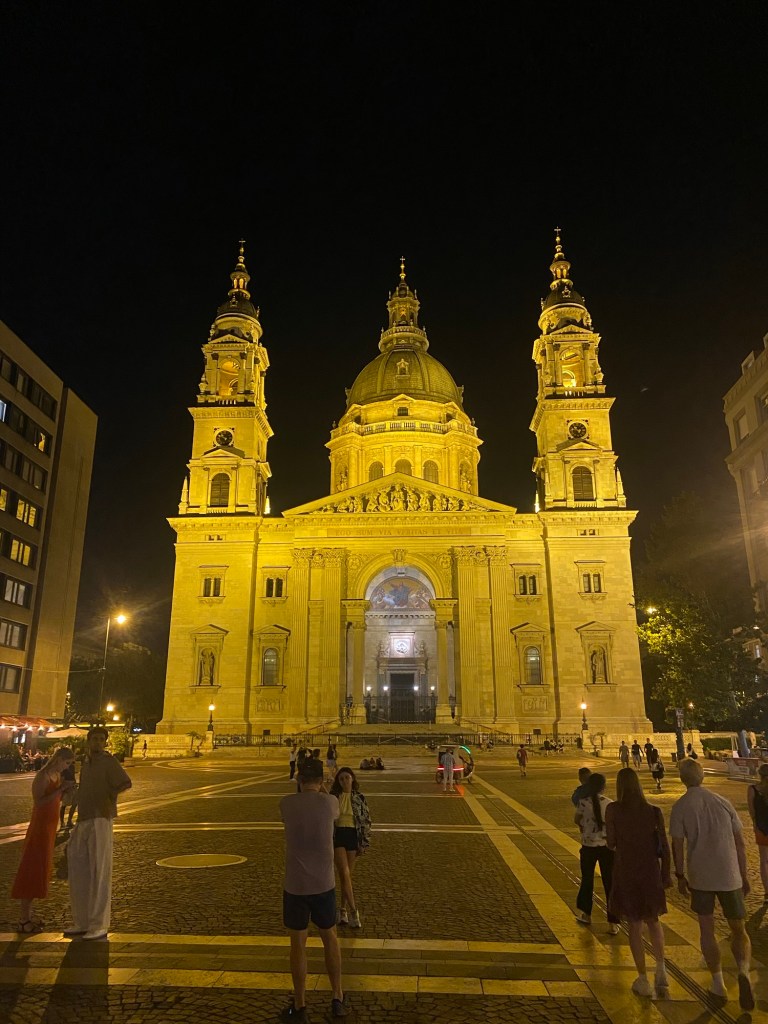
St. Stephen’s Cathedral.

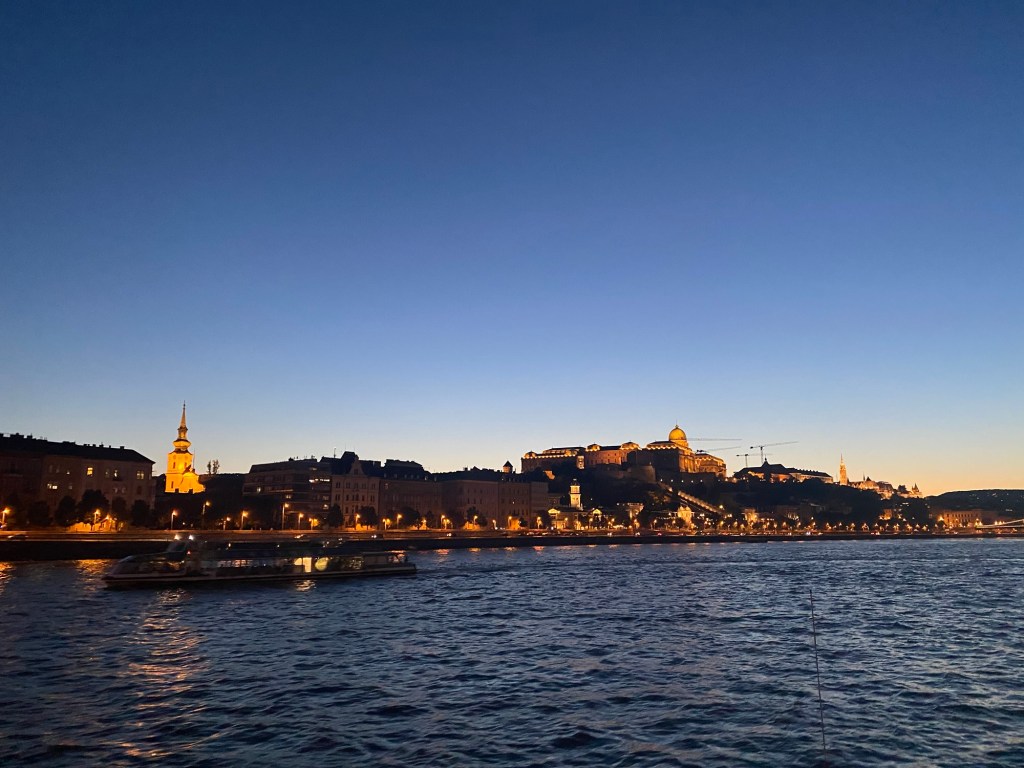
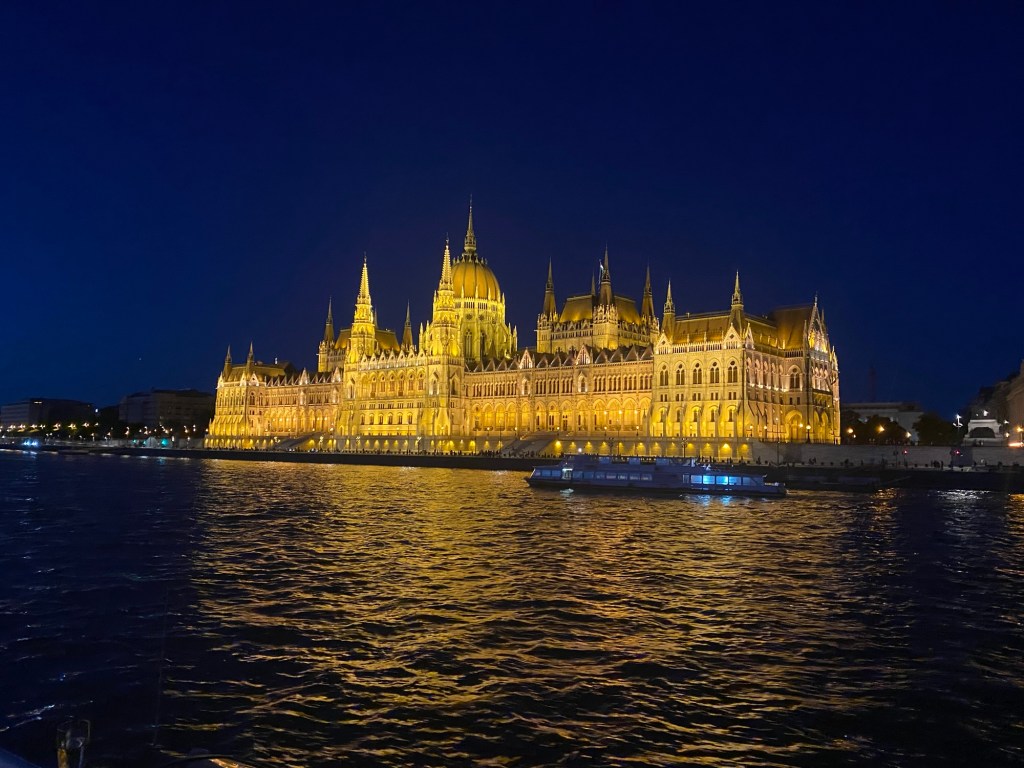
Jenny, my partner, had booked a night cruise at the request of her youngest son. We walked through parts of the Budapest from our AirBnB to the Danube taking in the mix of architecture and art through the central part of Pest. The cruise was perfectly timed to start as the sun was setting and to get the early evening darkness that allowed the iconic buildings of Budapest to start to glow as their lights were turned on. Although difficult to hear some of the pre-recorded information shared on the boat, the visual aspects of the hour-long excursion more than made up for it. We got to pass five of the major bridges of Budapest and see sits from the University on the south end to the Parliament building in the north. I would recommend seeing the city from this vantage.

The Buda side of the river.
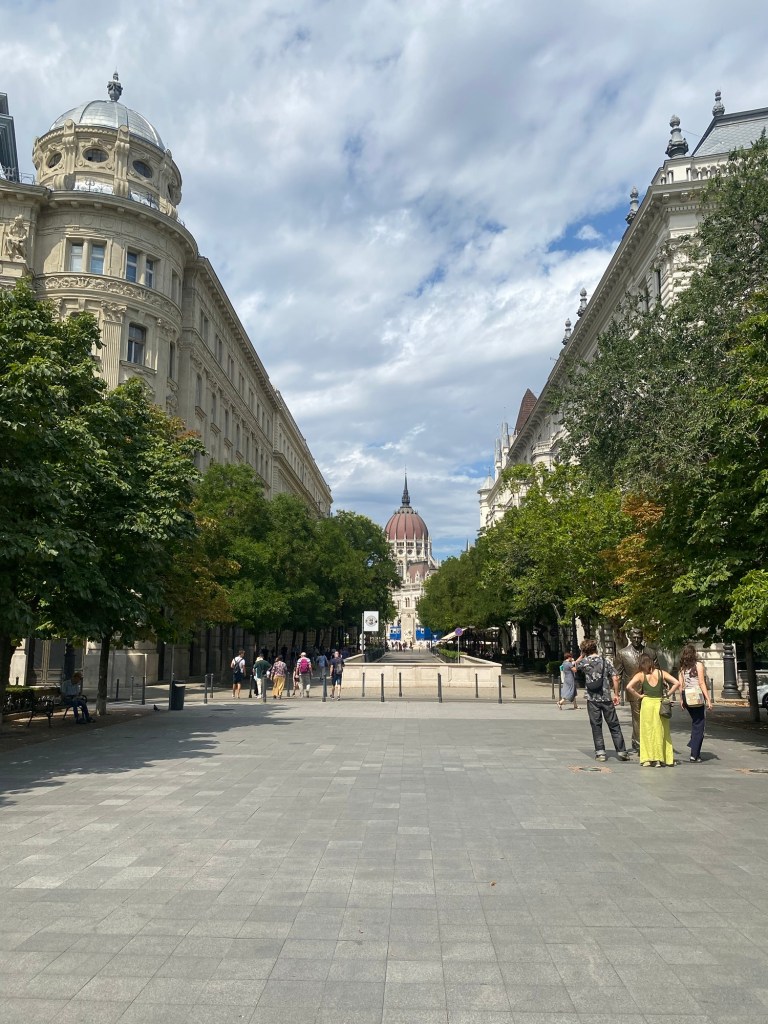
The Hungarian Parliament building.

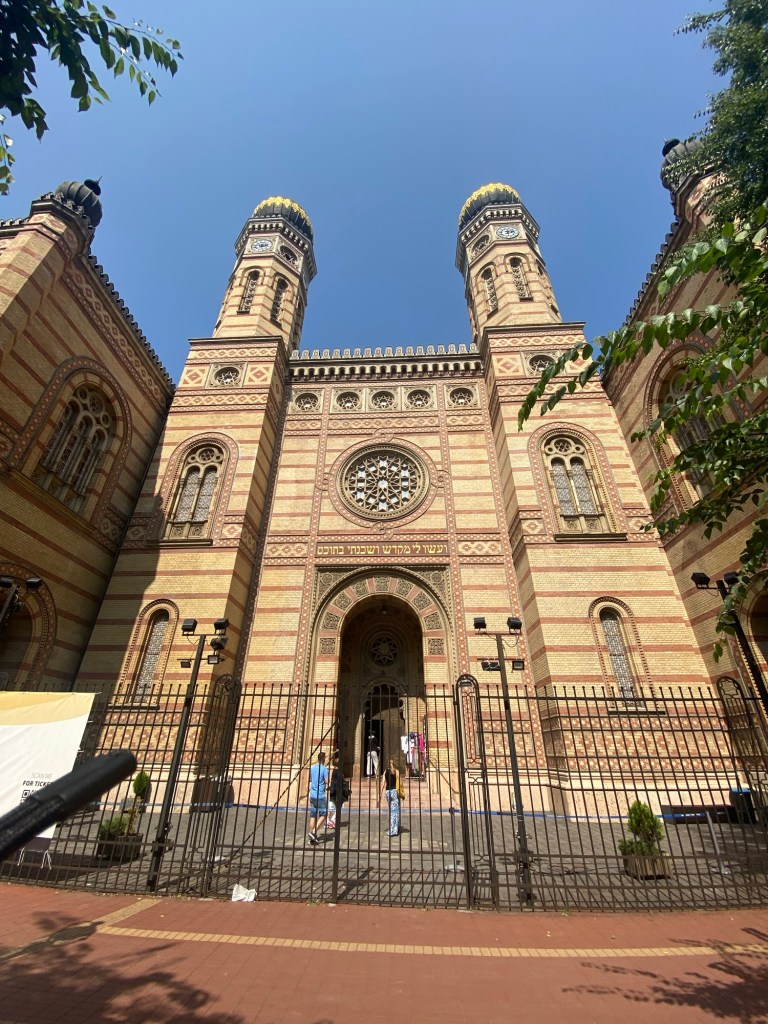
The following day Jenny hired a tour guide to show us a number of sites on the Pest side of the city. We went through the government quarters, learning about historic and modern Hungary. Seeing the unique building and historic sites. The Parliament of Hungary stood out due to its size and gothic design. We stopped for lunch at a pub so I could try a few craft beers (very tasty), before heading into the Jewish quarter of the city. The impact of World War II was strongly felt in Croatia where a late invasion by Germany in 1944 resulted in over 100,000 Jews dying after the ghettoization of a section of Budapest. This section still contained a number of temples, including the second largest Jewish temple in the world. The boundaries of the Jewish ghetto are marked a locations where fences were erected. The horrors of this were in contract to the bohemian nature of the current Jewish quarter, where our guide indicated he had been priced out of living after his college years in this part of the city. This sector was now vibrant with many art shops, cafes, and bars that led to a vibrant night life.

Jewish synagogue in Jewish Quarter of Budapest.

I wish I had more time to explore Budapest and see more of the city. It is definitely on my list of a place to visit again.

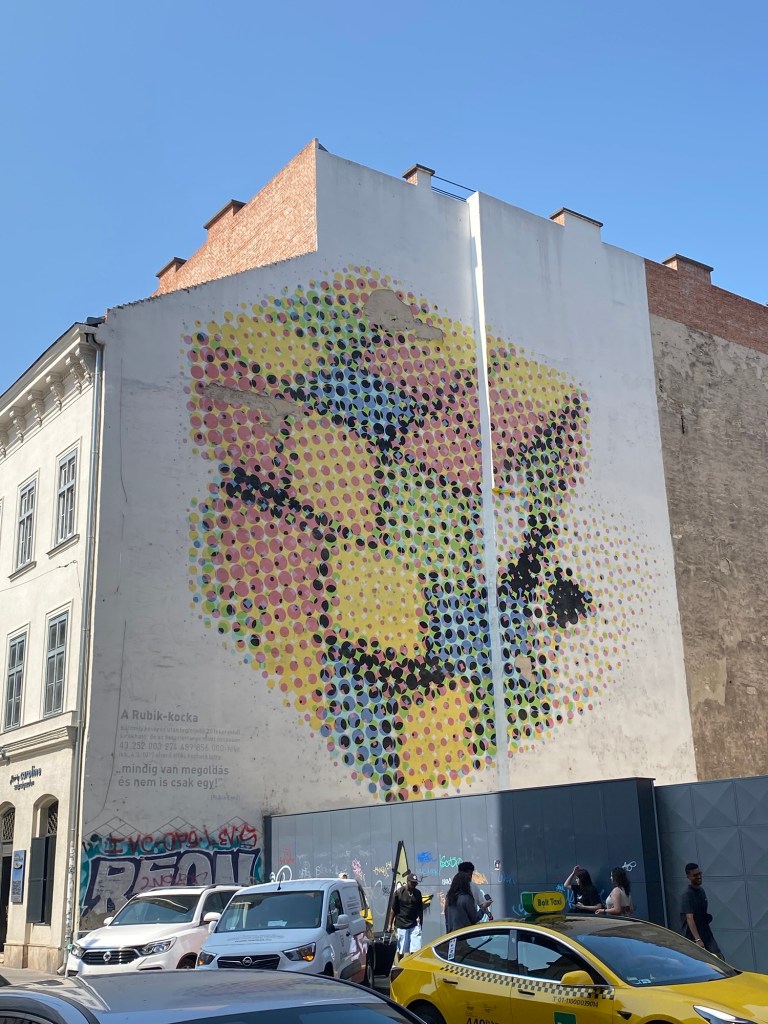
The creator of the Rubic’s Cube was from Hungary and this mural was to celebrate his creation.

Herzegovina 

I had seen that Meet Bosnia provided various day trips with guides to see other parts of Bosnia and Herzegovina. Knowing that I was spending most of my time in the part of the country known formally as Bosnia, I thought it may be good to visit Herzegovina and learn some thing about this other parts of this country. It was a twelve hour bus tour with frequent stops and packed a lot into the day. 

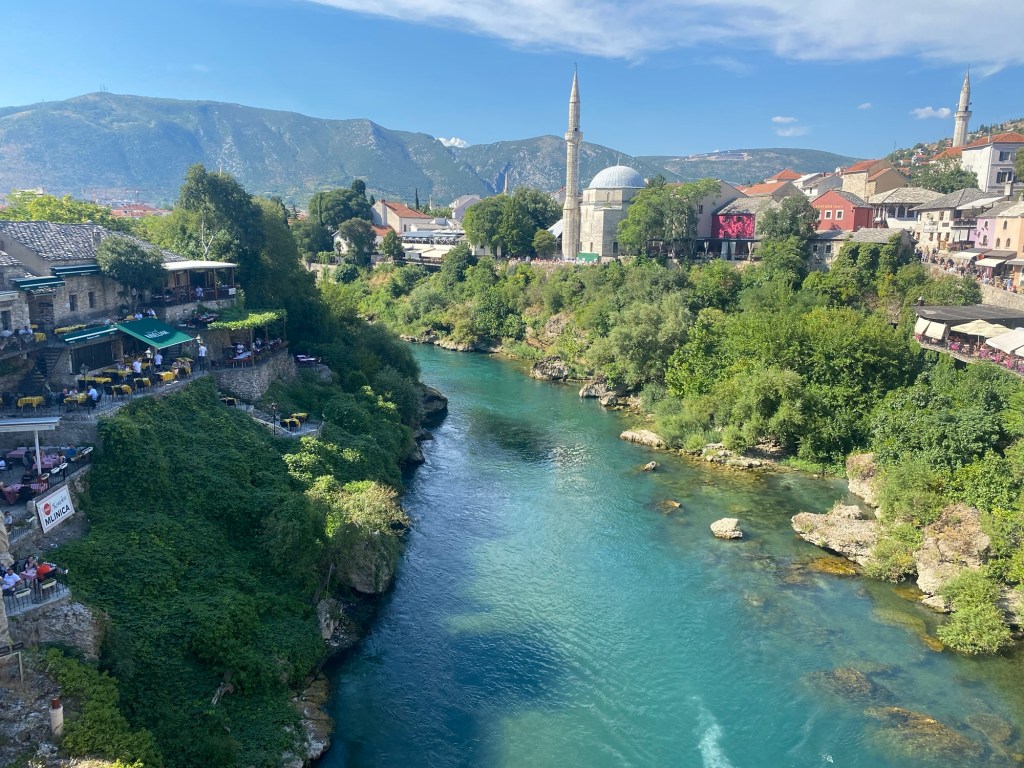
Mostar.

The first thing our guide did was explain that Herzegovina was mostly an administrative division brought on when people in the area were fomenting unrest against the Austria-Hungarian empire. The hope was that by sub-dividing this group  within the Balkans it would prompt less coordinated actions against the monarchy. The division of Bosnia and Herzegovina has continued since then. 

Mostar from Bridge.

There were a few other differences including the higher population of Croats in this part of the country and a warmer, more Mediterranean climate. It definitely felt a bit warmer on this day trip than my days in Sarajevo. 

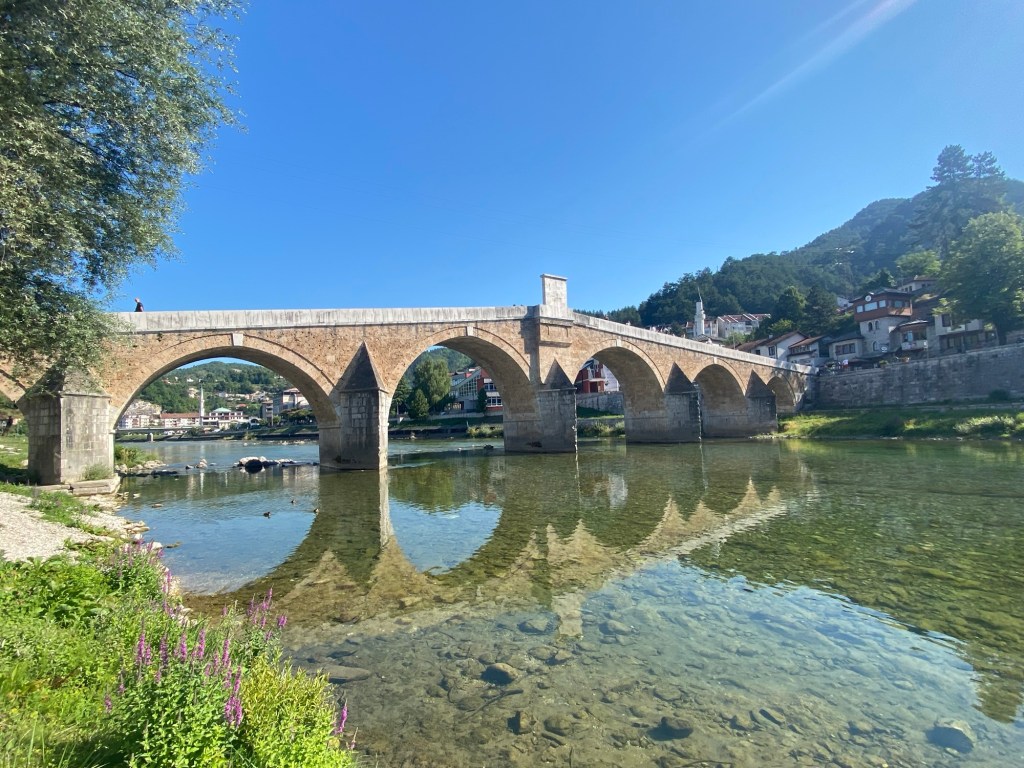
The tour hit a few key stops. The first was at an Ottoman bridge in Potoci. Although damaged both in WWII and in the more recent Bosnia-Serbian War, the bridge with its six arches had been rebuilt on its original pilings. The town had a small old town that you could walk quickly through and was a key location for artisans doing ornate carvings. 

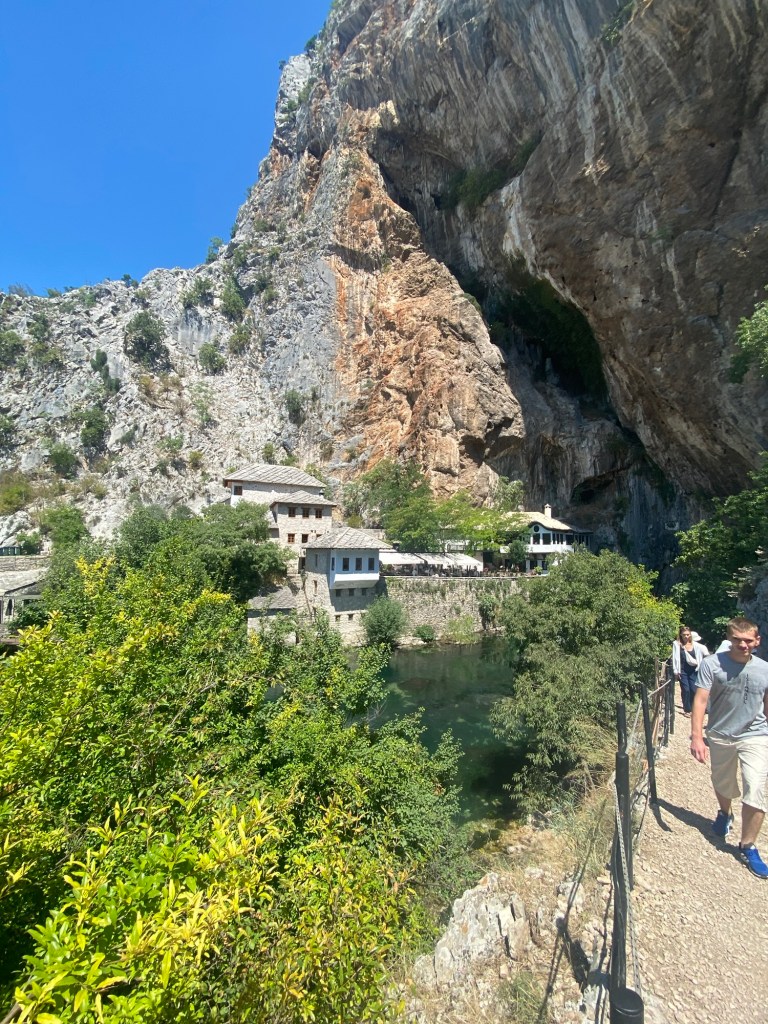
The next stop was a Tekija Dervish Monastery at Blagaj. This monastery was building in the 15th century and was once a centre of this branch of Islam in Bosnia. Overtime the monastery had diminished and was closed with the advent of Communism in Yugoslavia, although they did preserve the site and make it a monastery. Built at the source of a spring that fed a river through Herzegovina, the site has caves that would have served the early monks and remains a peaceful setting. 

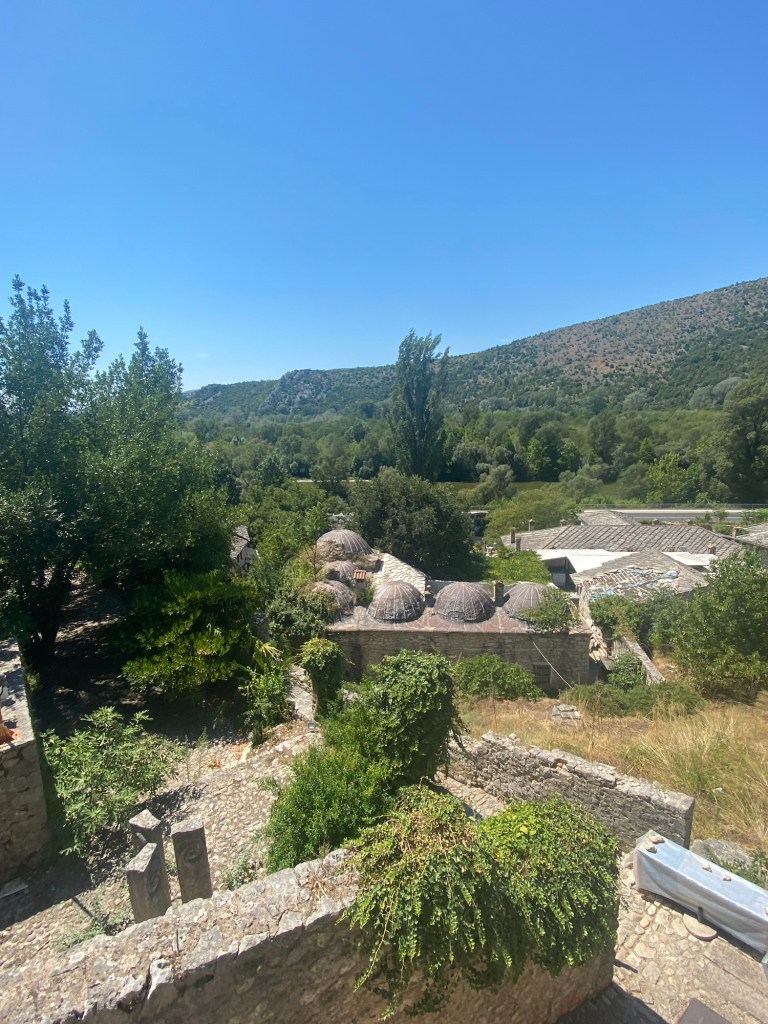
We went a bit up the road from Blagaj to visit an older Ottoman city that is now in a state of some disrepair. At one point this had been a major trade center for the Ottoman with its two fortresses—one military, the other administrative. A mosque, Madrassa, Hannam, and Caravasai building still remain cared for by the dozen or so families that still live in houses among the old buildings. 

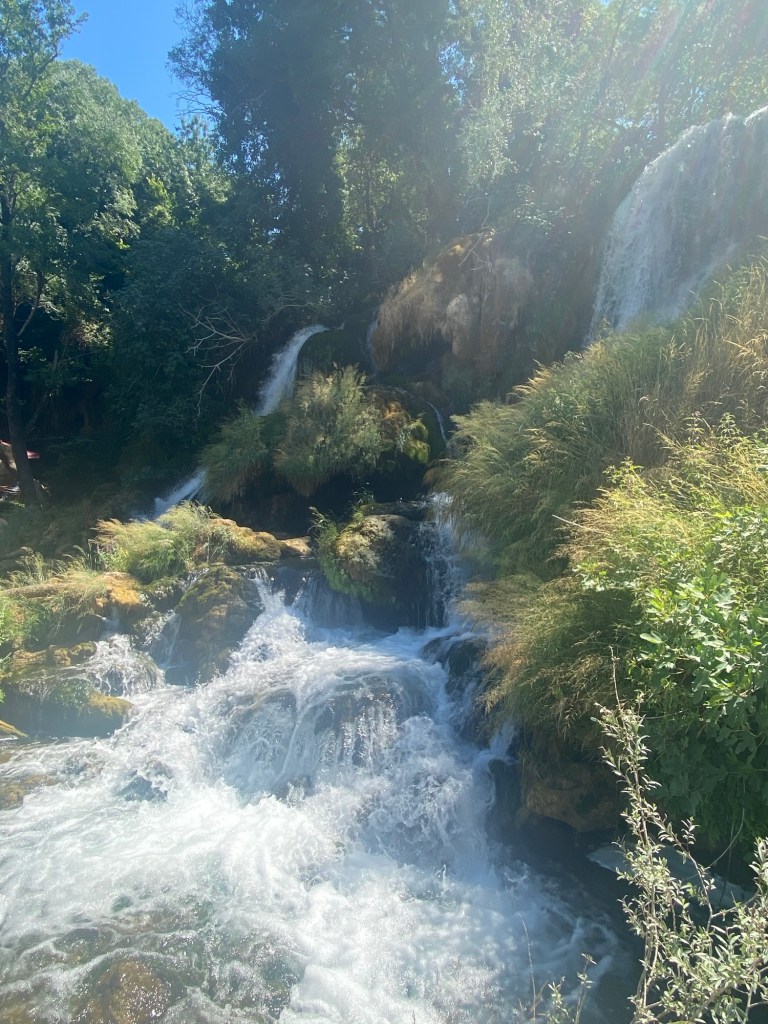
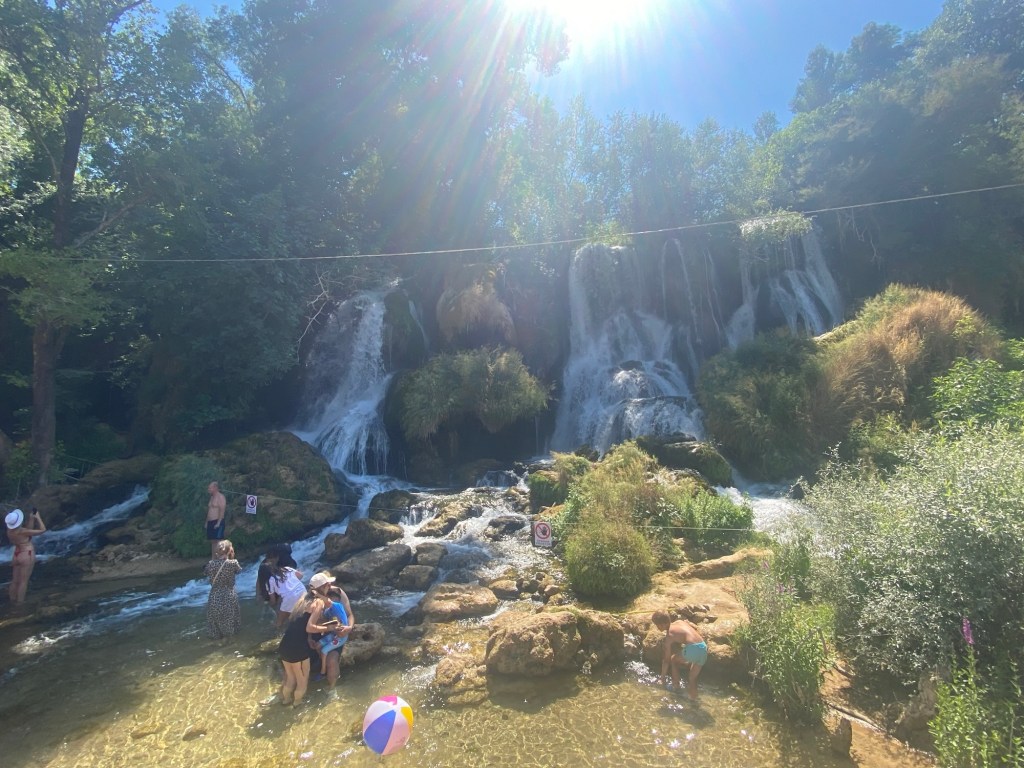
The Kravica Falls was the next stop. A resort time setting—particularly on a warm weekend when people wanted to swim—these Falls were described as being rated multiple times as the most beautiful Falls in Bosnia and Herzegovina. The multiple falls made for a beautiful setting. Finding a spot in the water or not he rocky beach to appreciate them was a bit more difficult. 

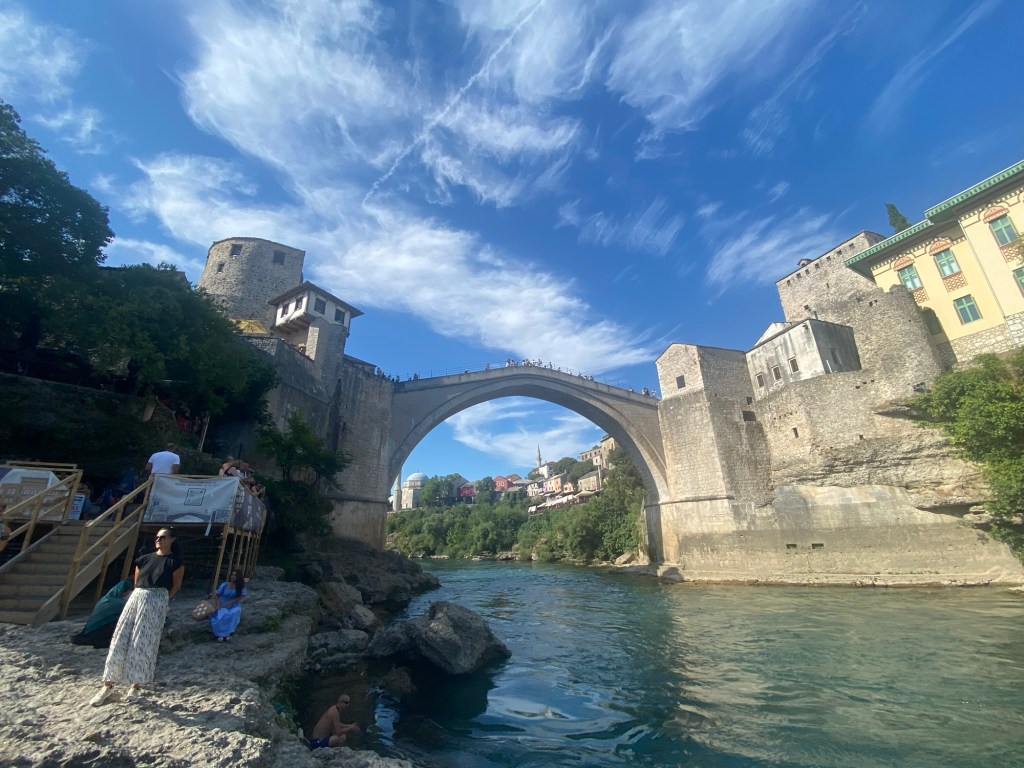
The final stop was in Mostar, the third largest city in Bosnia and Herzegovina. We were brought here to see the stunning visual of the Mostar bridge. This bridge was built in Ottoman days and had stood until the 1990s when the Serbian Army shelled it. The country chose to rebuilt it in the original style and it remains a symbol and main attraction in Mostar. A few narrow shopping and eating streets lead up to the bridge adding to the anticipatory nature of being able to walk over it. Youth still jump off the bridge as part of a tradition of showing your manliness in anticipation of marriage (although the latter part is less the modern focus). The visit was well worth it, although it had a whirlwind feel due to the quick visits to most sites. 

in Sarajevo

As I sit in my bus taking me away from Sarajevo, I am reminiscing about the five days I spent in the capital of Bosnia and Herzegovina. It was a city with a lot of history and a desire to tell its history in a way that I haven’t encountered in my trip through the Balkans. It also seemed that there was a lot of pain just below the service and that old wounds weren’t healed. 

I arrived late on August 30th. I basically got to my hostel, up the hill from the old city, and got settled in. I had booked a tour for the following day and had a desire to check out some of the history museums. On the 31st, I started my education on Sarajevo and Bosnia and Herzegovina. My morning took me to the History museum of Bosnia and Herzegovina, followed by a visit to the National History Museum that was right next door. These two museums allowed me to take in history from pre-Bronze age right through the Siege of Sarajevo. The Siege was a major part of the History Museum, while the National History Museum went back in time and told the story from ancient history, through Greek and Roman rule, Medieval Bosnian monarchs, and the Ottomans rule. Both were interesting. The afternoon tour covered the central old city, particularly focused on the Ottoman rule and the role that Gaza Hursev played in developing the Old City, which can still be seen today with buildings he supported constructing including the Grand Mosque, Madrassah, Caravansai (hotel), and marketplaces. In addition to this was the history of Roman Catholic Croats, Orthodox Serbians, and the Jewish population that came from the Iberian peninsula. Intertwining this older history was the stories of the Battle for Yugoslavia and the Siege of Sarajevo. It was a fascinating couple of hours with the Free Tour. 

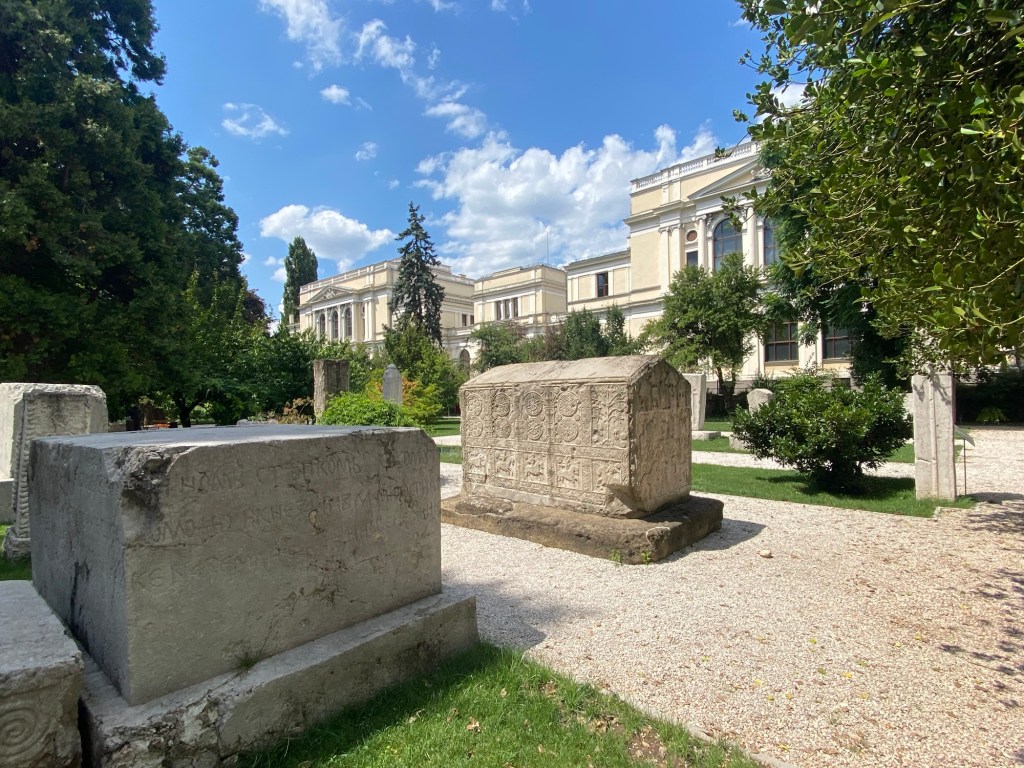
Tomb stones in National Museum Garden

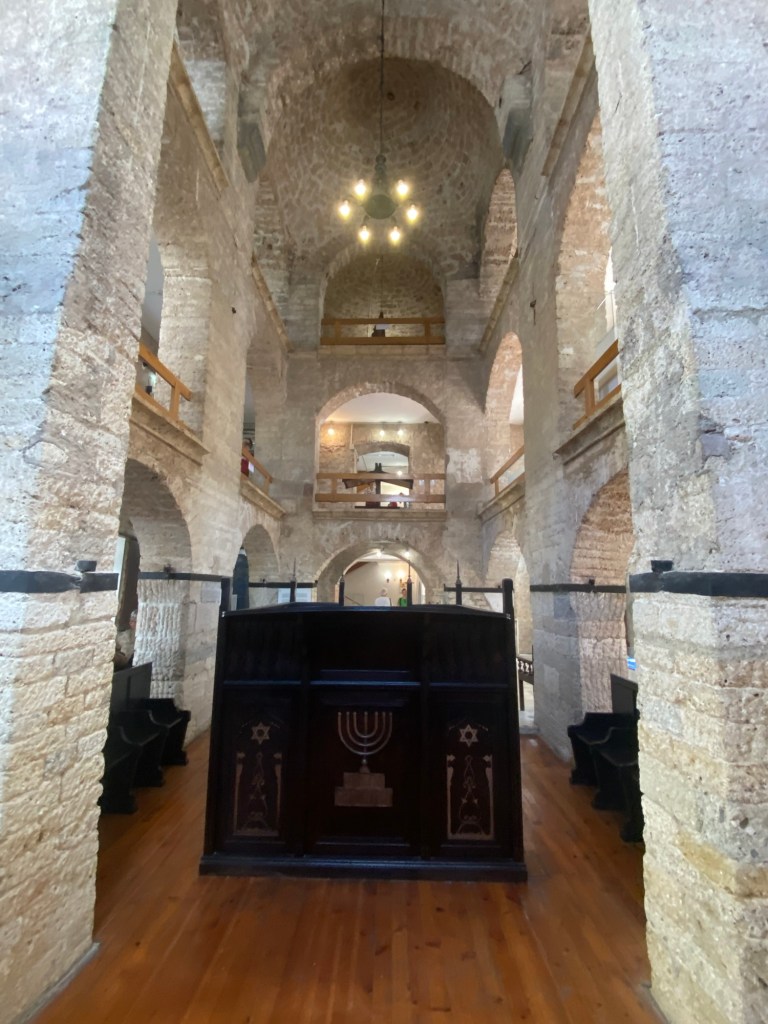
On my second full day, I dug a bit deeper into the more recent history. Stopping at various museums in the central core. The museum of Sarajevo 1878-1918 covered, as the time frame would indicate, the pre-world war one situation in the Austro-Hungarian empire leading to the assassination of Archduke Franz Ferdinand. The museum is conveniently located on the corner where the Assassination took place. A replica of the care that the Archduke was been driven in and the footprints of where Gavrilo Princip took the fateful shots are just outside the doors to this museum along with a plaque commemorating the event (we were told that the plaque had been changes multiple times over the years based on whether people in power were supporters of the archduke or his assassin). From here I visited the Jewish synagogue, now a Jewish Museum, between all the conflict of the past century and a half, a very small Jewish population remains, but the Sarajevo Haggadah remains a special document that was highlighted at this museum along with the history of Jewish people in Bosnia and Herzegovina. The remainder of the day was spent exploring three museums I could get on one ticket: The Museum of the 1980s; the Siege of Sarajevo Museum; and, the Museum of the Crimes against Humanity and Genocide. The woman at the ticket counter in the Crimes against Humanity and Genocide museum, where I was starting, suggested ending the day at the Museum of the 1980s as it was a more positive way to end the day. She wasn’t wrong. The other two museums focussed on the Bosnian-Serbia war—one looking more broadly at the ethnic cleansing behind the Serbian-led actions and the other on the experiences of people living under Siege in Sarajevo during what ended up being the longest modern siege of a major city. Both museums focussed on personal experience and anecdotal evidence of people who had lived through the War and experience the horrors and atrocities. This made it both compelling and overwhelming as almost all available surfaces had either images, items, or quotes from those people who lived (or died) during the war. The sheer brutality was often stated in factual ways that left me feeling drained after almost five hours of reading through the displays in these two museums. The Museum of the 1980s was very different. It took an old apartment and remade it in the image of a typical house in that decade, along with countless explanations of what life was like in the final decade of Yugoslavia. Although generally a very positive look at life—I could see some Bosnia tourists enjoying the memories of things they had in their homes as well—there was the occasional reminder of the surveillance state and challenges with economic uncertainty under the communist state of Yugoslavia. Definitely this was a full day but gave me a deeper insight into the country I was a guest in. 

Inside of Jewish temple/museum.

I will write separately about my third day of visiting Herzegovina on my third day. 

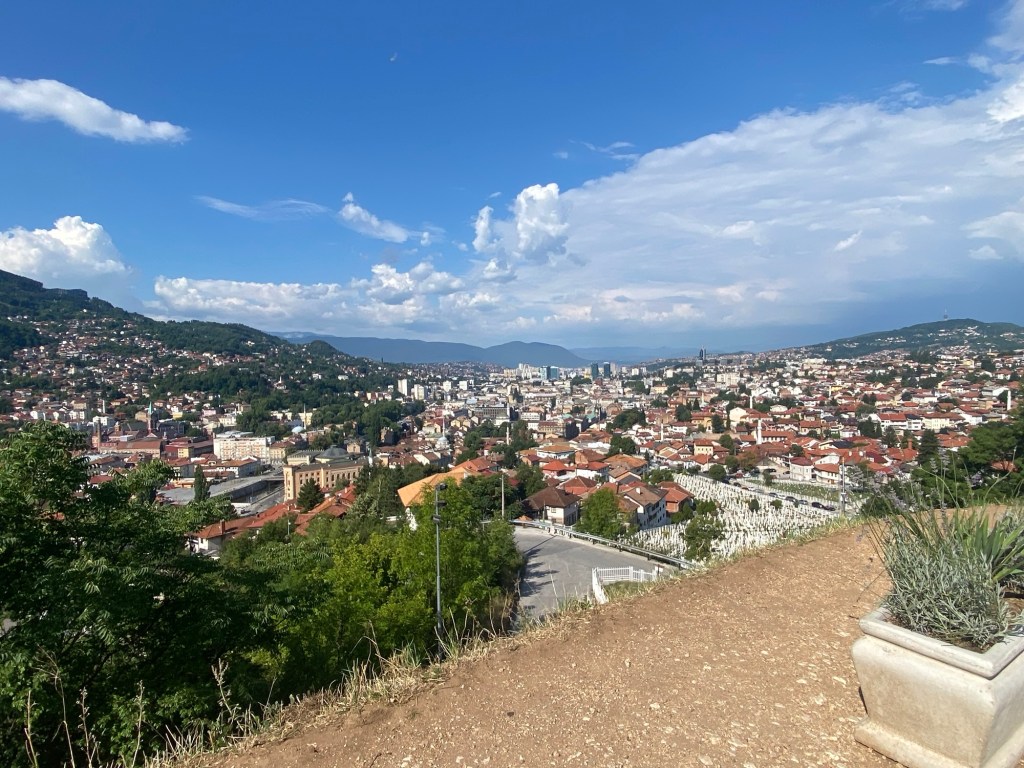
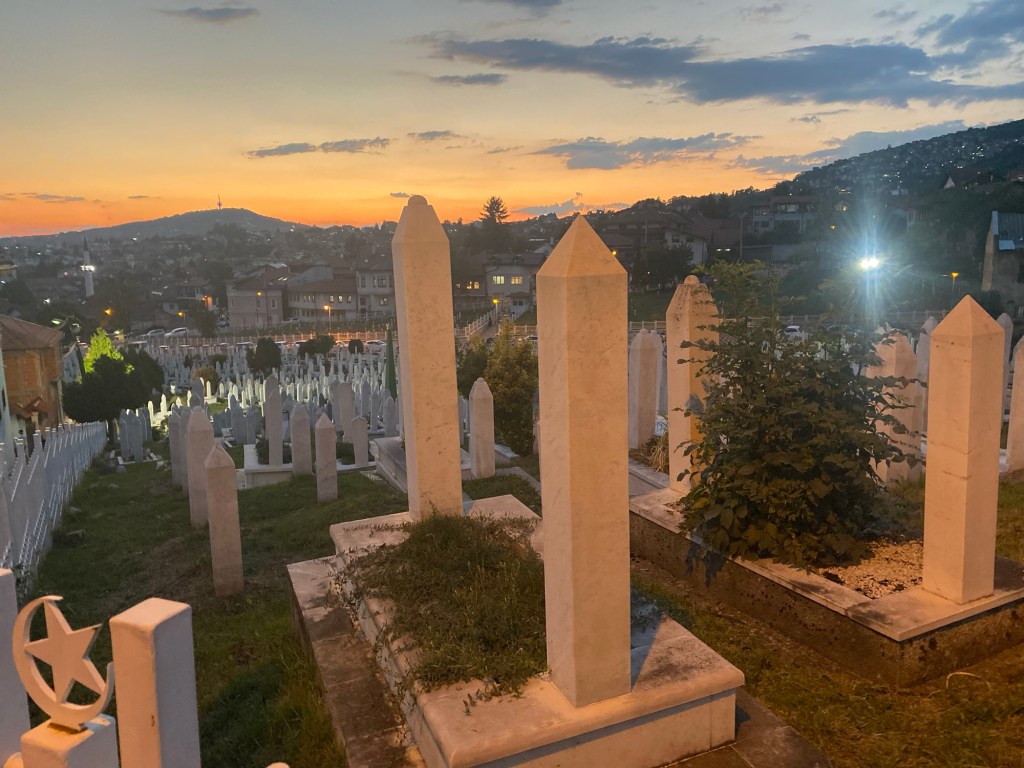
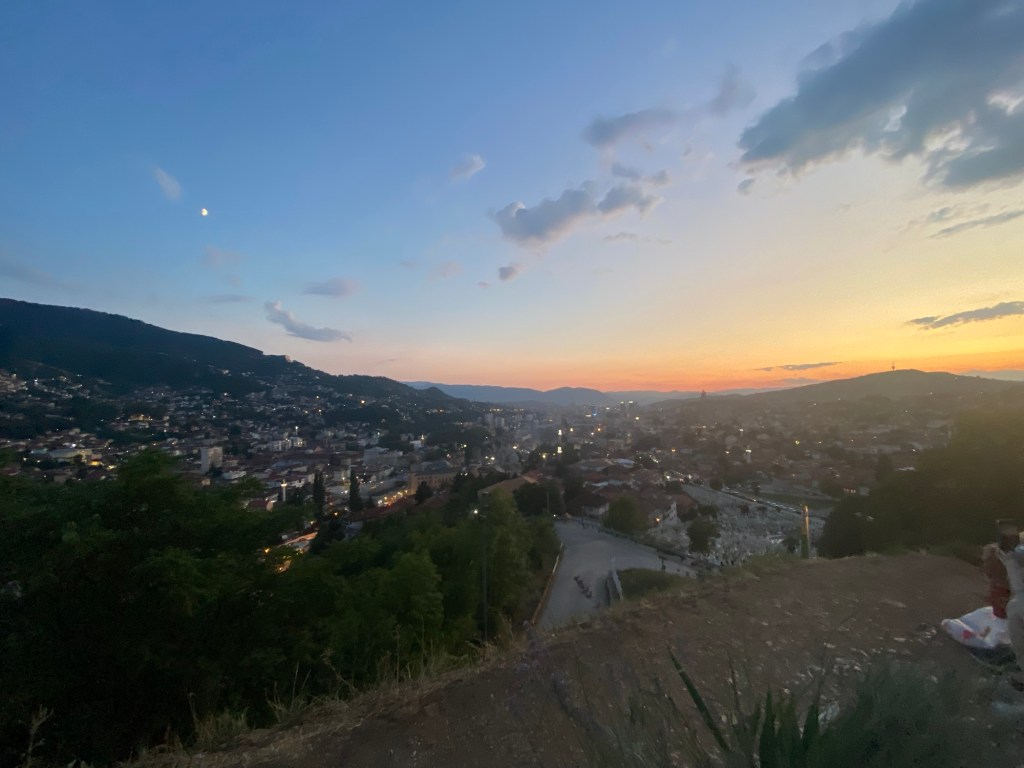
My last full day in Sarajevo, I decided to take in another tour. The Meet Bosnia tour group did excursions and tours inside and out of Sarajevo. After a fellow Canadian on my free tour raved about the “Siege of Sarajevo” tour, I thought it would be good to experience this. This tour basically took you outside of the old city and showed you other parts of the city and shared stories of what was happening and the impacts of it. We were shown Sniper Alley and told about the risks of snipers and other projectiles being shot into the city from the hills around Sarajevo where the Serbian forces had surrounded the city. The emphasis on the thousands of people killed through the war, including 1601 children, was part of the compelling story of the risks. We were shown grave yards that were all victims from the war, including one that was previously a practice soccer pitch that had been repurposed. From the higher vantage of the Yellow Fortress, our guide pointed out key buildings that were demolished including the City Hall/Library, the water plant, the twin towers formally know as the Friendship Towers that were built to symbolize the harmony of the two major ethic groups in true pre-war days, and the maternity and pediatric hopsital, blown up  to maximize terror in this vulnerable population. The tour went out to the Tunnel of Hope near the airport where a group of citizens had dug out a tunnel under the airstrips—controlled by the UN peacekeepers during the war—to allow those in SArajevo to have a link to Bosnia controlled territory on the far side of the airport. This became a life line for those living with limited resources within the city. It was interesting to wall through the replica tunnel and get a sense of what it may have been like for the hundreds of people forced to use this route. The final site was to go to Trebevic Mountain, a site of the 1984 Olympic bobsled track, and an example of how Serbians were using the high ground to enforce the siege and  attack the citizen of Sarajevo. All in all it was a compelling story about the experience and impacts of the war on Sarajevo. 

View of Sarajevo from yellow fort.

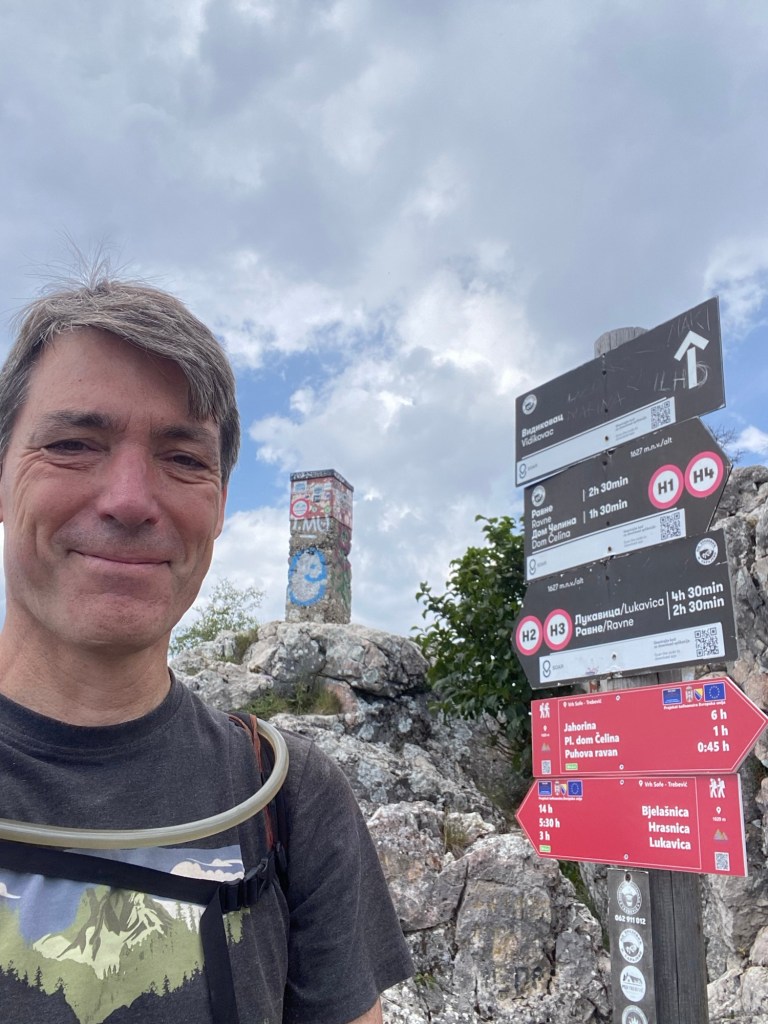
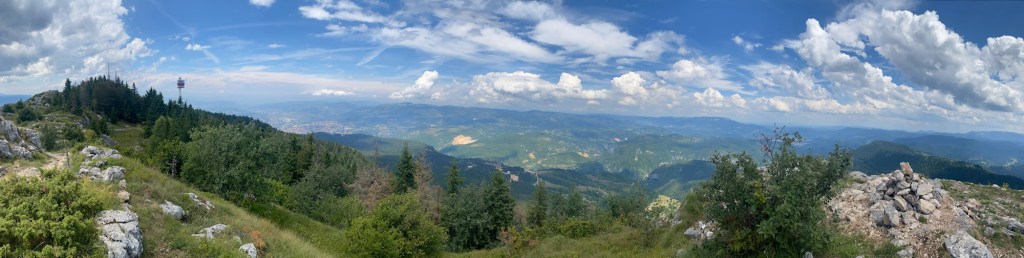
I took advantage of being on Trebevic Mountain to explore a bit further. Hiking and biking trails up the mountain allow you to get the pinnacle of Trebevic and see an 180 degree panoramic view of Sarajevo and the surrounding valleys. A steep and steady climb, it was well worth the reward. I then headed back down into Sarajevo on a route that left me at Austria Bridge for a final night to enjoy the hospitality of the city. 

Exploring Durmitor National Park

In my preparation for my trip I had looked a few places to go hiking and to explore the nature in the Balkans. In Montenegro, Durmitor National Park was a destination that came up multiple times as I worked through where I could go. It did not disappoint. 

In looking at HostelWorld I came across the Hiker’s Den Hostel in Zabljak, the town on the edge of Durmitor National Park. The Hiker’s Den, as its name suggests, is a hostel focussed on supporting outdoor adventurers who come to Zabljak to see the National Park. In addition to the usual hostel accommodations and cooking facilities, the owners are passionate about hiking and provide detailed information on what to do, access to equipment if people need this, and ensure that they have a good sense of what people are doing in case their is any difficulty in their adventures. 

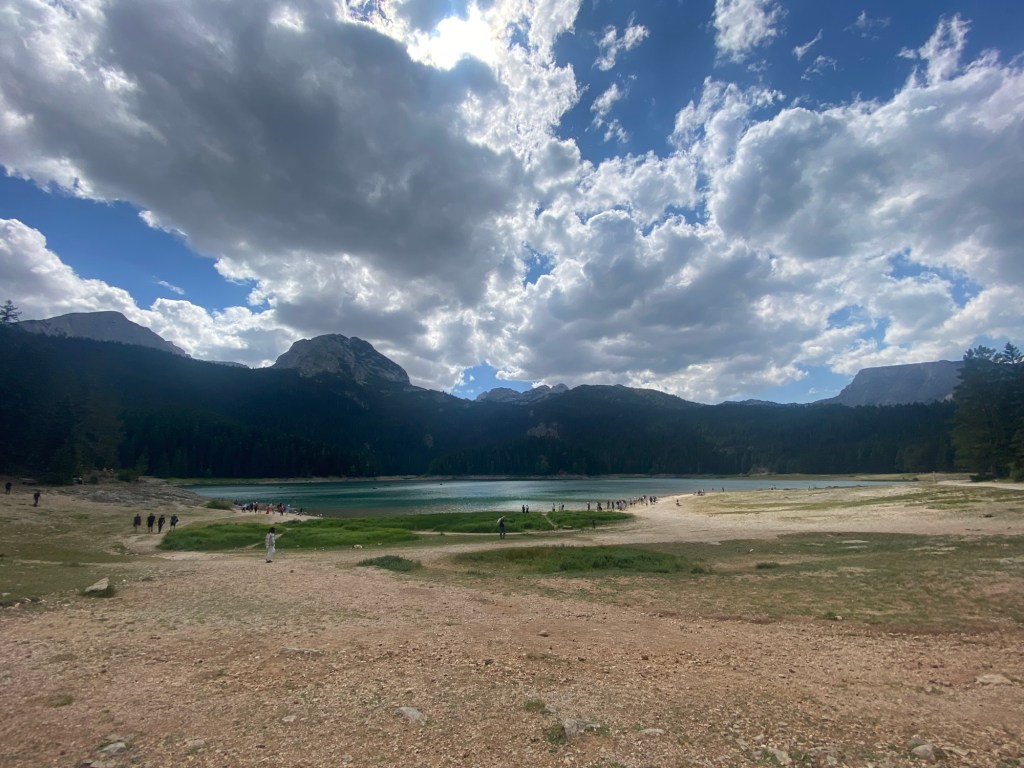
Black Lake

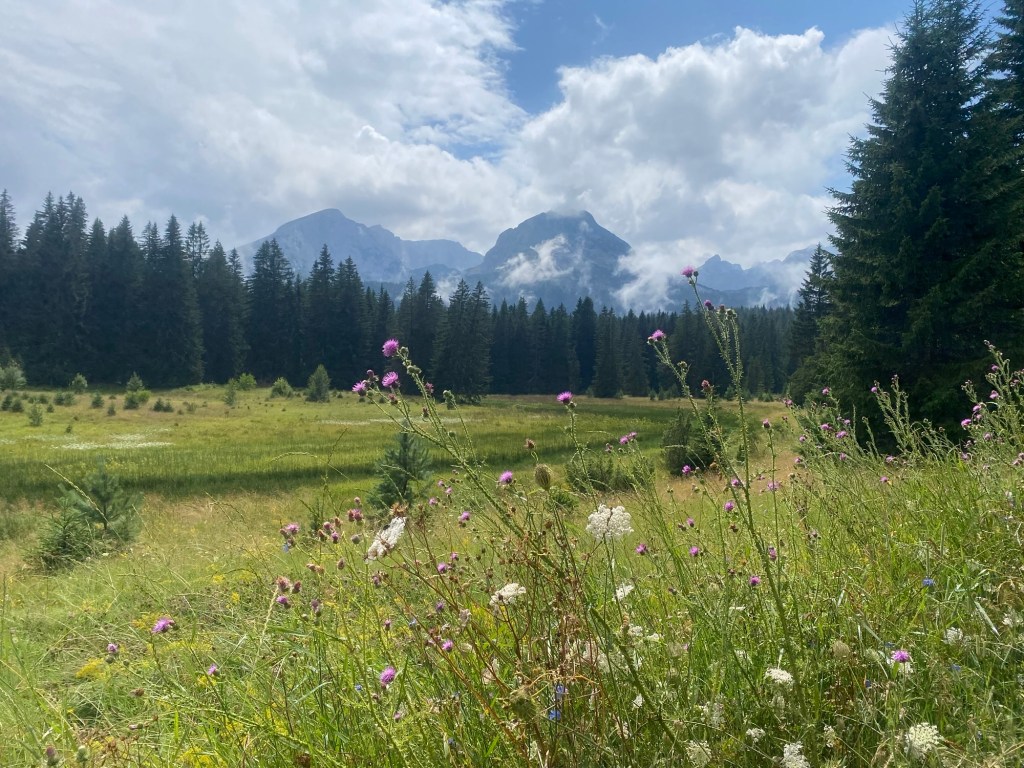
Zabljak felt like a classic mountain town. Small but with lots of companies to support various outdoor pursuits and willing to help coordinate activities. And a number of small shops selling items related to Durmitor or Montenegro for the tourist crowd. A number of resorts and rental properties could be seen in the valleys around Zabljak and lots of building was occurring. It felt a bit like the Canmore, Alberta, that I remember from my youth. 

I spent three nights at the Hiker’s Den, which allowed a fair bit of time to explore what Durmitor had to offer. The weather was not overly cooperative as the last couple days were wet and thus put the damper on outdoor pursuits. I debated staying longer, but the poor weather was going to continue for a couple days which meant I missed the opportunity to hike to the highest peak in Montenegro, Bobotov Kuk. Despite this, I was able to see and do a lot. 

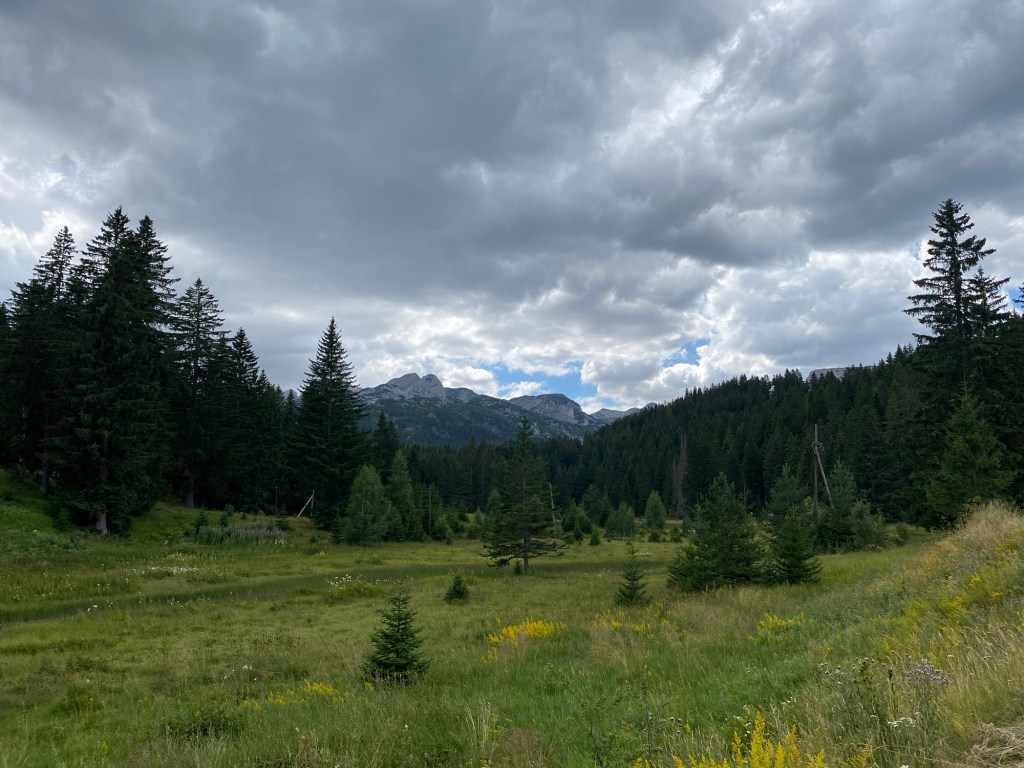
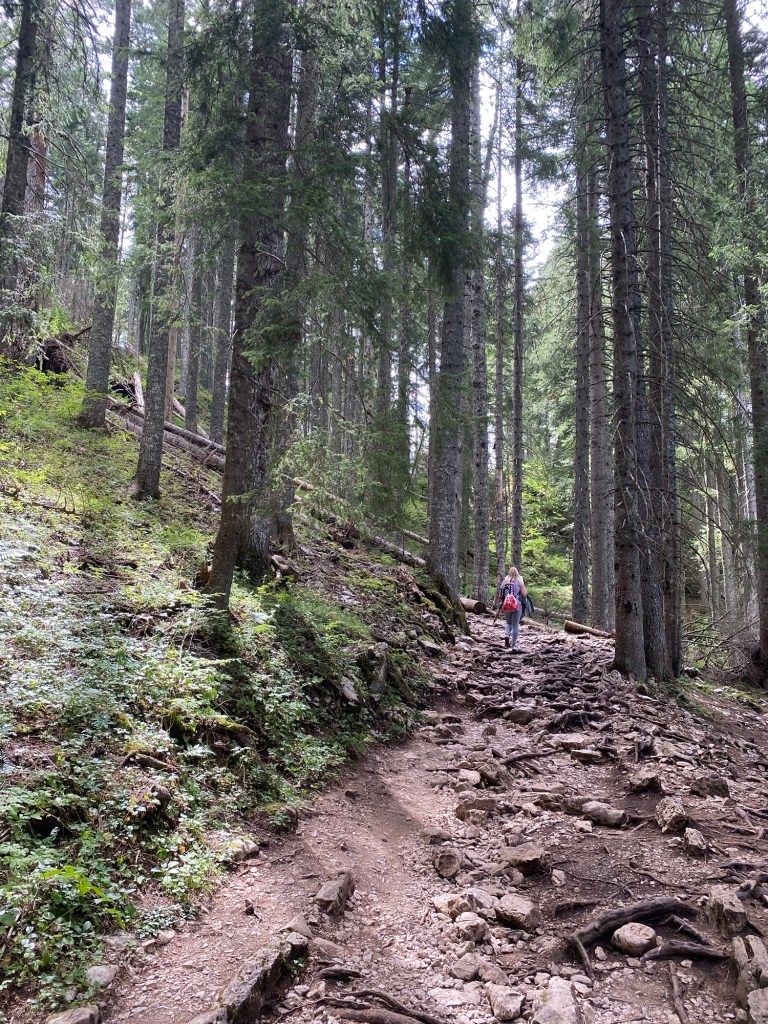
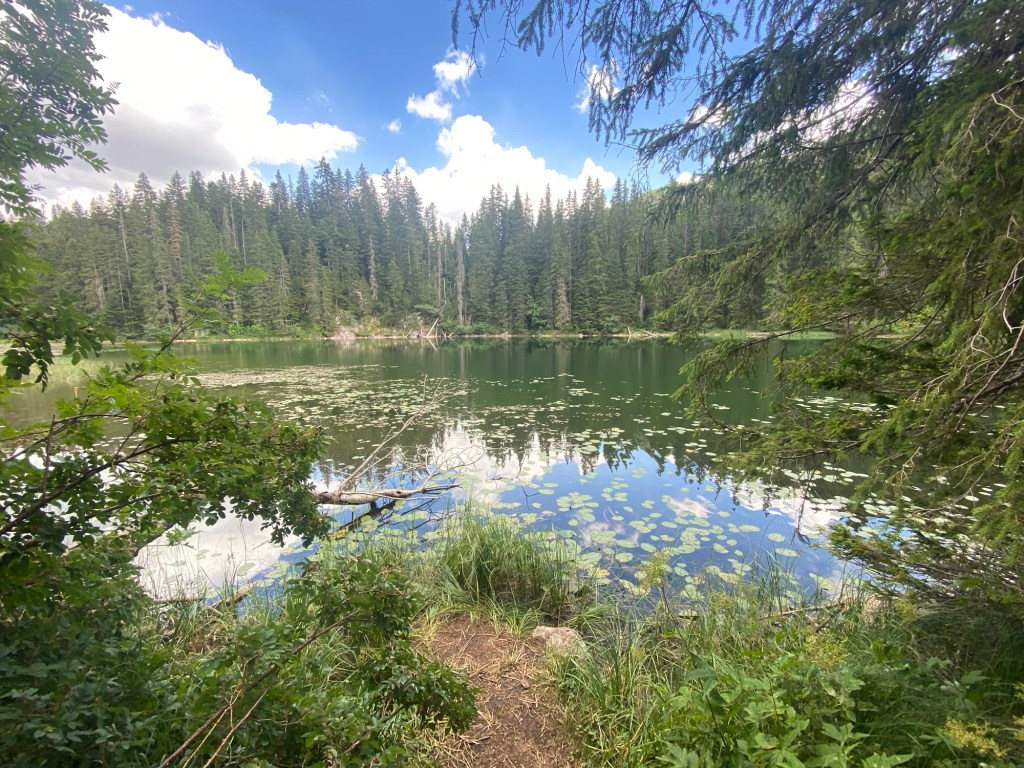
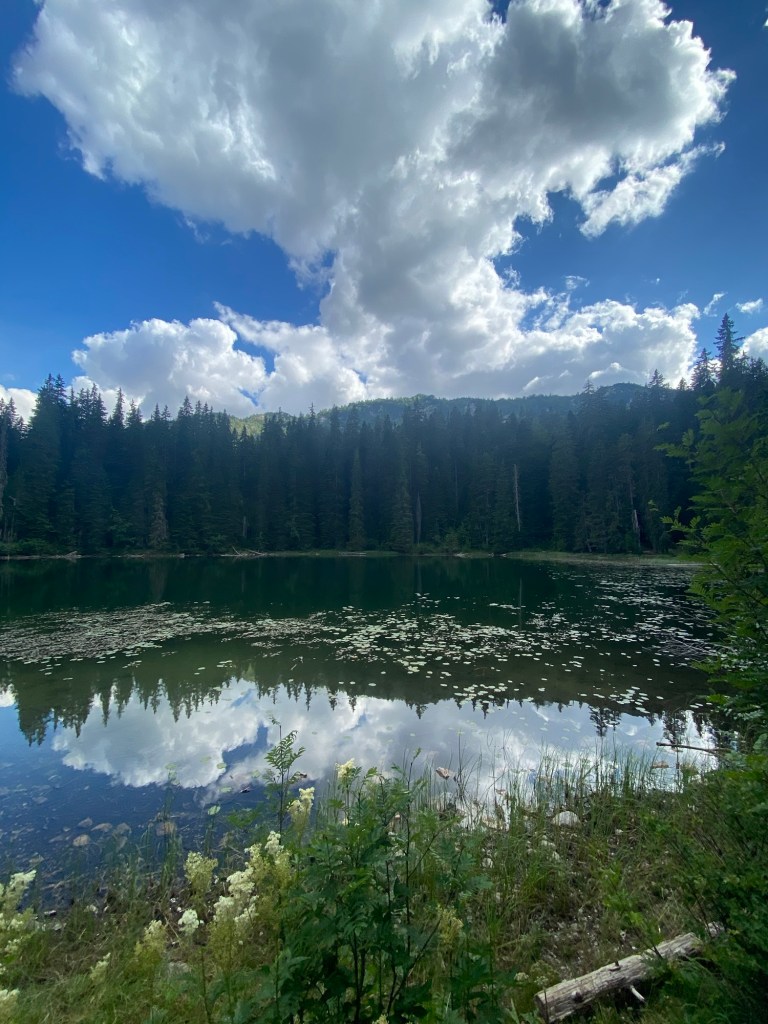
I arrived Sunday just after noon and was encouraged by the hostel owners to do a shorter, “three to four hour”, hike around the three lakes. I wondered down from the hostel through Zabljak’s Main Street that led, after just over two kilometres, to the gates of Durmitor National Park. Another kilometre on a paved walkway, the Black Lakes revealed themselves. This lake is two lakes connected by a small channel. A around the two allowed me to see the mountain lakes with their azure colouring from various angles. Despite a sign saying the back part of this path was “dangerous”, the number of families with small children navigating the rocky and rooted path belied the level of risk. After circumnavigating the first lake, I headed further into the path on a well worn trail that connected with an old road that led to the second of the three lakes, Zminje Lake. This was a small serene lake with some of the Durmitor mountains towering behind it, making for an idyllic setting. From there a return down the path and a turn just north of the Black Lakes led to Barno Lake, a swampy smaller lake on a lower area of land. It was a nice easy hike that was around five kilometres. A good way to start the exploration of Durmitor National Park. 

Zminje Lake

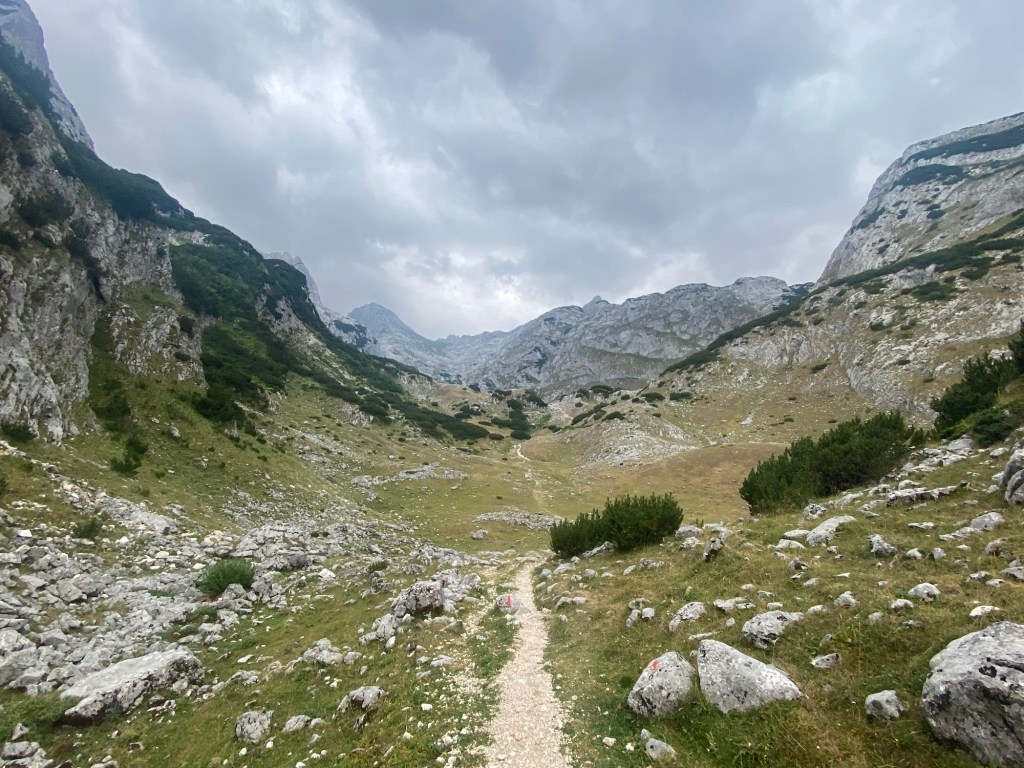
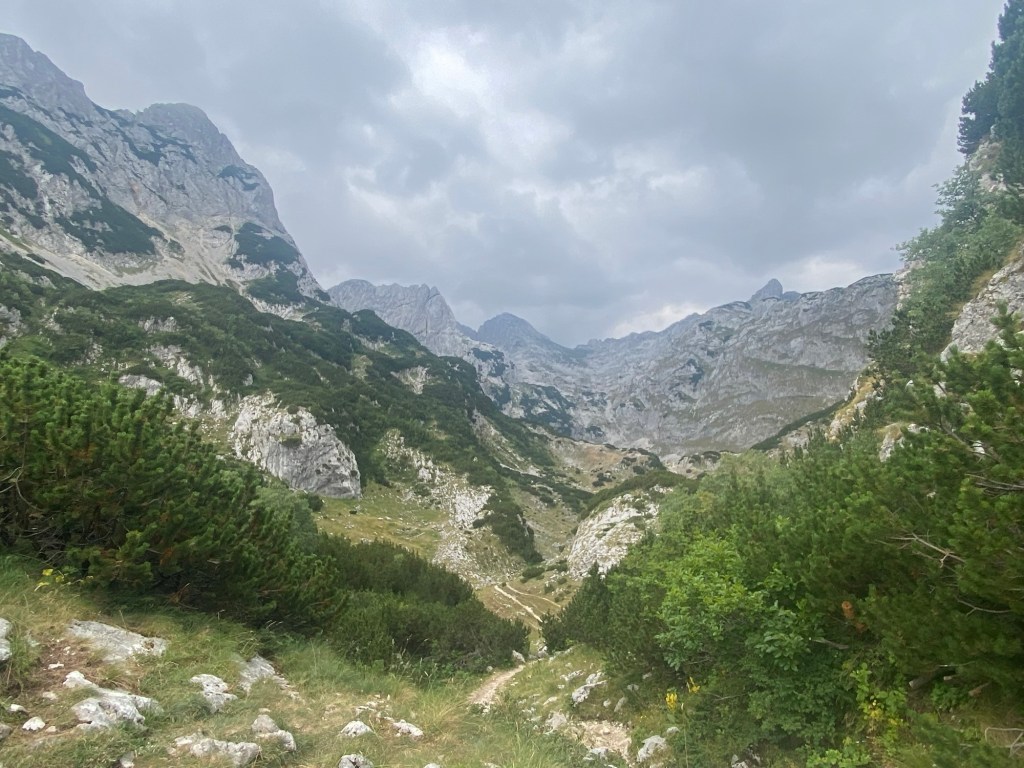
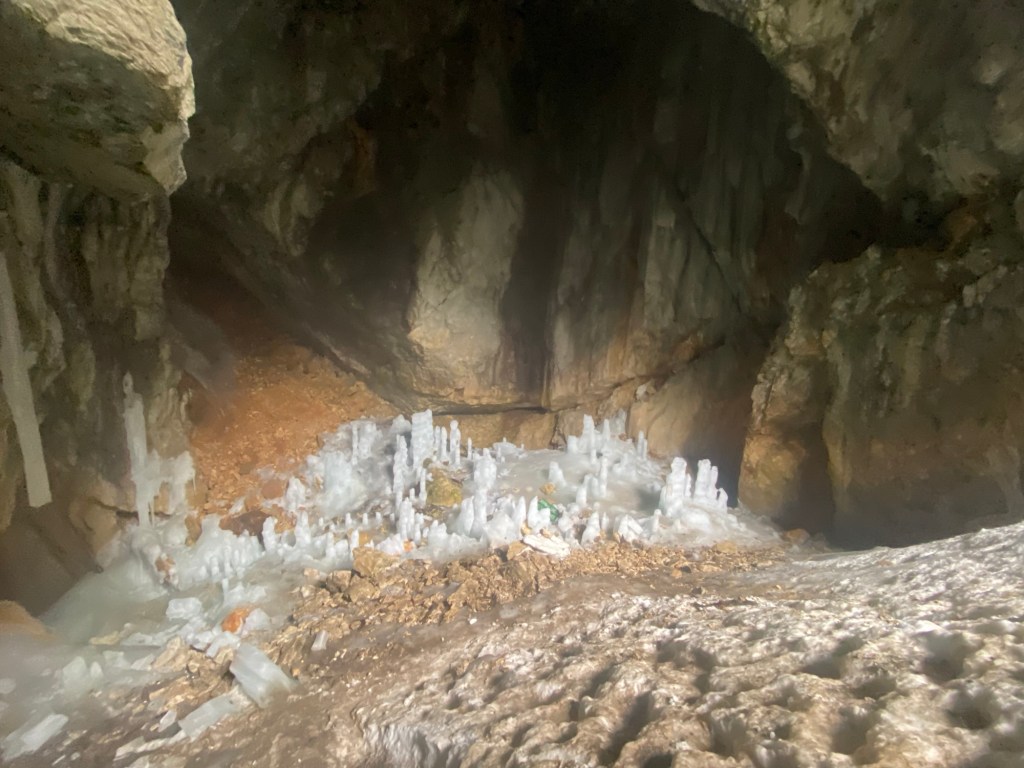
On the second day I was encouraged to hike to the Ice Cave. Said to be an 8-10 hour hike from the hostel to the return. For a few people at the hostel this was their favourite hike they had done whihc sold me on taking it on next. It was a great way to get deep into the Durmitor mountains as the path had a loop that took you over a few passes and down through a number of mountain valleys. It started out past the north end of the Black Lakes and curved south to where the trail split at the start of the circular trail. Most of the first hour was spent in forested areas before, after the trail split, you were largely past the tree line scrambling on the rocky terrain. The trail had a few steeper sections as you went up and down, but revealed beautiful vista’s of the various peaks of the Durmitor range despite the low hanging cloud. In one of the valleys I passed a shepherd with his flock of sheep and a couple sheepdogs. This added to the scenic adventure of walking this path. As I climbed to around the 2000 metre mark after one long climb, I got to a junction where you could keep going to Bobotov Kul, or turn to the ice cave. I took the right hand path across the face of a mountain that climbed towards the ice cave. About 25 minutes on, i got to the cave opening. It was a deep cavernous cave that had a sixty degree decent to where you could see ice in what looked like stalagmites at the bottom about fifty metres down. I climbed about two thirds of the way down before feeling like the slippery ice and my being relatively alone at the cave—I had seen a couple other climbers coming up the other side of the path, but they weren’t up to the cave yet—made me cautious about going all the way down. Despite this I got to see how the water dripping from the cave roof was creating this ice stalagmites at the base of the cave. It made for an interesting and unusual image. After climbing out of the cave, I started the return trip. The north side of the circular route was very steep and felt a bit more tenuous to climb than the path coming out. I descended fairly rapidly for the first hour before I got into a more treed area. The path from there wound in and out of forested and rocky sections through some overgrown parts where I had to squeeze between branches. About half way back the rain started coming down making for a fairly wet adventure. I was glad i wasn’t on the steeper sections with this downpour. Despite the rain, it was a very enjoyable adventure. The sixteen kilometre hike took me just under eight hours to complete. 
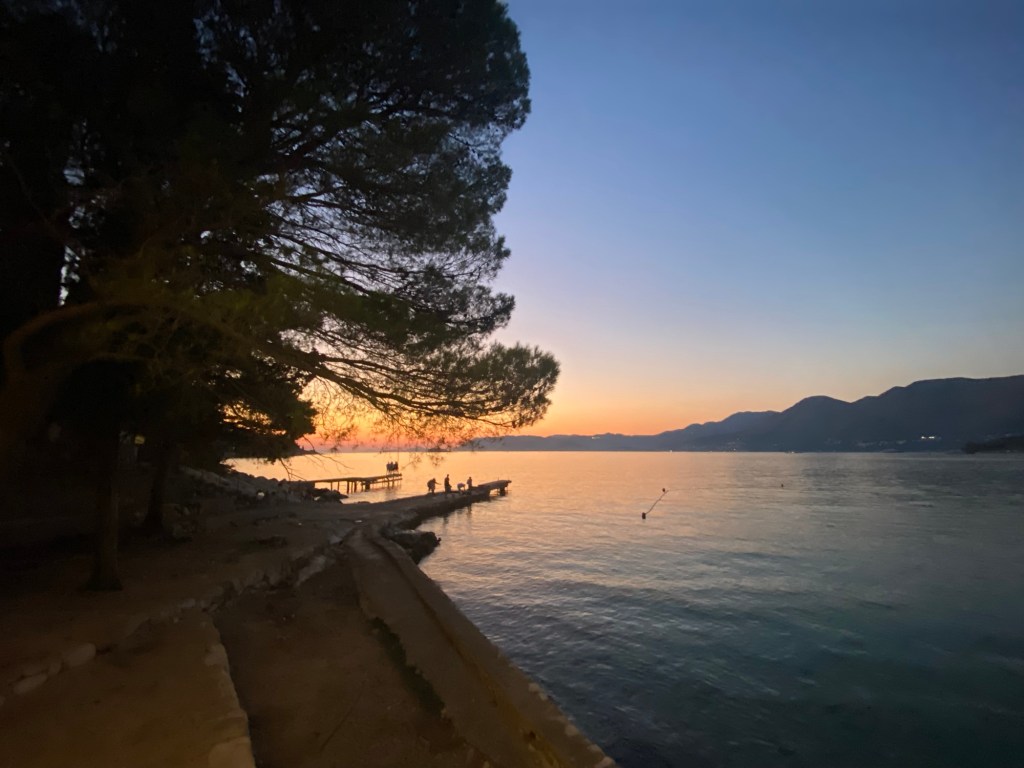
On the path to the ice cave.
From inside the ice cave.

The rain continued into day three making hiking seem less desirable. The hosts at the hostel suggested it was likely to start clearing a bit after 1000. On my arrival they had told me about a few places you could cycle to and do some exploration. They had three different locations with 42 kilometres of biking that were suggested. I knew my fitness on a bike would not allow me to complete all of this, but thought I would take on the cycle and short hike to see the Tara Canyon, the deepest gorge in Montenegro. Despite having the direction in my GPS, I missed one of my initial turners and, then in trying to correct through a cross country route, I likely added six kilometres onto what was supposed to be around an eighteen kilometre biking return journey. That will teach me not to look at the GPS more frequently. I eventually did get to the gates of the park at Tara Canyon. From there it was around a two kilometre hike up a gradual slope to a look out point. On my way into the park, I had cycled through some fog and was curious to see how this would impact the visuals. The hostel hosts had said that typically the clouds lift through the day and that I may need to give it some time. unfortunately, as I approached the lookout over the Tara Canyon, a wall of white cloud filled the gorge.  I sat to eat my lunch and read a book with the hope that some time would allow for the cloud cover to lift. Over the better part of the next hour, i saw glimpses of the Canyon as the clouds moved across its face, but the general view remained largely shrouded in thick fog. Despite only getting the partial view of this canyon, i was glad to have got out to see it. I made my way back with some light rain and a mostly downhill return trip. I celebrated my adventures with a pistachio crepe at one of the local restaurants before relaxing from the previous three days of adventures as the rain came on in earnest through the afternoon. 

Reflection of Zminje Lake.

The Capitals of Montenegro

I have spent the past couple days exploring Montenegro’s current and former capital cities of Podgorica and Cetinje. I was surprised by how much of the National historical items were in the former capital rather than Podgorica. At the suggestion of the hostel owner at Q hostel where I was staying in Podgorica, I was encouraged to visit Cetinje on a day trip from the capital if I wanted to learn more about history. 

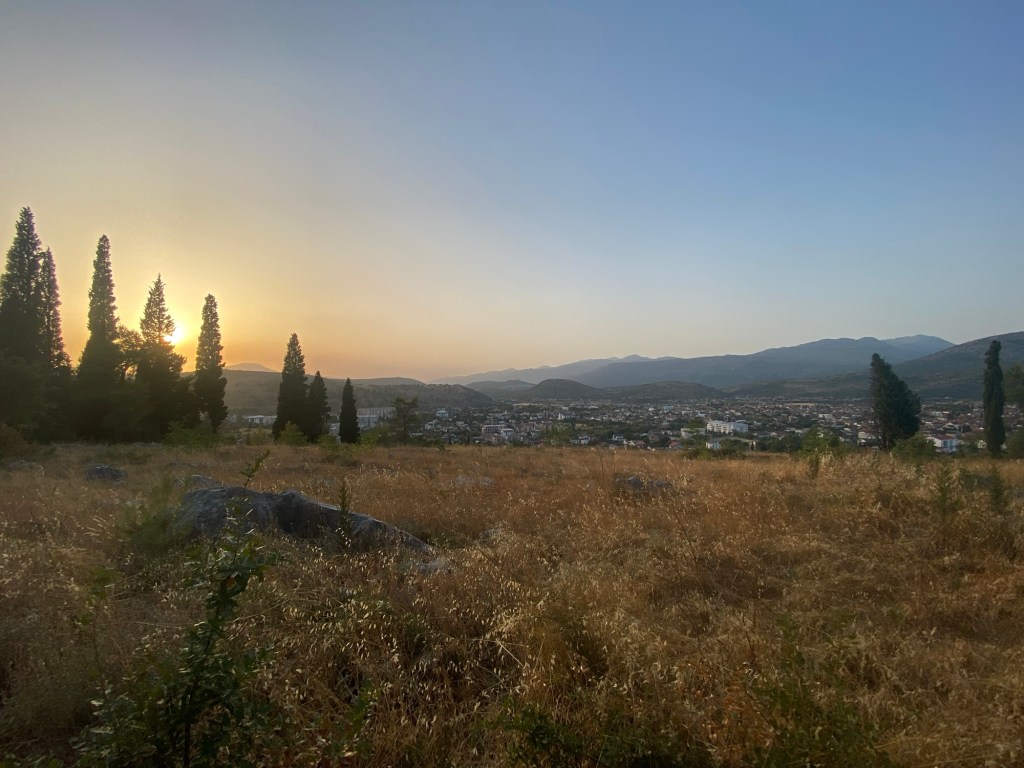
Podgorica from Gorica hill.

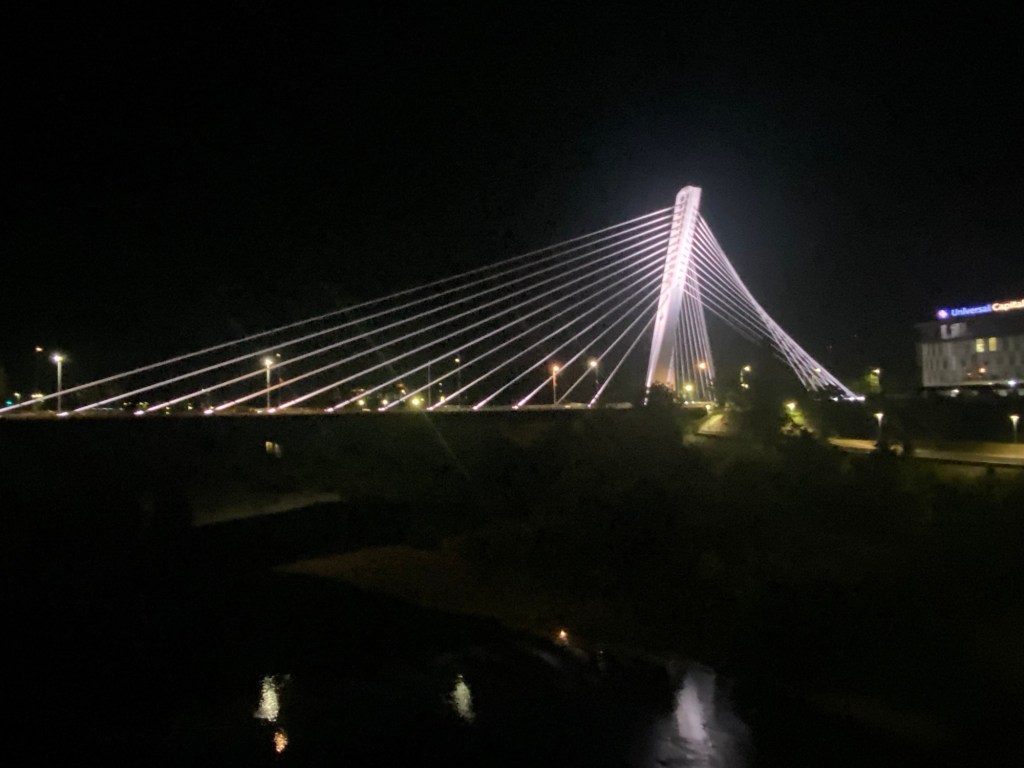
Podgorica is a bustling capital of one of the smaller countries in the Balkans. I was told that the “old city” was actually relatively new following the destruction of buildings through various Balkan and international conflicts over the past century. The country is very mountainous and the capital is on a relatively flat area of the country next to the Musis River that cuts through the heart of Podgorica. The Gorica Hill has been made into an urban park but serves as a high point that locals and visitors can climb to get a view of the city (if you can find a viewpoint through all the trees). I visited the Podgorica City Museum and Art Gallery to get some general history and see a collection of local 19th and 20th century art works that make up the collection. It was a nice city to wander and had a few nice coffee and drink places to relax on what was a very warm couple days. 

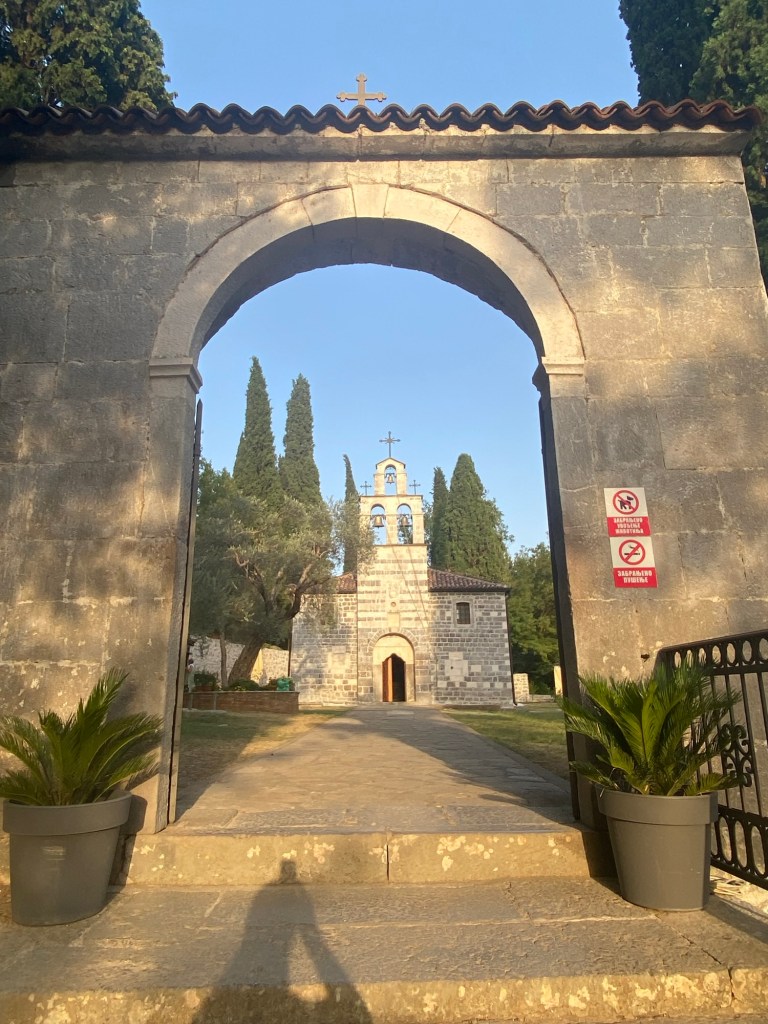
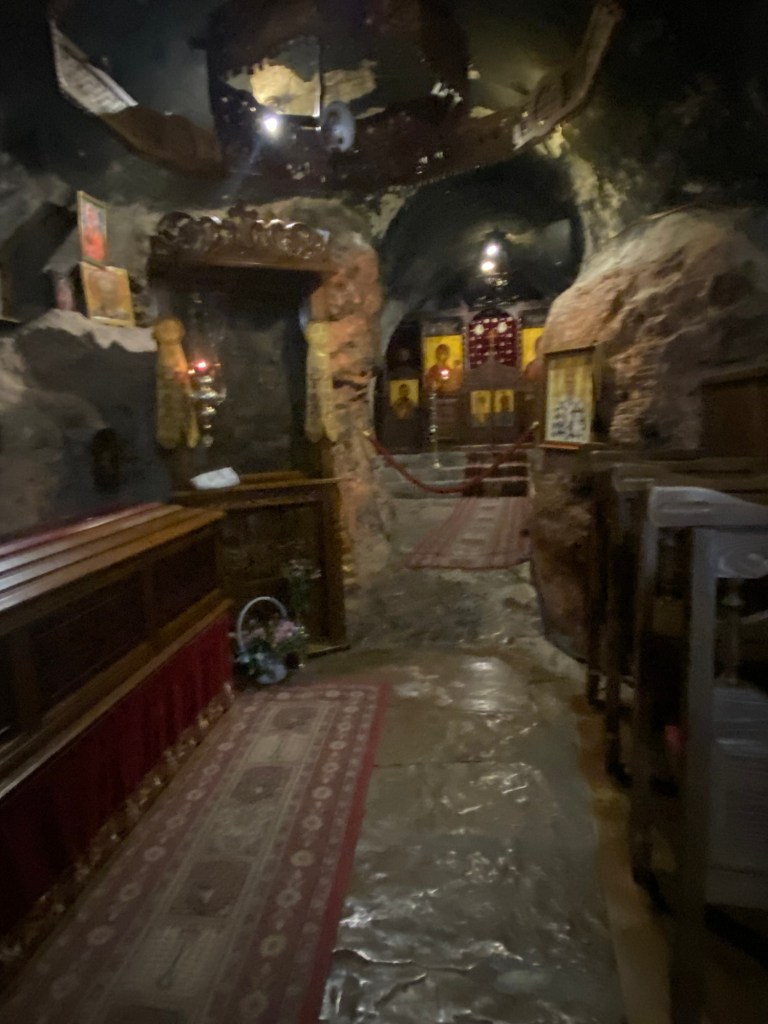
Taking the advice of my hostel host, i decided to explore a bit further a field. First I went just to the city limits by bus and walked to a monastery called Dajbabe. It was made famous as a monastery as a local priest, Simeon Dajbabe, in the 19th century had a vision to create a church in a hill where a natural cave “in the shape of a cross” existed. It was painted by local priests at the time and has the claim as a place where multiple miraculous acts have occurred. A monastery had developed around it over the past two centuries and it remained active with a little store where I bought some of the food items that were on offer. The church was the focal point. You enter what feels like a typical Orthodox Church entry way before ducking down to enter the caves that make up the Church of the Assumption of Mary. It was fascinating to see the natural formation and work done to create this church out of the cave. The body of the original priest was laying in one part of the cave and attracted a number of visitors even in the short time I was present. 

Entry to Dajbabe Monastery
Inside the church made inside the cave.

The other trip was a 40 minute drive to Centinje. I realized I should have spent more time in this former capital as it had a series of museums and many older buildings that Podgorica didn’t have as readily available. I was able to attain a greater sense of Montenegrin history from the visit despite the abbreviated nature. Centinje was central to this history as a place where rulers from the early 18th century through the dissolution of the Montenegrin monarchy around the time of World War One. For the first hundred years the monarchy was a vassal of the Ottomans before a Prince Bishop based in the Centinje Monastery led the Montenegrin tribal leaders to revolt and, with support of the Tsar of Russia, set up a more independent Orthodox nation. 
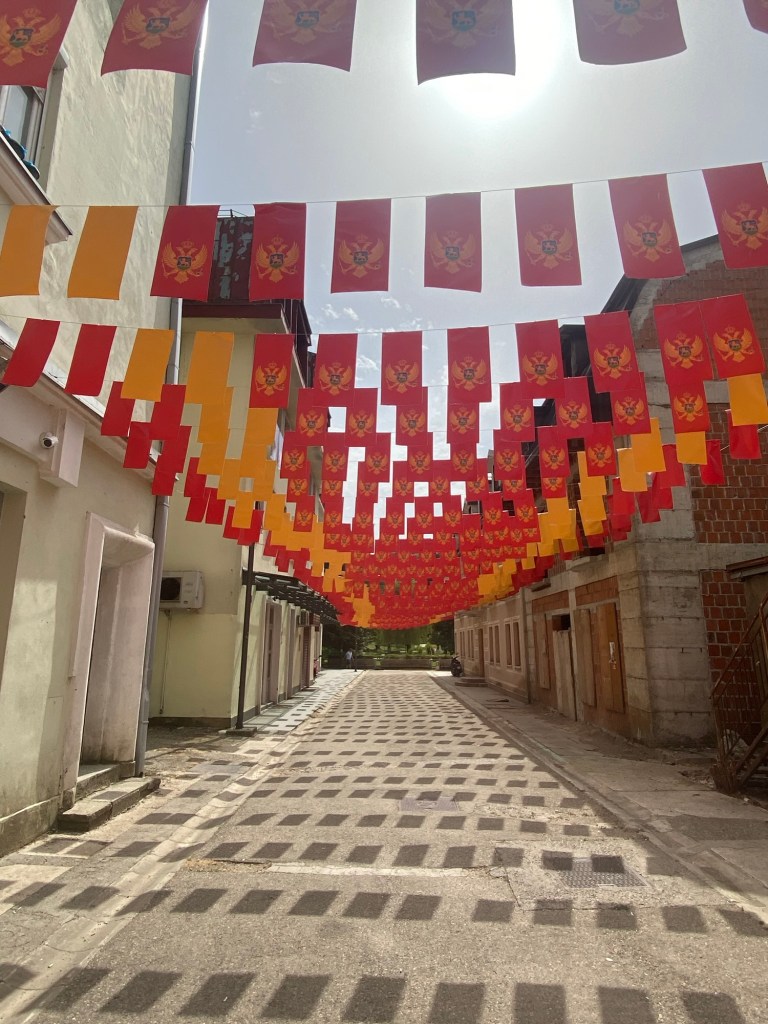
A street in Cetinje
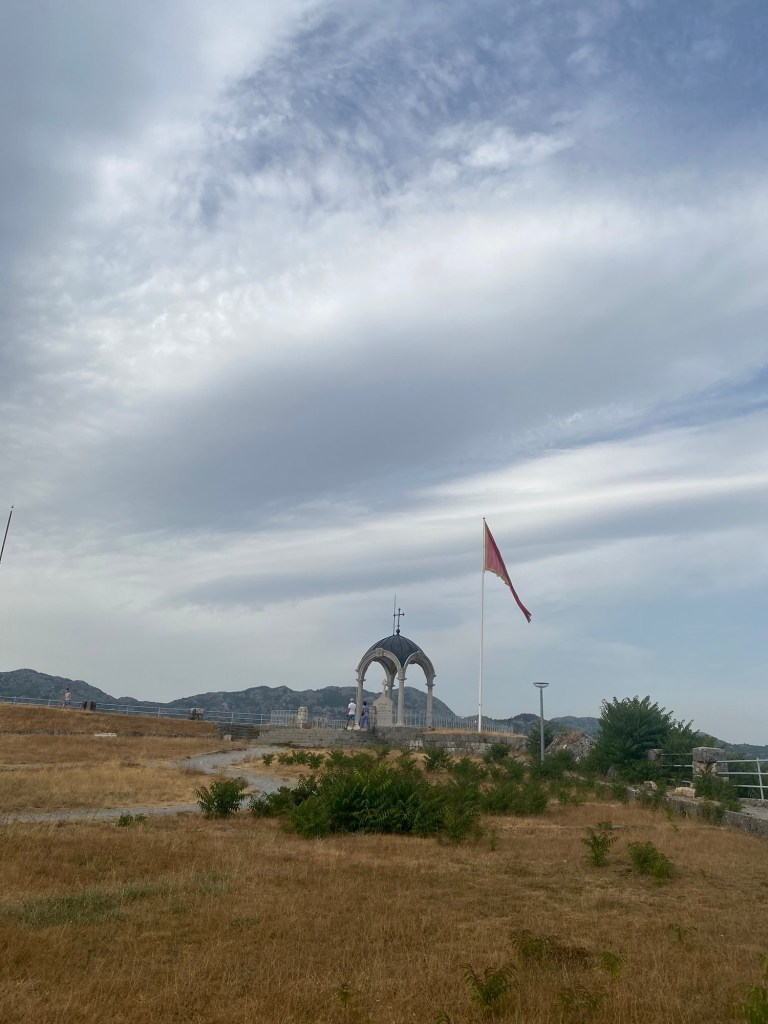
Eagle Rock Mauseleum

Centinje’s old centre included many old embassies and national state houses, including the old Parliament and Prince’s residence, both of which are now museums. Eagle Rock was on a small hill overlooking Centinje where the remains of one of the monarchs was entombed with a view over the town of Centinje and with the hills of Lovcen National Park behind it. Definitely Centinje was an enjoyable visit and a place I wish I had a bit more time to visit. 

The Accursed Mountains

I had read about hikes in the Accursed mountains, also called the Albanian Alps, prior to leaving on my trip. As opposed to coming hiking independently, I signed up for a three-day excursion, organized through the Wanderer’s Hostel in Shkoder, that took me to a guest house in Valbone, which help bring me to the trailhead of the hike to Theth, and then had another night in Theth. 

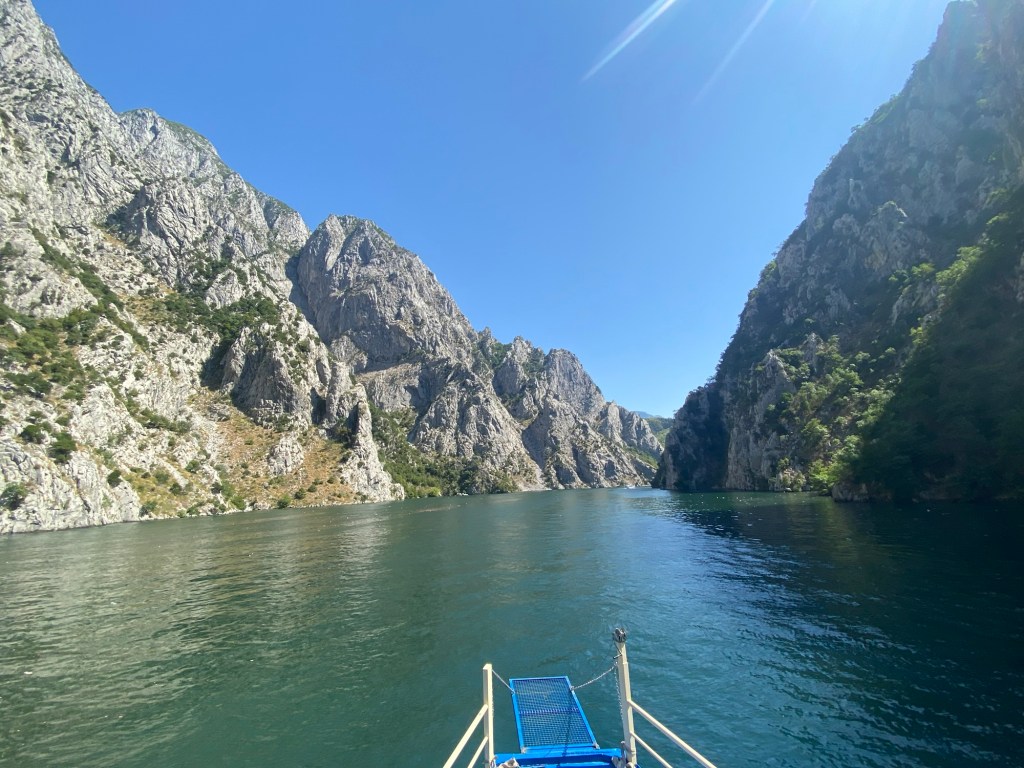
The trip out included a bus ride to Komani Lake, a two and a half hour ferry ride to the far end of this mamade lake, and then another bus ride to Valbone. The consistent presence of towering cliffs and deep valleys made this trip breathtaking. Once in Valbone I was able to explore the small mountain community and area around taking in the gorgeous scenery that the mountains and streams provided. 

On lake Koman.
In Valbone.

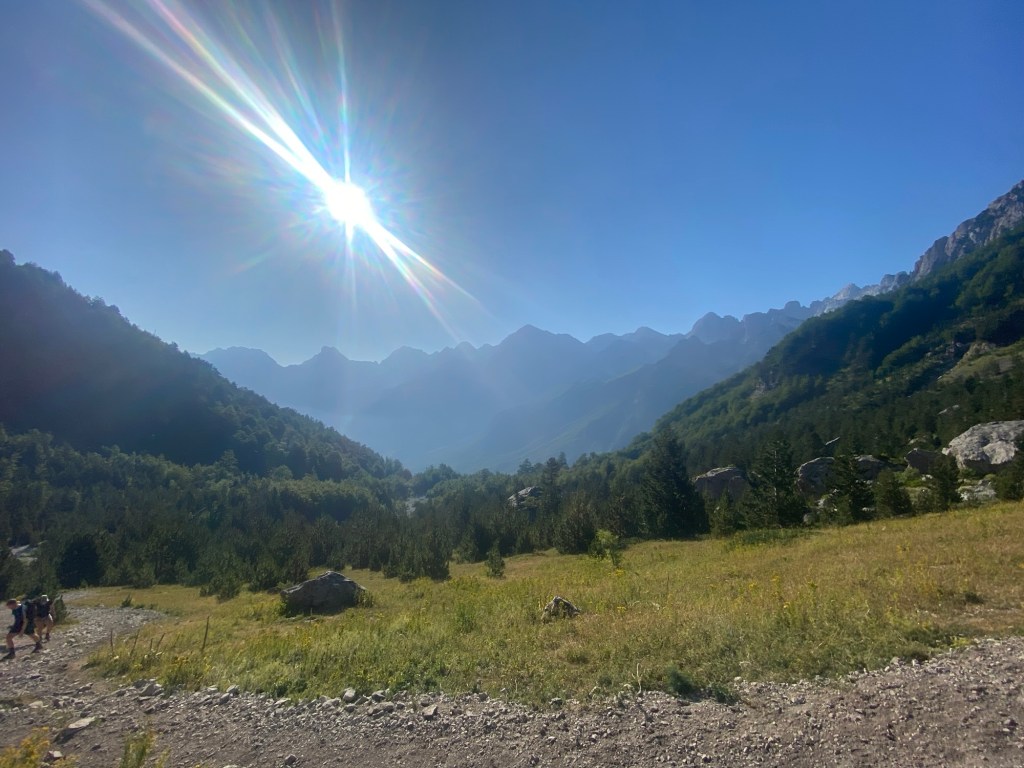
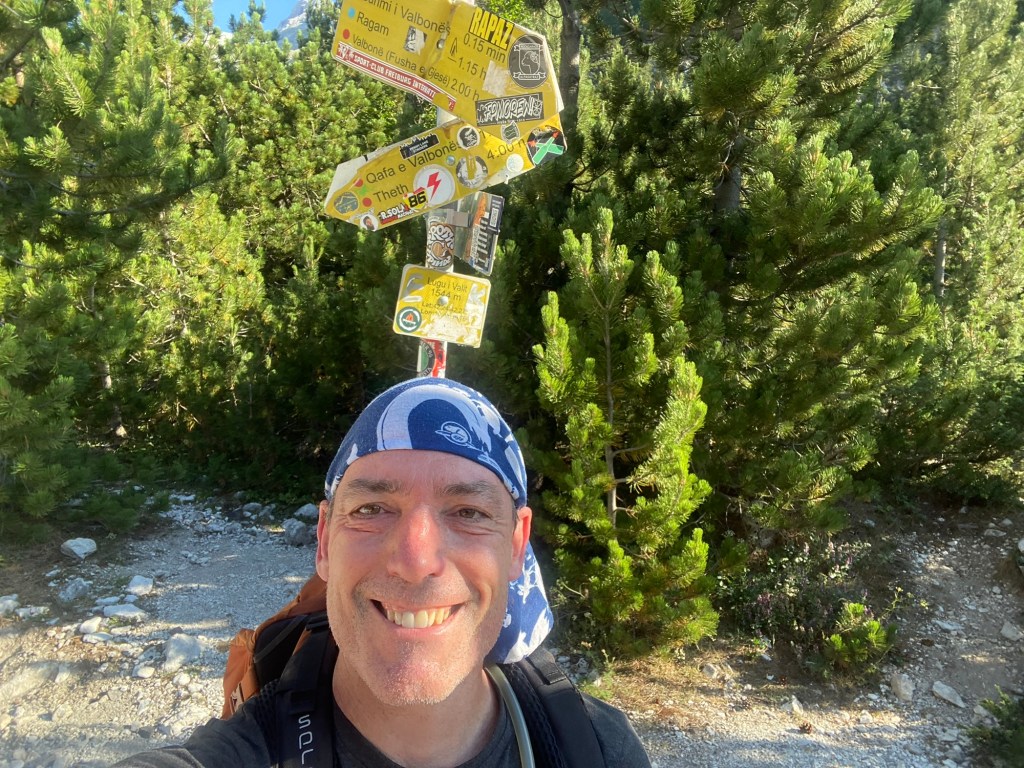
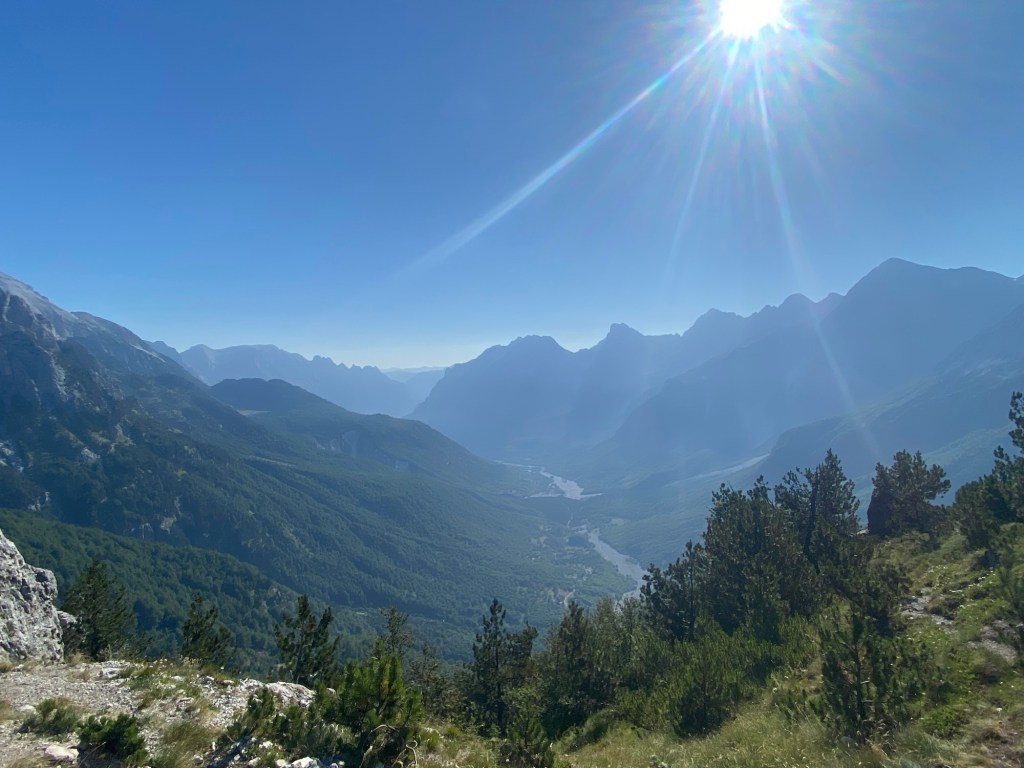
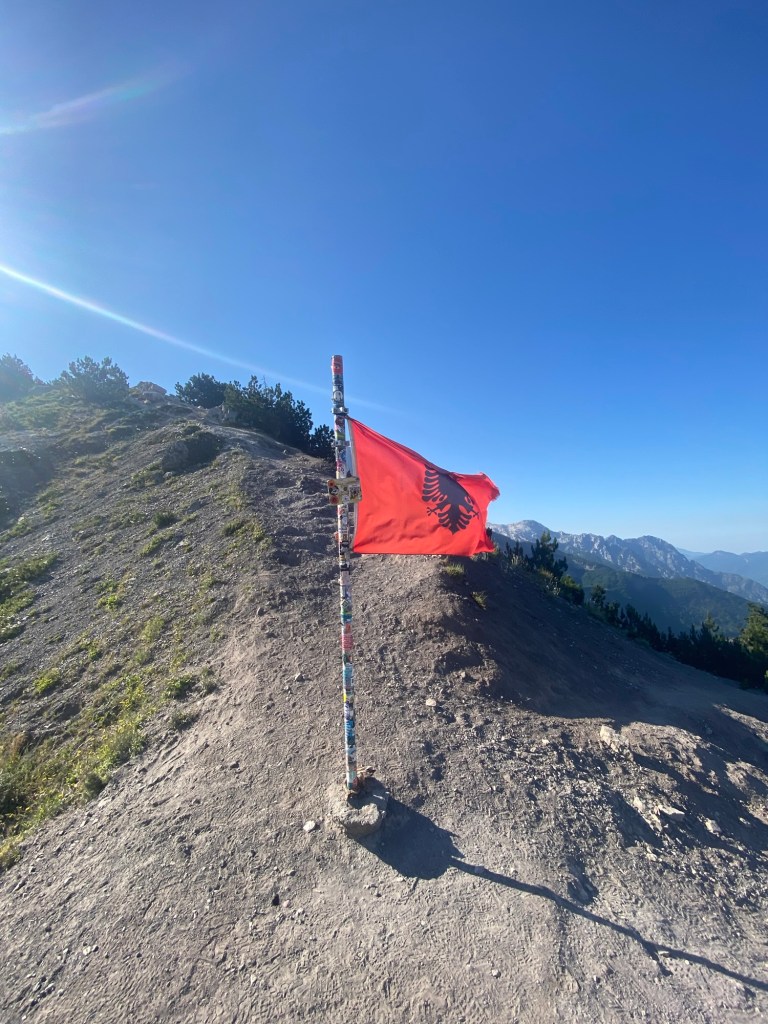
Day two was around a twelve kilometre hike over the Pass from Valbone to Theth. We were driven to a trailhead at around 0600 trying to beat the heat that was still present despite being in the mountain elevations. The trail snaked up the mountain slope allowing plenty of visuals down the Valbone valley that made the breaks on this uphill climb pleasant. It took me a little over two hours to get to the pass. A steady and yet enjoyable climb. The views of both the Valbone and Theth valleys were phenomenal. An opportunity to climb a bit higher to see a different angle of the valleys was also possible and I took in this extra short hike as well. The downward climb wound through a largely forested hillside with occasional gaps that revealed the changing views of Theth and the Natuonal Parks mountains. Another couple hours and I was arriving early to my guest house in Theth. Tired but satisfied in a wonderful hike.

Looking back at the Valbone valley.
The Albanian flag at the pass.

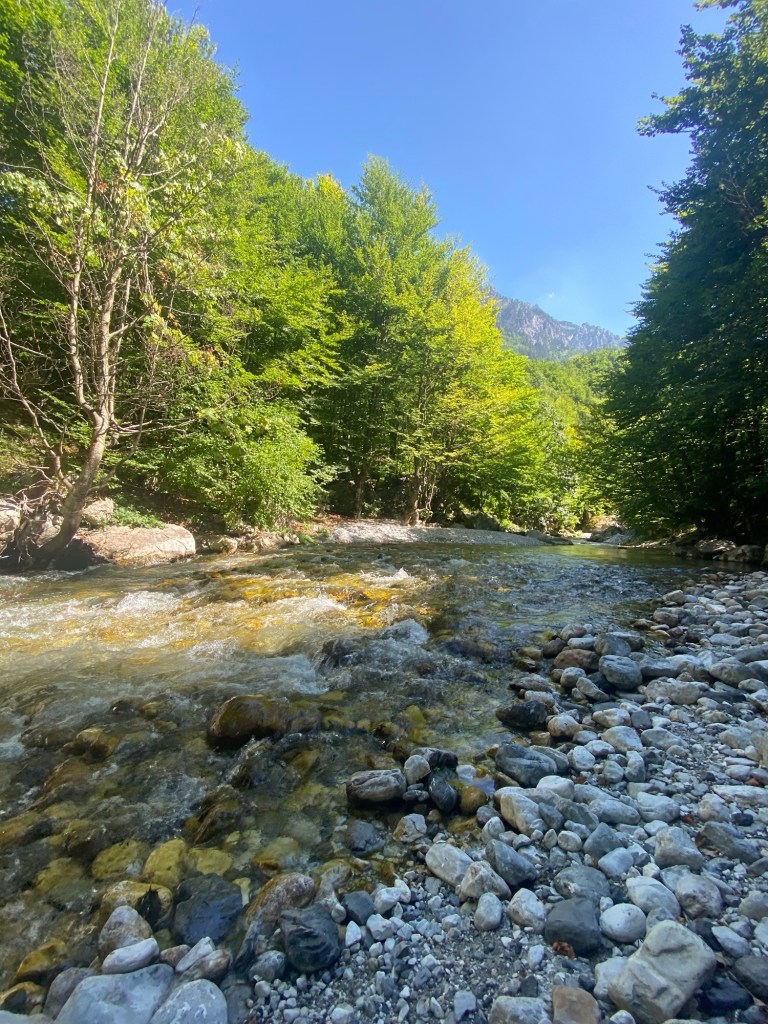
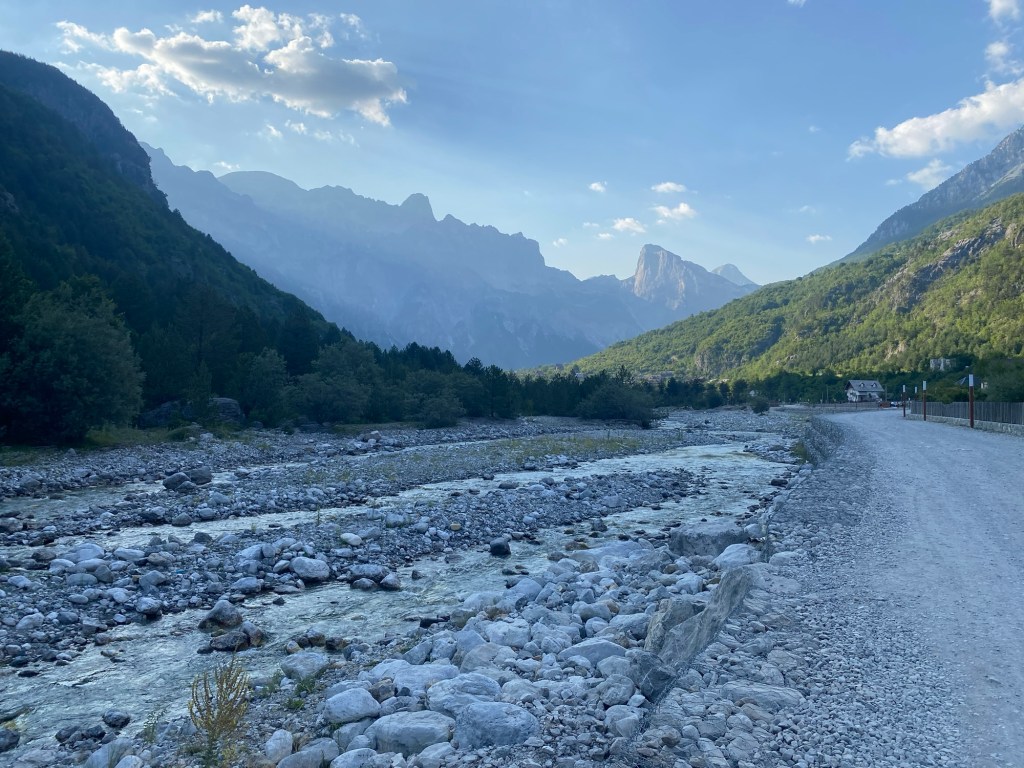
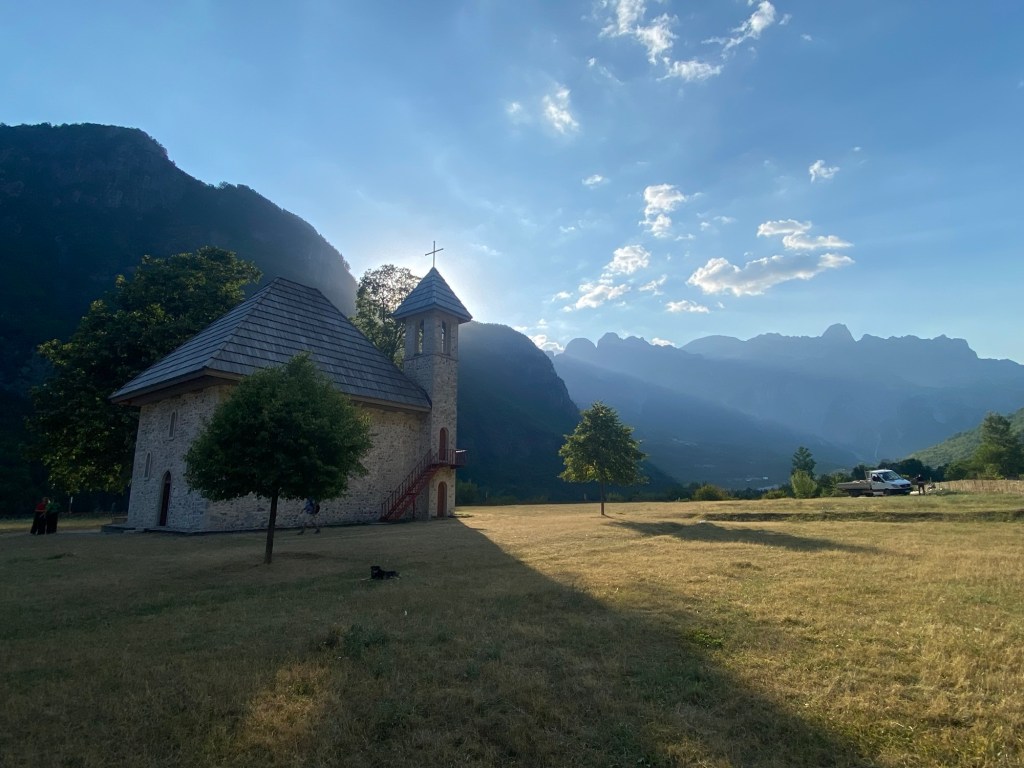
For the rest of the day I relaxed and explored a bit around Theth. A small mountain church was set in a picturesque location. A walk along a mountain stream led to a waterfall about half an hour south of Theth. The odd thing in this town was the number of houses that appeared to be demolished. I learned that there was a government initiative to invest in tourism infrastructure a few years ago that was suddenly repealed leaving a number of property owners with half constructed buildings but no government money to finish building. As a result many had just stopped the projects and decided to tear down what they had. It was an odd thing to have the wreckage of a tear down next to a large tourist guest house. 

Church in Theth.

The ride back from Theth was an adventure. The bus picked us up and then started up through a pass on its way to Shkoder. We went through a couple dozen hairpin turns with the bus driver blowing his horn just in case someone was coming the other way. Despite this, the driver frequently was on his phone chatting to people as if he wasn’t driving a foot away from a precipice. We got back in one piece so I can’t really complain.

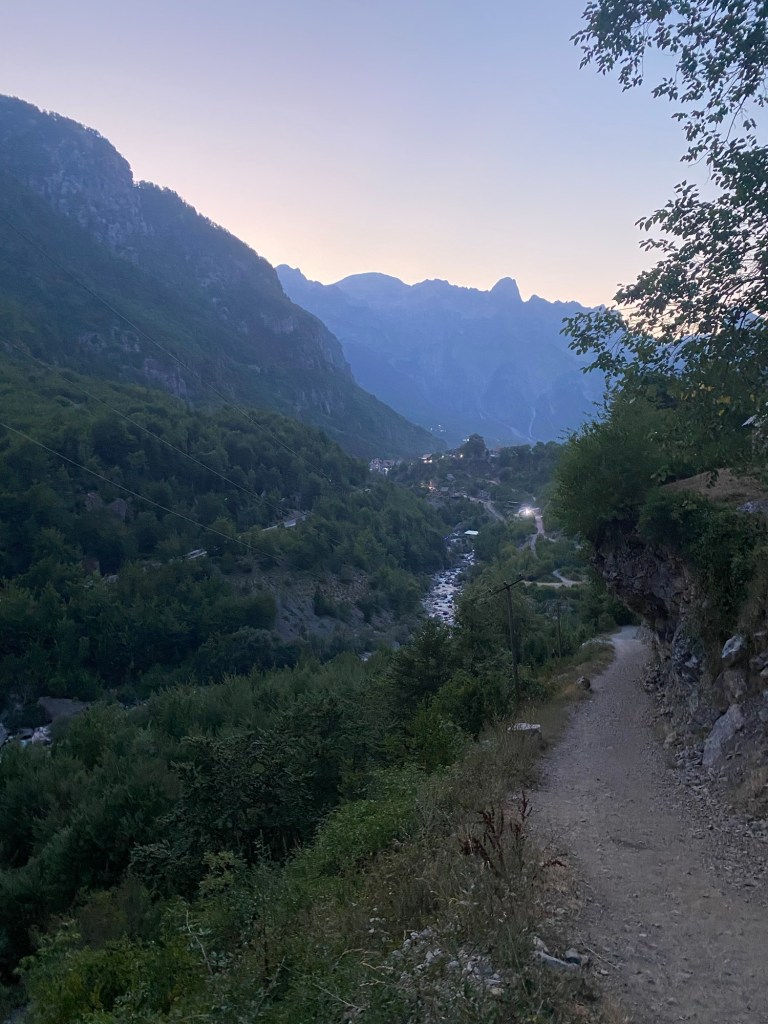
On the way back from the waterfall in Theth.
Looking out from the pass towards Theth.