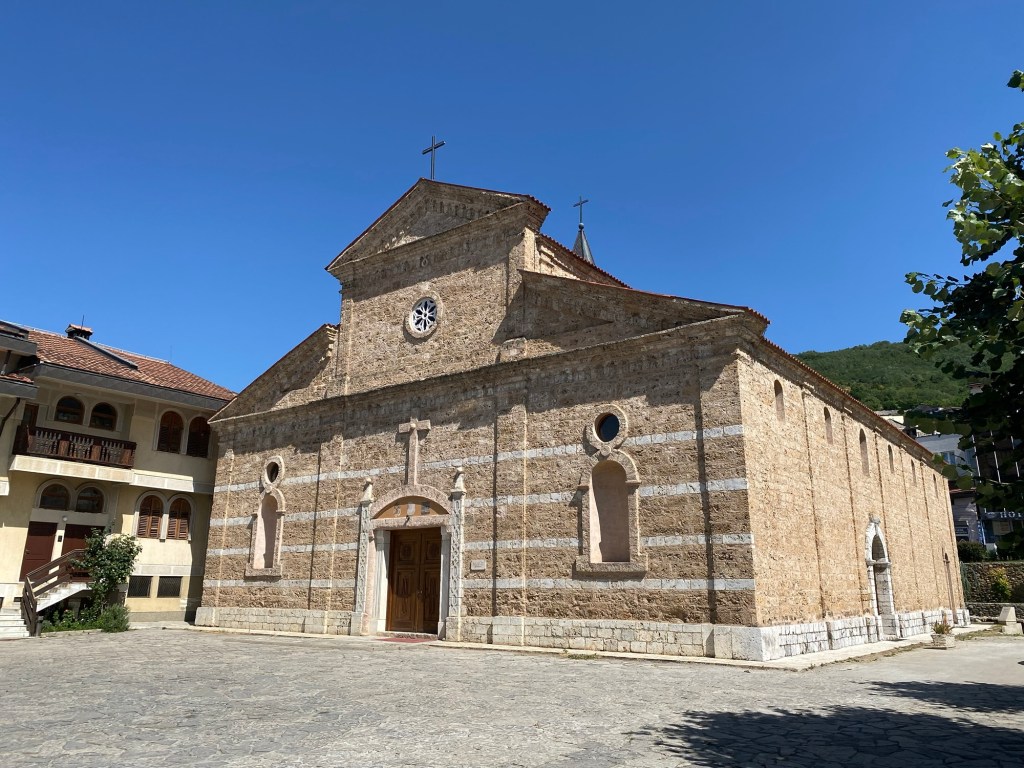
In Shkoder, Albania

Almost as soon as the bus entered Albania, it felt like the mountains were bigger and steeper. Winding around curves as the bus made its way to Shkoder, a northern city with lots of history, the views drew me in. 
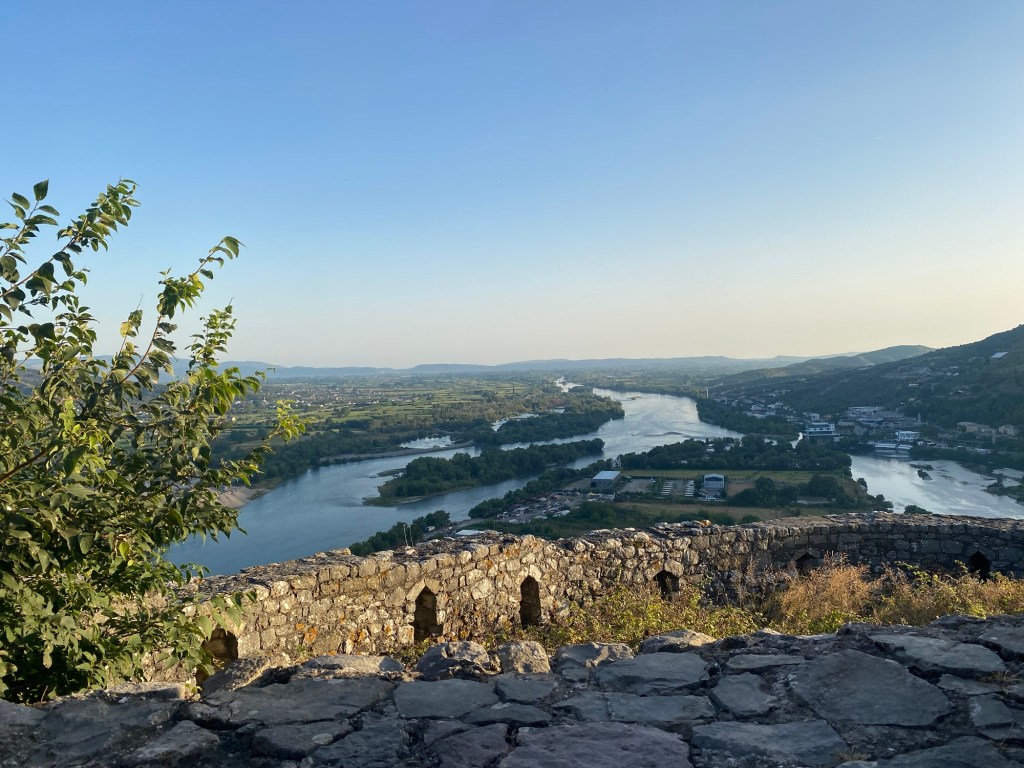
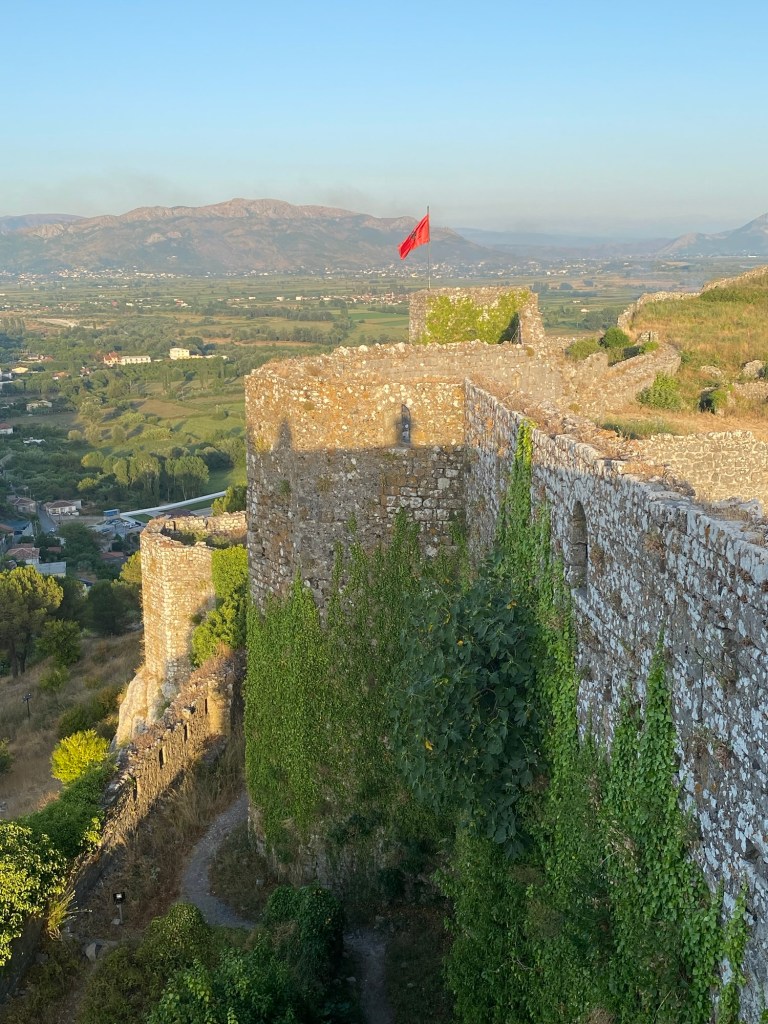
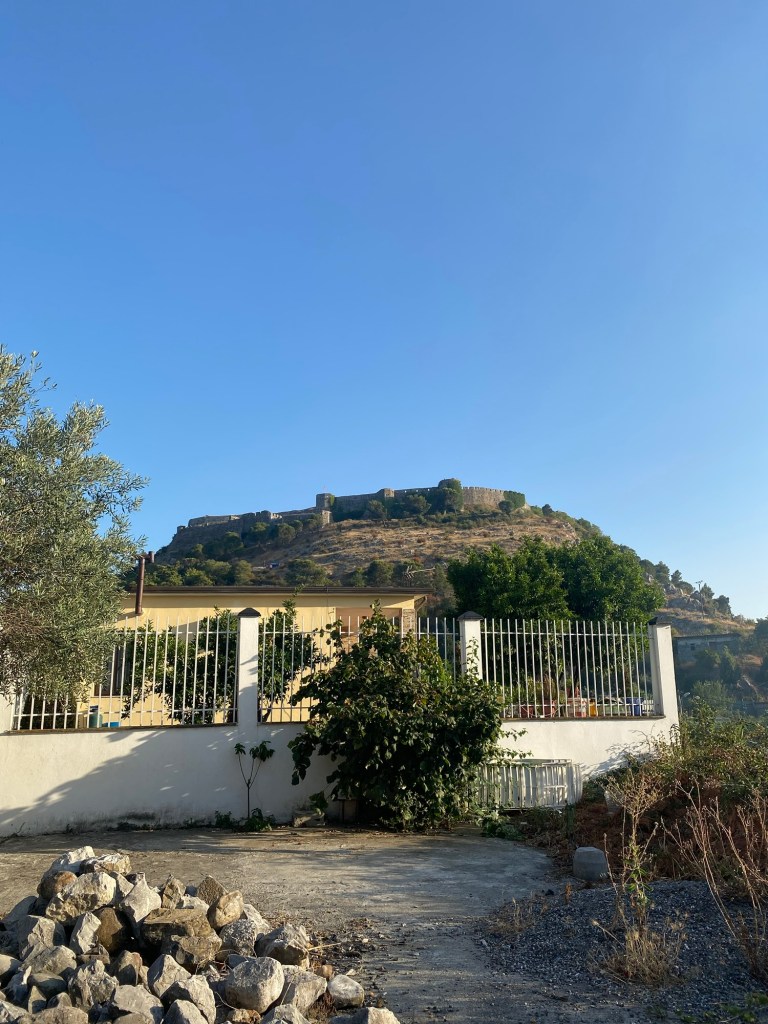
Shkoder is another city with a lot of history. The guide I joined for a free city tour emphasized the history going back to the Illyrian Tribe. The Rozafa Castle greets you as you enter Shkoder from the south and it was a fortress with access to three rivers and the Skadar Lake which connected with the Adriatic Sea, making it a piece of valuable real estate. The Romans took possession of it in 200 BC after the Illyrians lost to them, but the history of Shkoder was one of strong local independence.
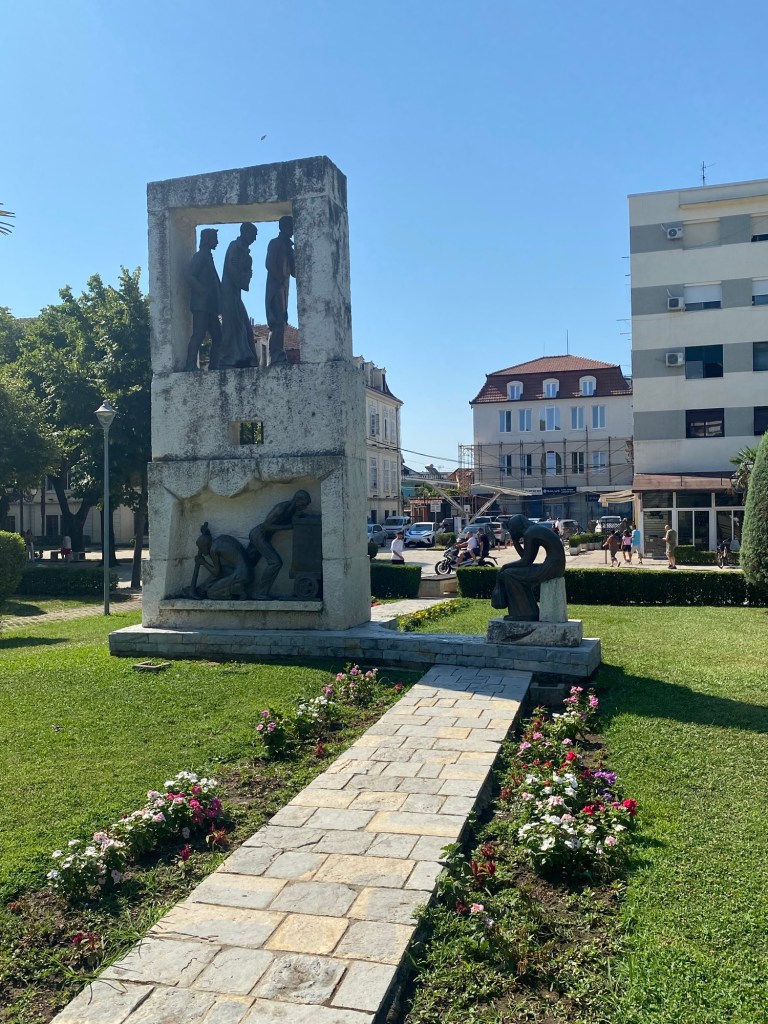
Even into modern times Shkoder was a city who pushed for their linkages to Albania despite Montenegrin and Serbia interest in its position. Although it fluctuated between the various regional powers the Albania connection appears to have always been strong. Even within Albania, our guide talked of Shkoder’s independent mindset. In communist Albanian times, Shkoder was a central point of disagreement with Hoxha’s leadership. This resulted in the majority of arrests and deaths of activists coming for Shkoder. A visit to the chilling site of Witness and Memory tells the compelling stories behind many of these losses through the near 50 years  Communist rule. A number of memorials exist across the city that add to this sense of the desire not to forget the impacts of Communism.
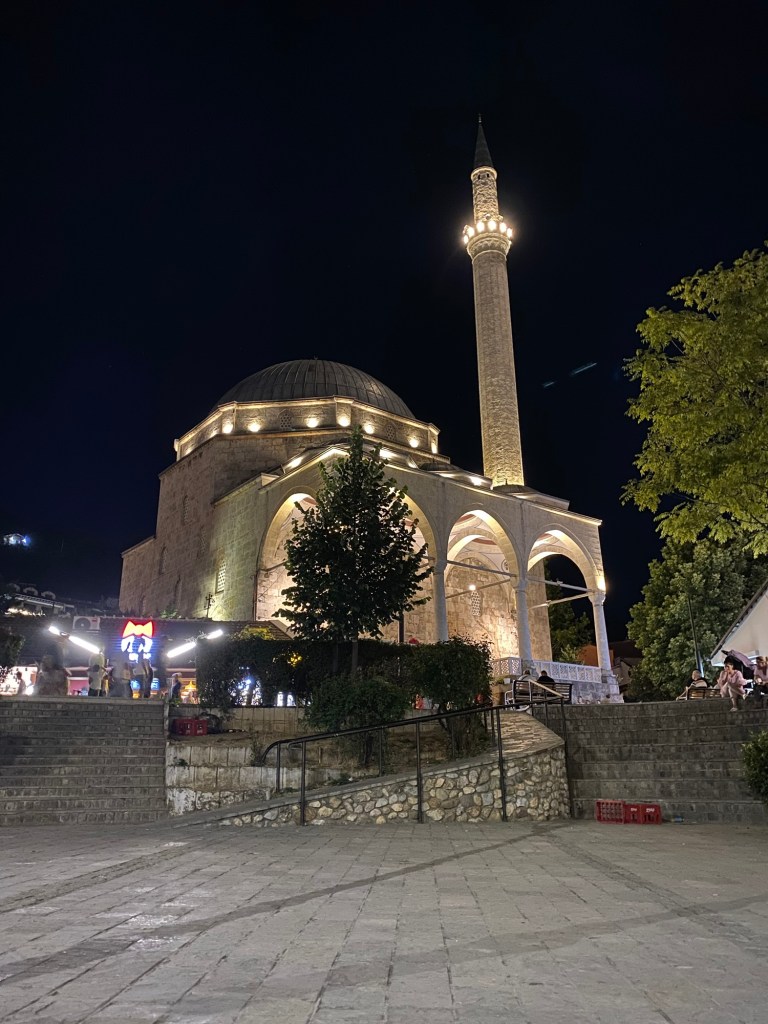
Shkoder was also surprisingly new. Through wars and various aspects of central planning the majority of houses were built over the past 150 years. A Communist mandate that forbade religion starting in the 1970s meant that the majority of mosques and churches were raised following this point. The large mosque in the central part of Shkoder was a gift from Saudi Arabia and only built in 1995. The cathedral of Albania was only saved by innovative leaders who hid most of the religious imagery for 30 years while creating the shell around it to allow the cathedral to be used as a sports facility through the last decades of Communism. 
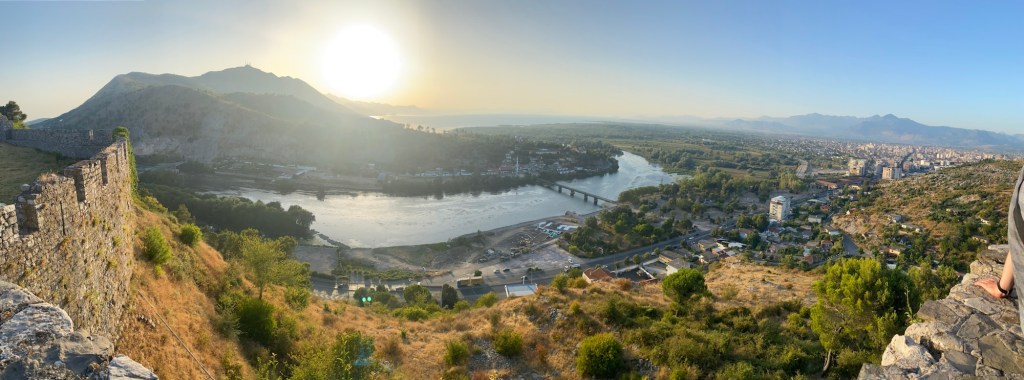
Definitely Shkoder has a lot beneath the surface and was well worth the visit.
In Prizren, Kosovo

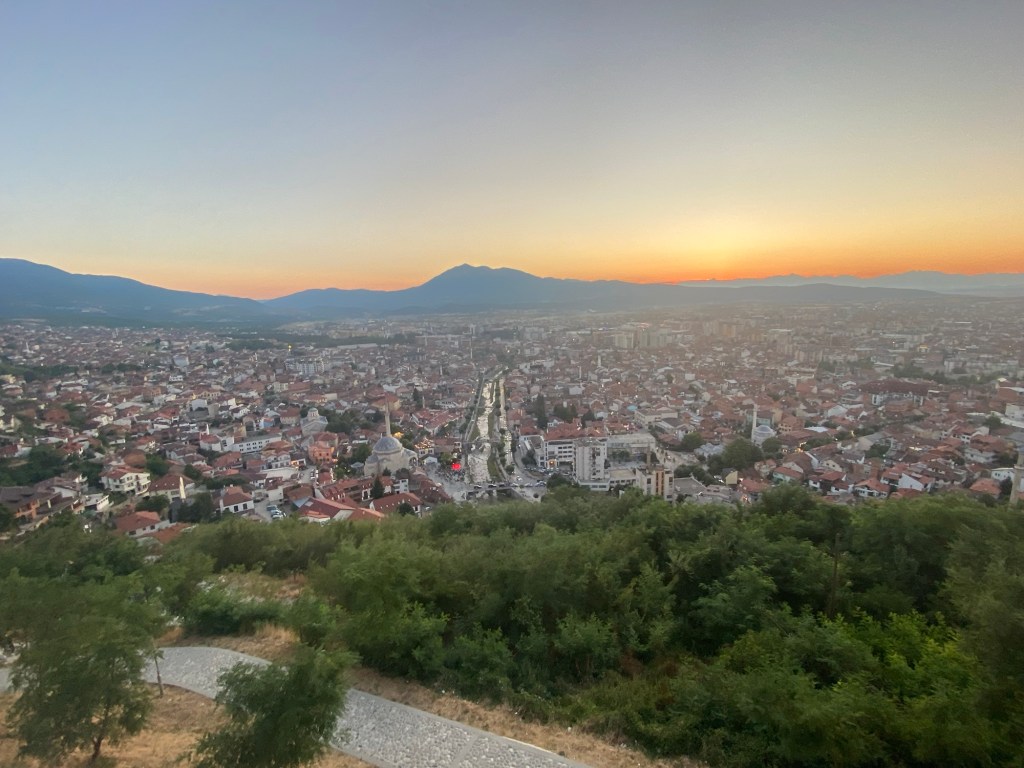
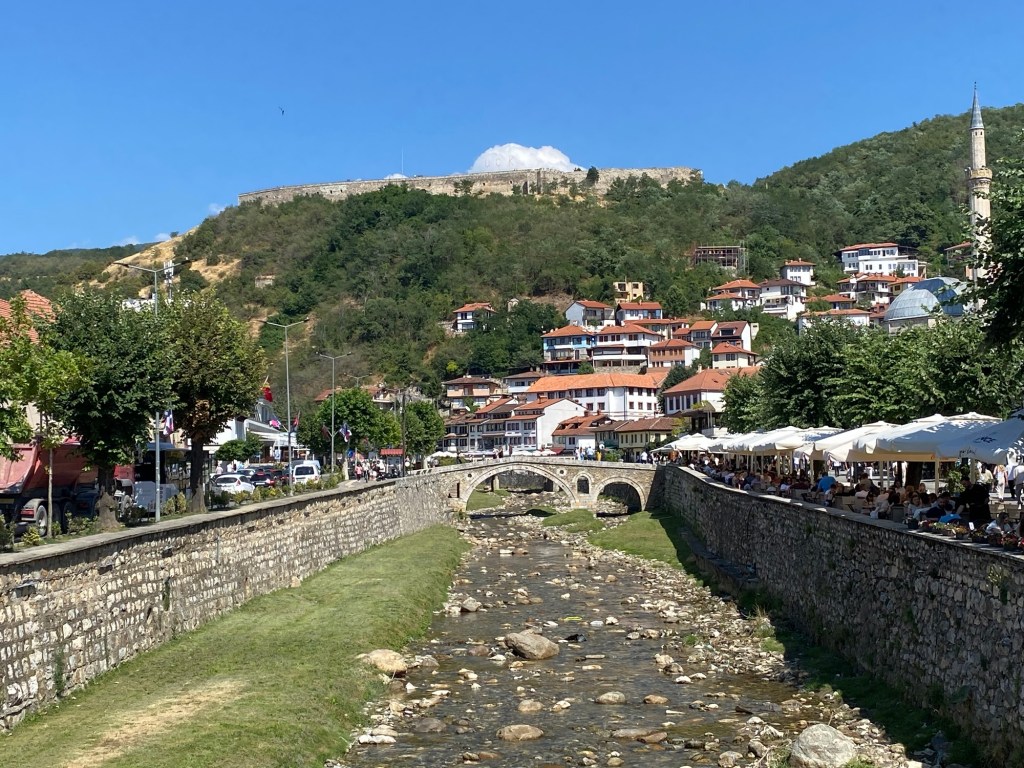
The first thing I note about Prizren as I walk to my hostel is the picturesque location. A small stream running through the centre part of town with built up walking paths on either side, a series of bridges crossing between the Old Town and New town Prizren. Up above, high on a cliff overlooking the central Prizren is the old Fortress. It makes for a stunning visual and I find myself taking more pictures than are really necessary. 

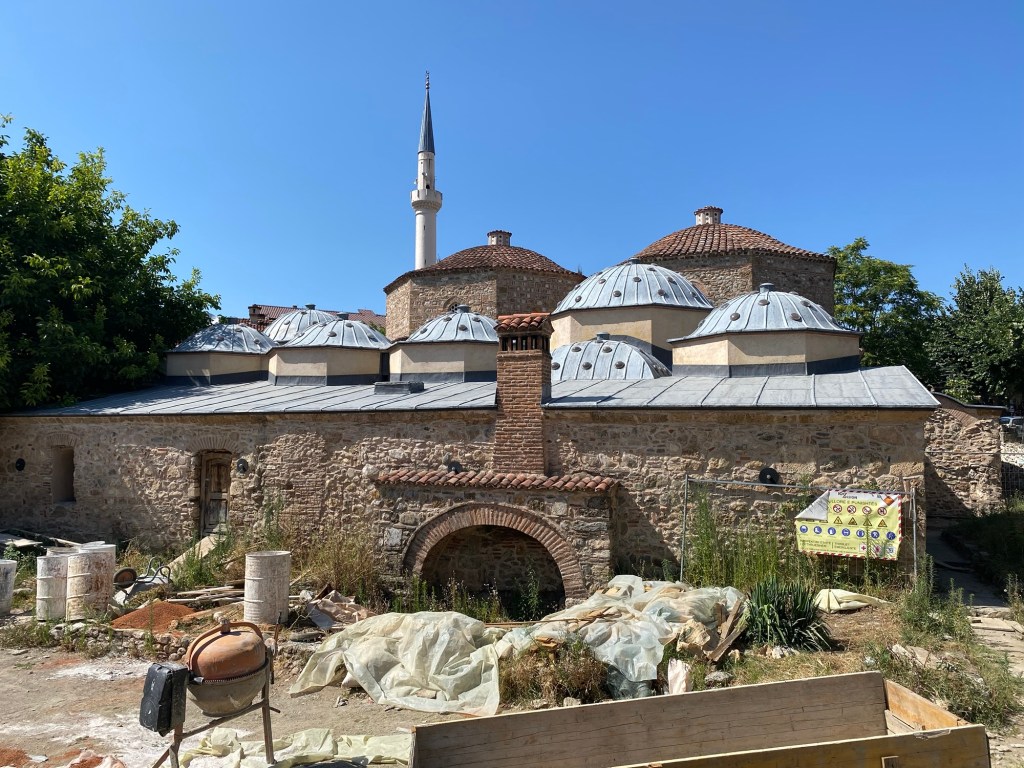
I take a walking tour later in the afternoon of my visit. The history of Prizren and Kosovo are deeply entwined. The tour takes you to the Great Mosque, but also past a number of lesser mosques, the largest Hammam in Kosovo, which is being restored after damage in a series of wars since the early 20th century, and to a few churches which are in reconstruction after violence broke out in 2019 resulting in the art inside being largely burnt. The Albanian League building was also part of the tour which I visit later to learn more about how, in the 1870’s Prizren was a primary location for much of the Albanian-speaking Balkan nations and became a headquarters of sorts. This did result in conflict and the bombing and burning of the site I visited. The site had been restored to the same specifications of the building from 150 years ago and were now a museum to the 1870-1880s in Prizren and the work of the Albanian League. 
Oldest Hammam in Prizren.
The Albanian League Museum.

The older history of Prizren was also on display. I walked up to the Fortress a couple times. Beautifully situated on a peak of a smaller hill surrounded by valleys and the Sharr mountains to the south, it looked out over the plains past Prizren revealing a wide area of western Kosovo. It was clear why various tribes, the Illyriuns, the Romans, and the Ottomans all used this site. Much of the evidence of this history was in a small but interesting archeology museum. Built in a repurposed Hammam it walked through the historical ages with a wide range of historical items on display. I couldn’t walk up a clock town that was at the site as it was being prepared for an art show, but the setting of this museum made it more interesting. 

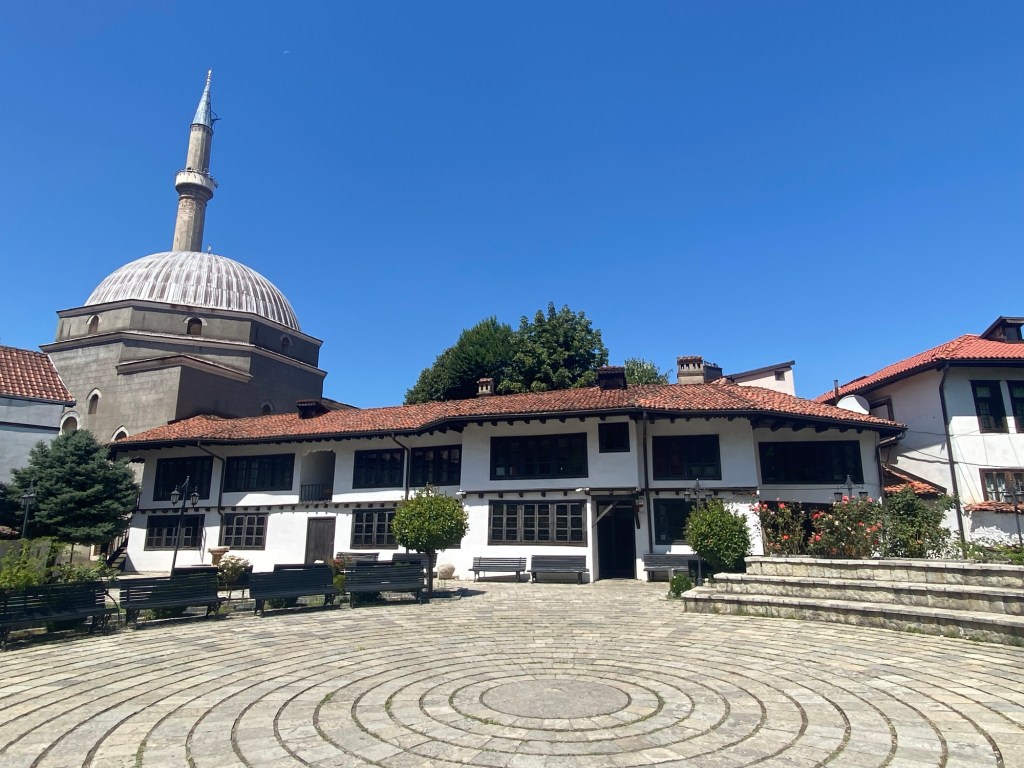
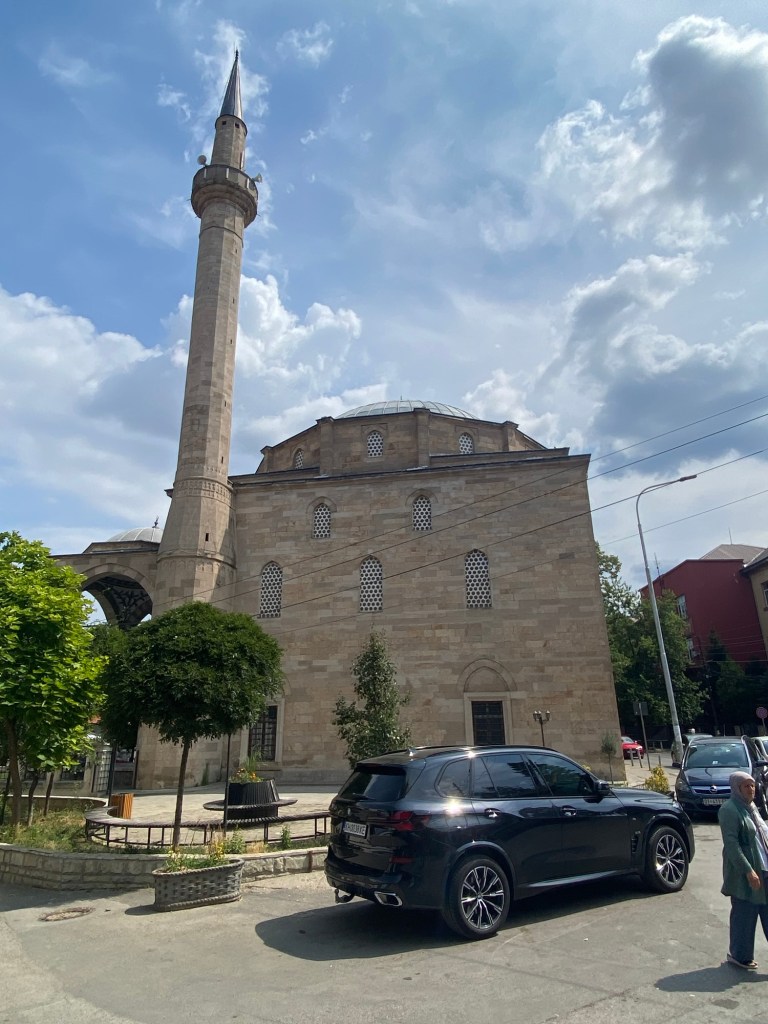
Old Mosque of Prizren.

It was great to just wander around this town and some of the paths outside of the city. 

Visiting Gracanica

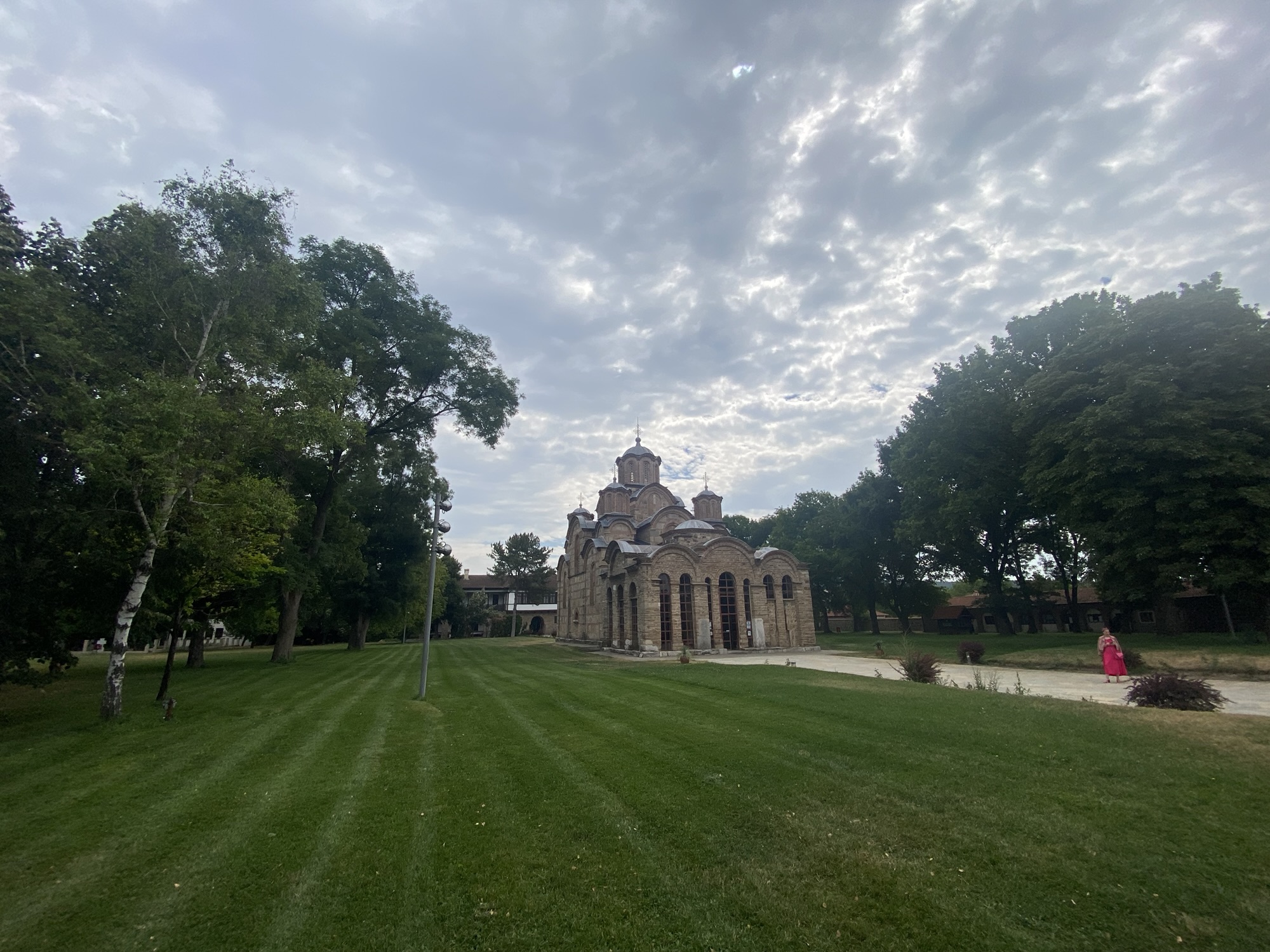
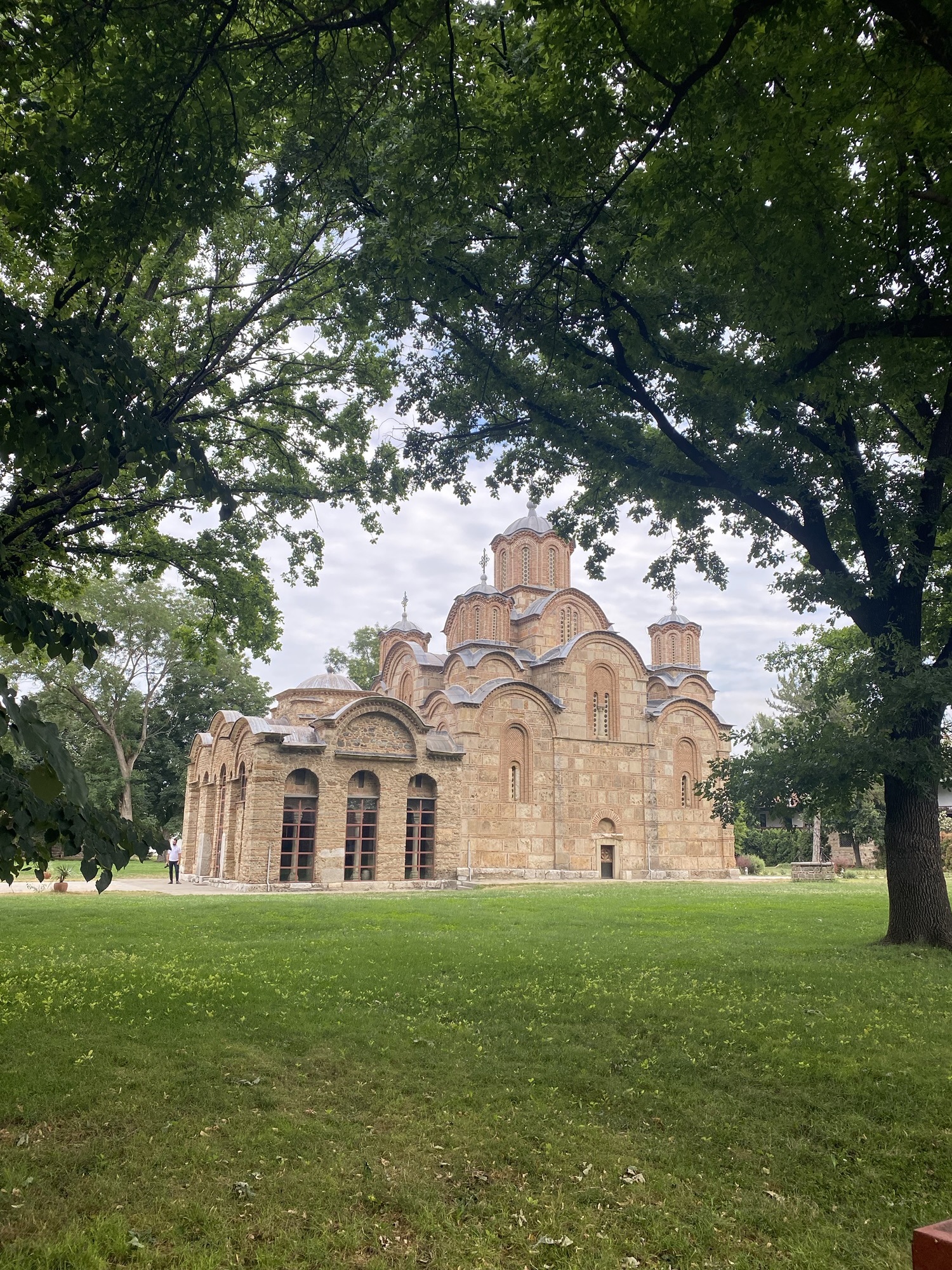
I took a short trip out of Pristina to visit the Gracanica Monastery about five kilometres southwest. It is a 14th century monastery with a central cathedral that has frescoes dating from this time. Although it has been damaged and repaired over the centuries, the original art can still be seen.

It also appears to still be an active monastery with the ability to buy fruit, vegetables, cheese, and wine that the nuns are creating as part of the work that they do. It was interesting to see a few nuns doing work around the monastery as I toured through the central area.

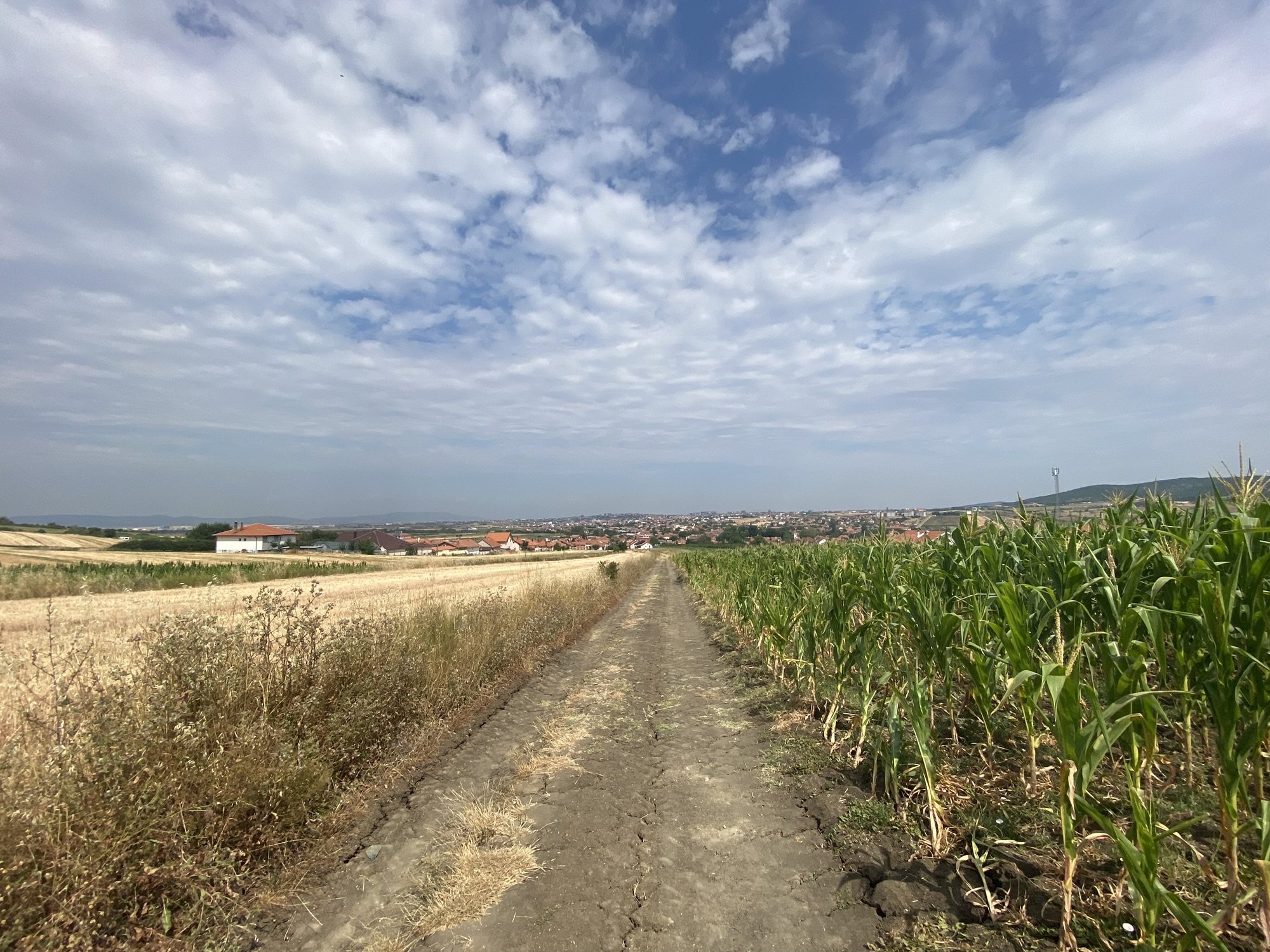
After taking in the monastery, I had looked up a hike in the area that allowed me to head south from Gracanica and then head east to get up a large hill that would allow me to look back on the town and beyond that to Pristina. It was a warm day and I took the advice of a couple locals in a town I passed who seemed convinced I was on the wrong path. This may have been a mistake as I ended up lost in the bushes and likely didn’t get to the hill I wanted. Regardless, I was able to get to a vantage point that allowed me the view back that I was hoping for.

In Kosovo: 50 countries visited(ish)

I realized that coming to Kosovo I have now visited 50 different countries. Although being in Kosovo has raised the question of what is a country. Over 100 countries recognize Kosovo as an independent Nation. Serbia, its neighbour and former partner within Yugoslavia, does not and this is the case with many other nations. I suppose this is me saying that I am counting it as a separate country (and also counting Vatican City, as that may also raise some questions). 

This was my full-day in Pristina, the capital of Kosovo. I joined a free walking tour and visited parts of the old and new sections of central Kosovo. I had known some of the history of the war in the late 1990s, but it was apparent how real this was to our guide.  Adding the fact that Kosovo only achieved its independence in 2008, with some caveats for those who remained opposed to this, there seemed to be a clear desire to ensure that hard won freedom was emphasized. The guide made a point to speak to Rwanda, Gaza, and Ukraine as places where the Kosovars felt a sense of kinship through their struggles for independence. 

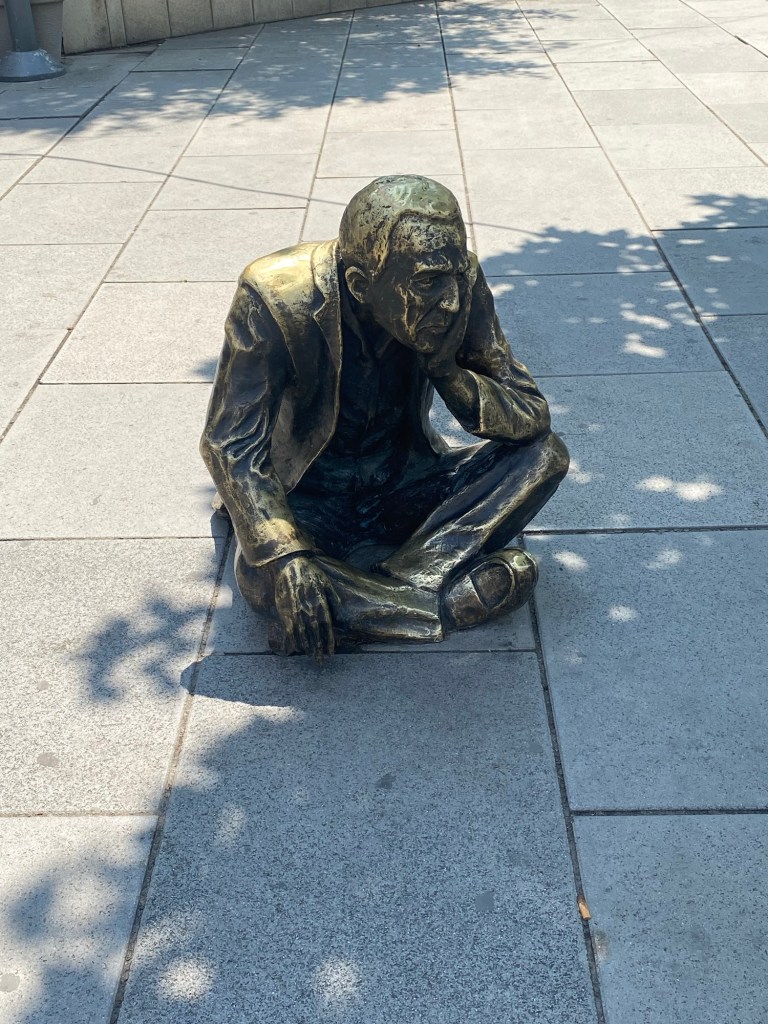
Statue commemorating peaceful protesters.

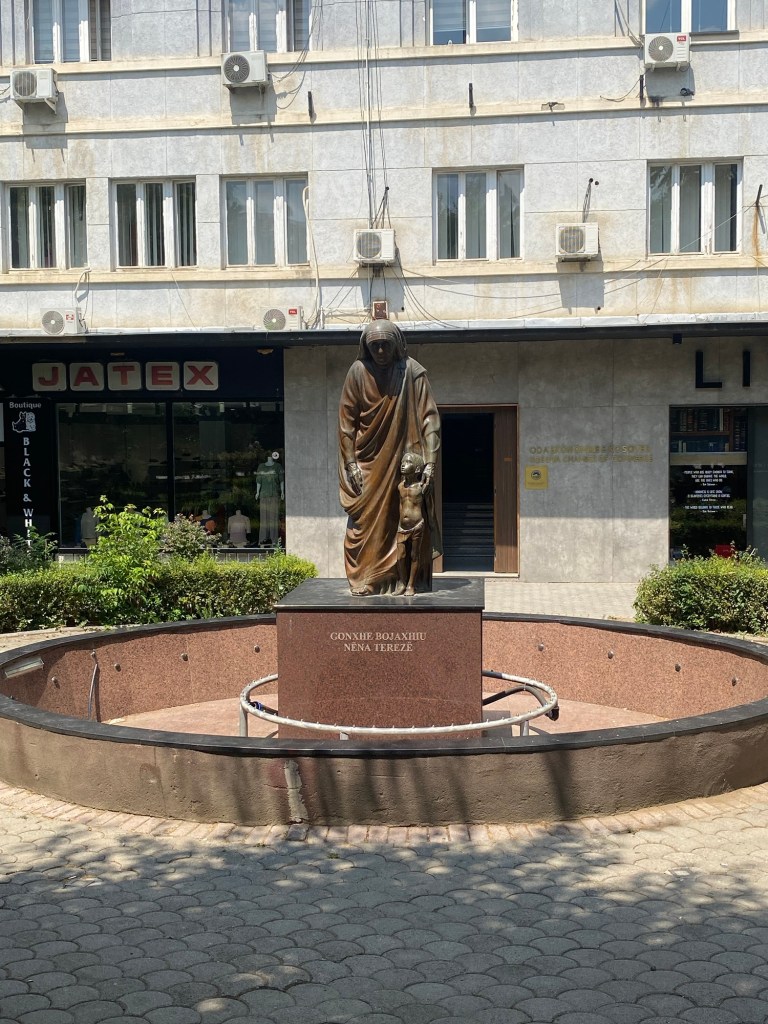
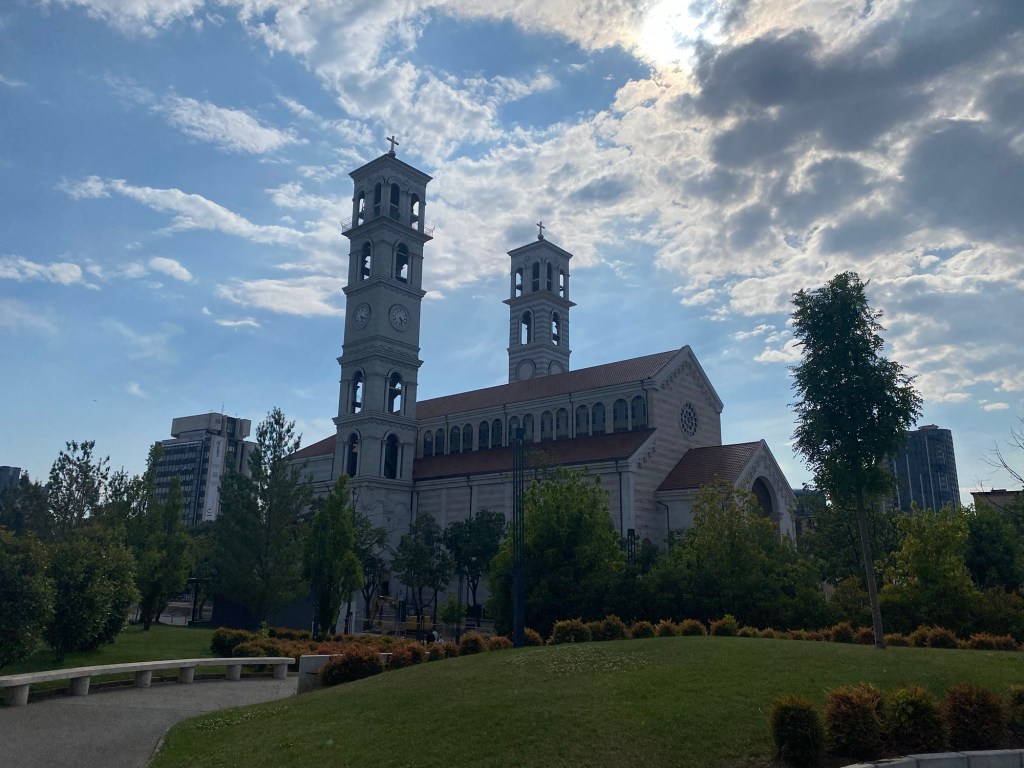
It was also interesting to be in a city/country where Muslims make up the majority. After seeing a couple capitals with their single mosque due to Orthodox Christian influences post the defeat of the Ottoman Empire. Kosovo had a much more open approach to the varied religions. In part this was likely due to years as part of Serbia with their Christian majority, but it also seemed strongly influenced by the passion that the Kosovars had for  Mother Theresa, whose family had come from the Pristina area, although they had moved to Skopje, now in North Macedonia, before she was born. One of the major squares was named for Mother Theresa with her statue on the side of it. A large cathedral—at the corner of streets named for George H.W. Bush and Bill Clinton, no less—has also been built in the past decade and bears Mother Theresa’s name. 

After the tour I went to a couple museums: The Reporting House and the Museum of the House of Independence. The Reporting House has a mixture of art and archival footage from the war in Kosovo in the 1990s. I was told by the guide that I would need over a month to listen to all the archival footage that they had rotating on screen throughout the building. It was a testament to the role that media can play in telling the stories coming out a conflict zone and how important the role is of independent media in being present to document what they see. The Museum of the Hosue of Independence was a request from the first President of Kosovo to have a place to document the process of Kosovo’s independence. It went from the history going back a couple millennium and the beliefs from multiple groups on what the rightful owners are of the lands of Kosovo, but the majority looks at the period from the early 1980s through independence of Kosovo in 2008 and the various things that helped and impeded the efforts for Kosovo to become self-governing and independent. it was an interesting and compelling museum. 

Visiting Nis

On this trip I knew I wanted to Visit Kosovo, but thought that one other Serbian stop before I went there made sense. in looking at what was somewhat on the way and had things of interest I picked Nis. The birthplace of Constantine and a location that had a mixture of Roman, Ottoman and Serbian sites to visit. 
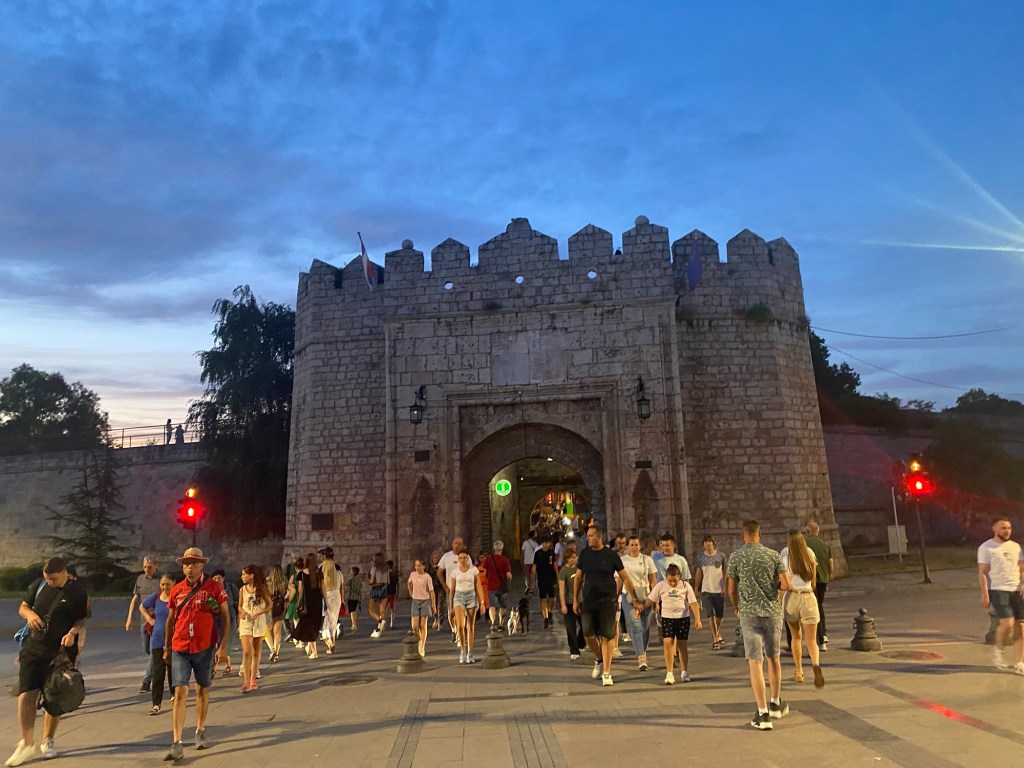
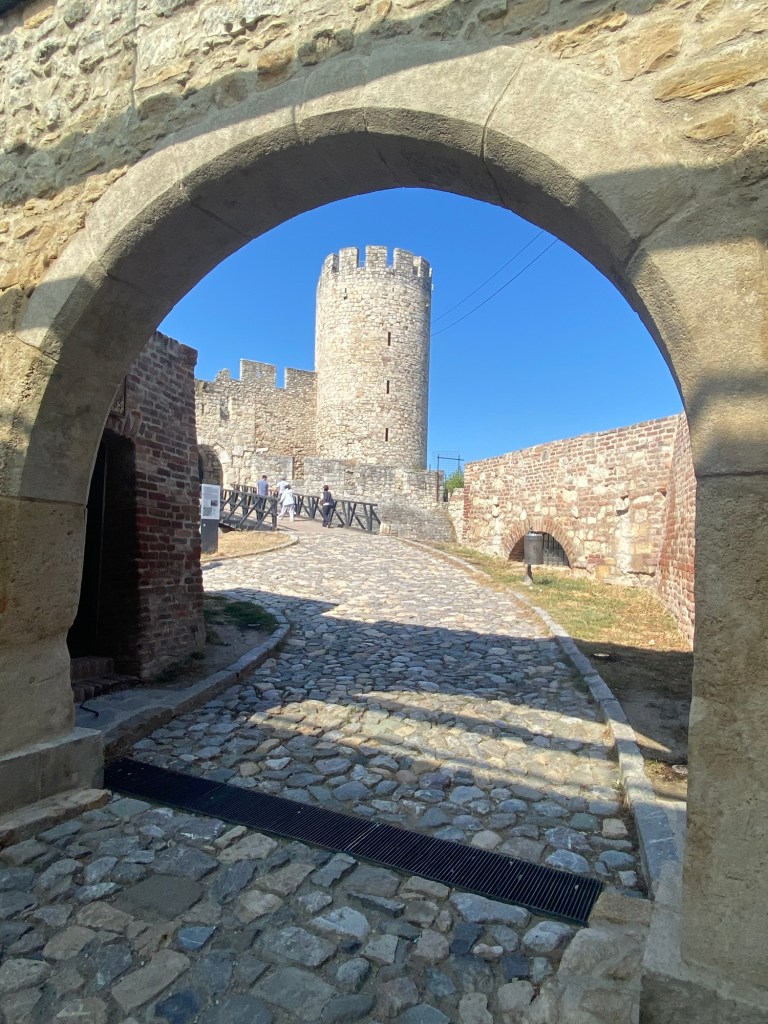
Main gate of Nis Fortress

Nis is a city of around 80,000 people. It felt like a smaller city and one that wasn’t quite as vibrant and new as Belgrade. The sites were interesting. I did have a small hiccup that i arrived at 1500 on Sunday afternoon and the majority of the main tourist attractions were closed on Monday (a good reminder for me to pay more attention to what days I am travelling and which days places are closed). 

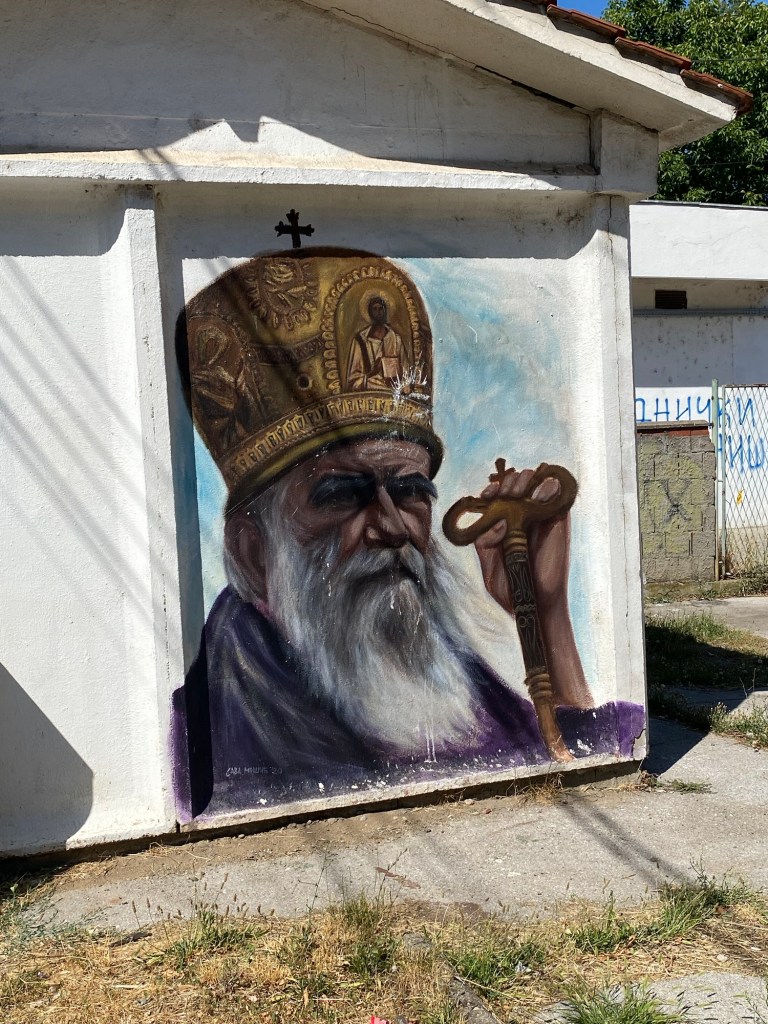
Graffiti next to a church.

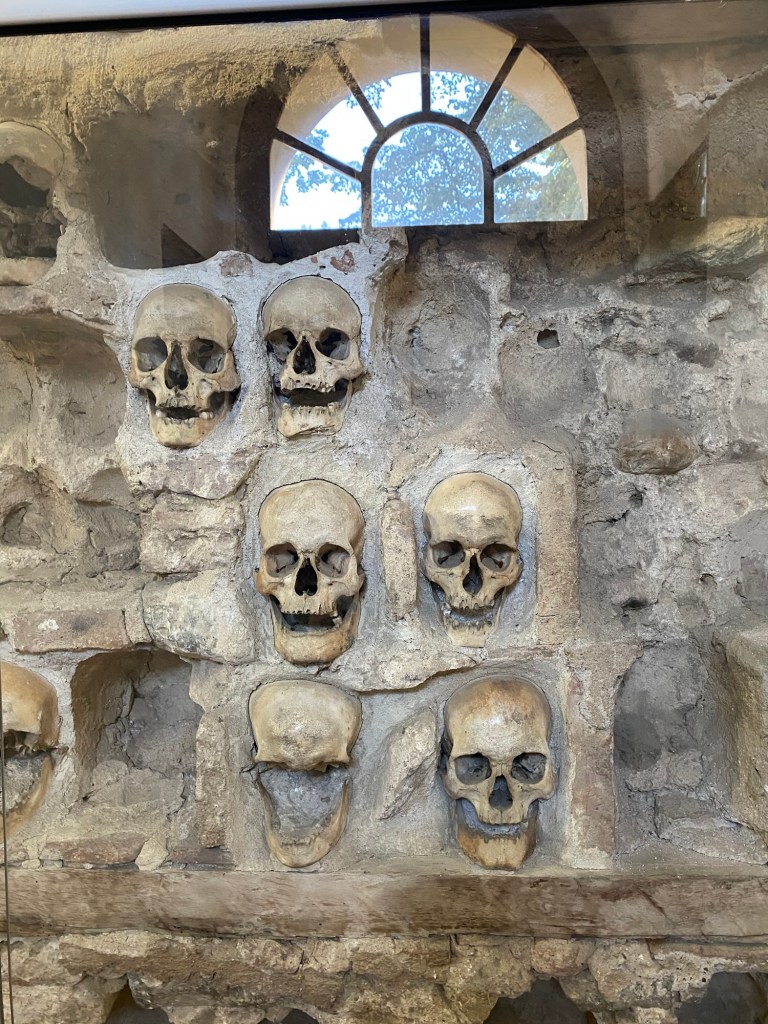
I went out to the Skull Tower site on Sunday afternoon but decided to save the rest of the activities for Tuesday. Skull Tower comes with a horrific story from Serbian resistance to the Ottoman Empire in the early 19th century. A battle occurred near Nis between those wanting independence and the Ottoman army. The Ottoman’s won the war but had a larger number of casualties than when compared with the Serbian losses. In anger for this, and as a warning against further rebellion, the Ottoman general decided to decapitate the Serbian dead, remove the flesh from their skulls, and build a tower along the main road outside of Nis. Apparently around 700 skulls were used in the original construction. Although the elements have had an impact on tower, you can still see a number of skulls embedded in the mortar of the tower. 

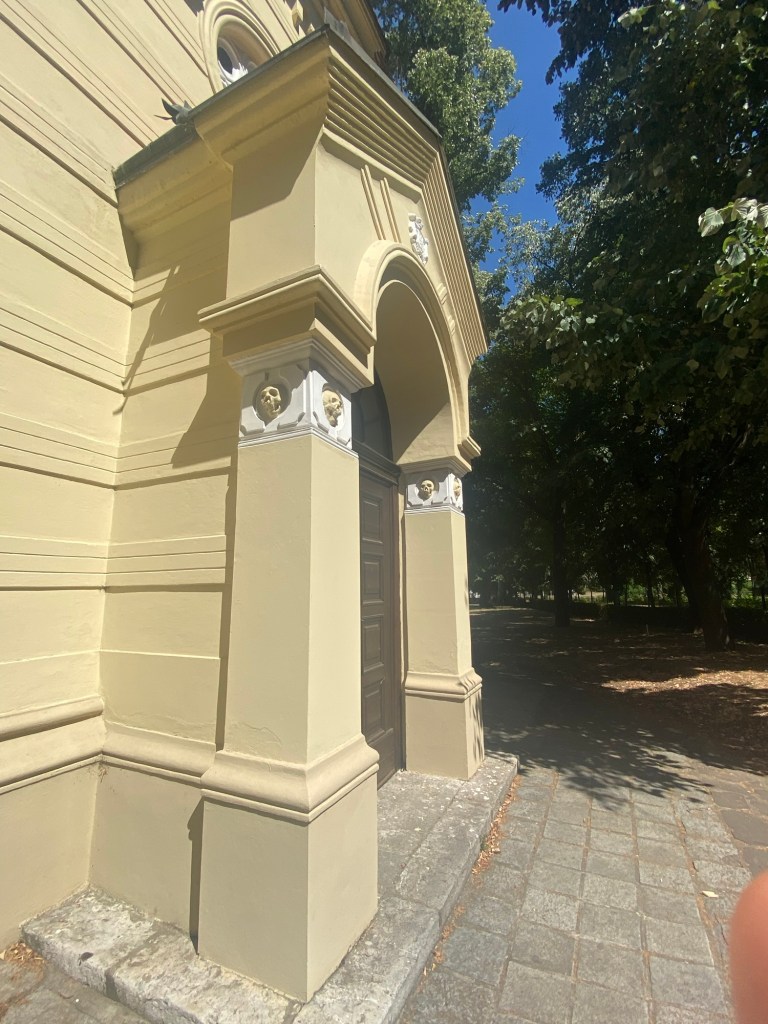
Outer building of Skull Tower
One portion of Skull Tower (I couldn’t get one without a window being reflected on the protective glass).

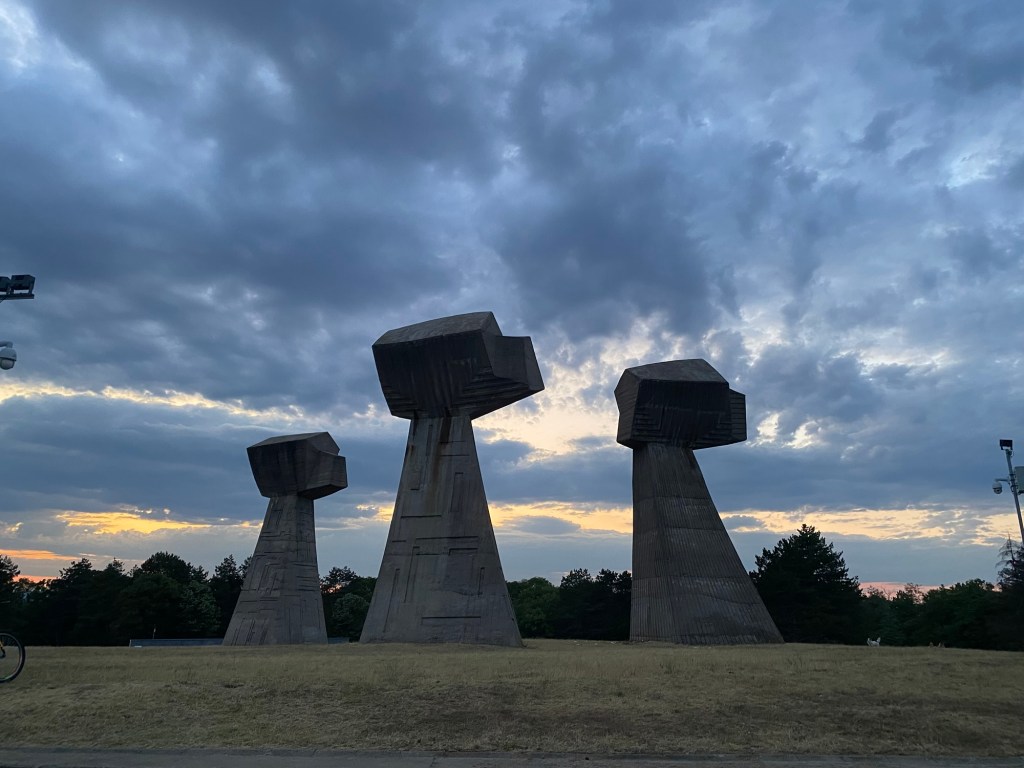
On Monday, I took it a bit easy having picked up a bit of a cold, but did wander a few of the sites that were open every day. The Fortress of Nis was just north of the river that ran by the cities main pedestrian street. The walls were very well preserved from both Roman and Ottoman use although the structures were mostly in states of disrepair. I also walked to Bubanj Park in the evening to see a memorial to those lost in World War II at the Red Cross Concentration Camp. Three distinctive structures that resemble fists being raised are on a site where prisoners from the concentration camp were brought to be shot.

The. Red Cross Concentration Camp—called this as the Red cross local head quarters were across the street—was opened in 1942 after the Germans had taken over was is now Serbia. The Jewish population, political opponents of the German rule, and others were brought to the camp and kept under horrendous conditions, forced to do hard labour, and then many were taken out to Bubanj Hill to be killed. The museum on the site in an older building that was used to house the prisoners in the concentration camp tells the story with many person vignettes of people who spent time in the camp. 

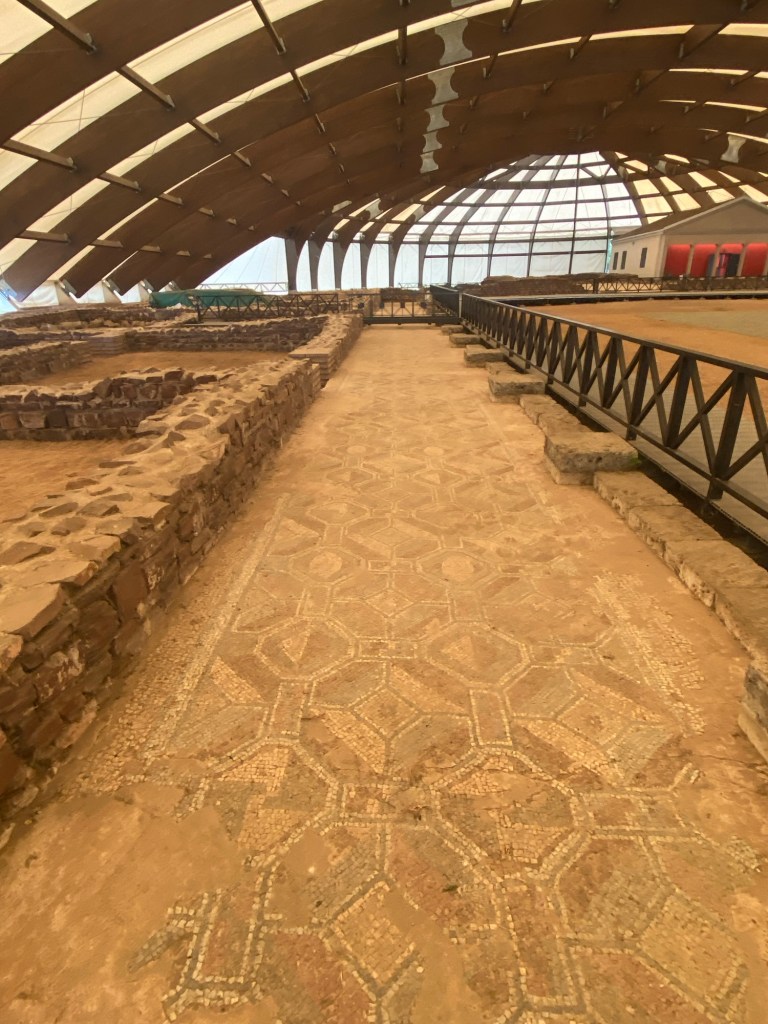
The other two sites that were included on a ticket I bought for 1200 RSD (about 16 CAD) were the Medijana and the archeology museum. These were connected by a large complex on the west side of Nis where excavation over the past century have revealed their remains of the Roman Town of Naissus. A covered dome structure at the Medijana protects a large home and baths that would have been part of the main building of a central square. Some of the floors have been repaired and cleaned and show the patterned mosaic work that is common in Roman ruins. The museum was small and highlighted the history of finds in the Medijana and other places around Nis. 

I’m glad i got a chance to see Nis. At times it felt like a town very much like my home in Prince Albert, Saskatchewan, given its size and condition of buildings. 

Exploring Greater Belgrade

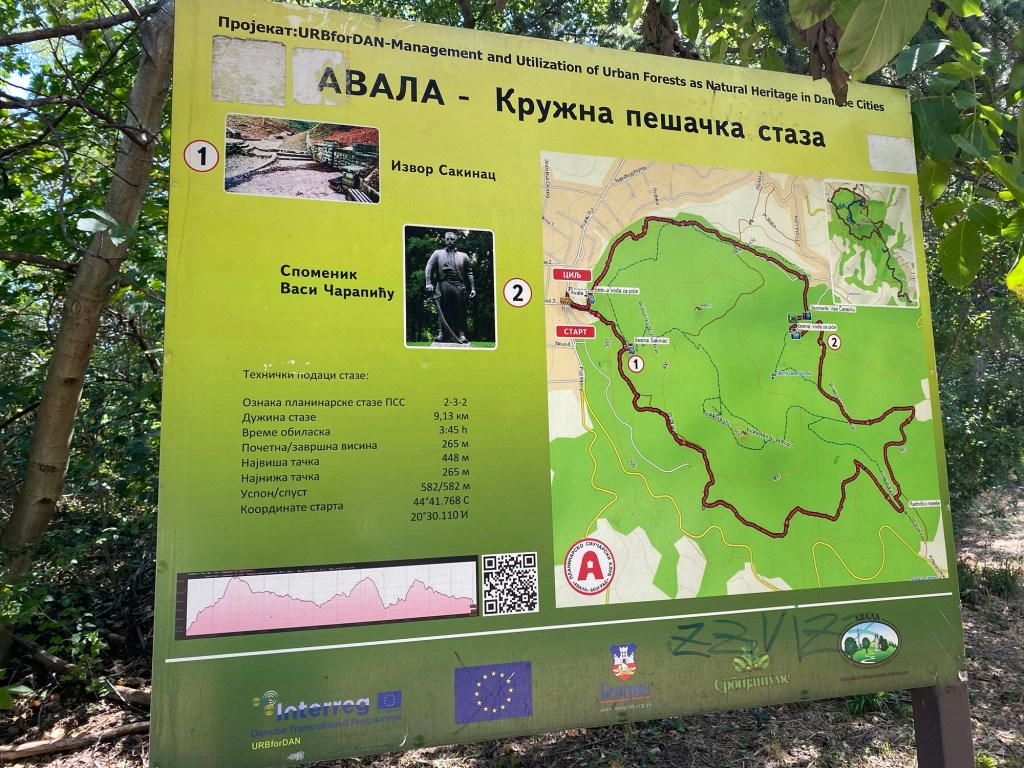
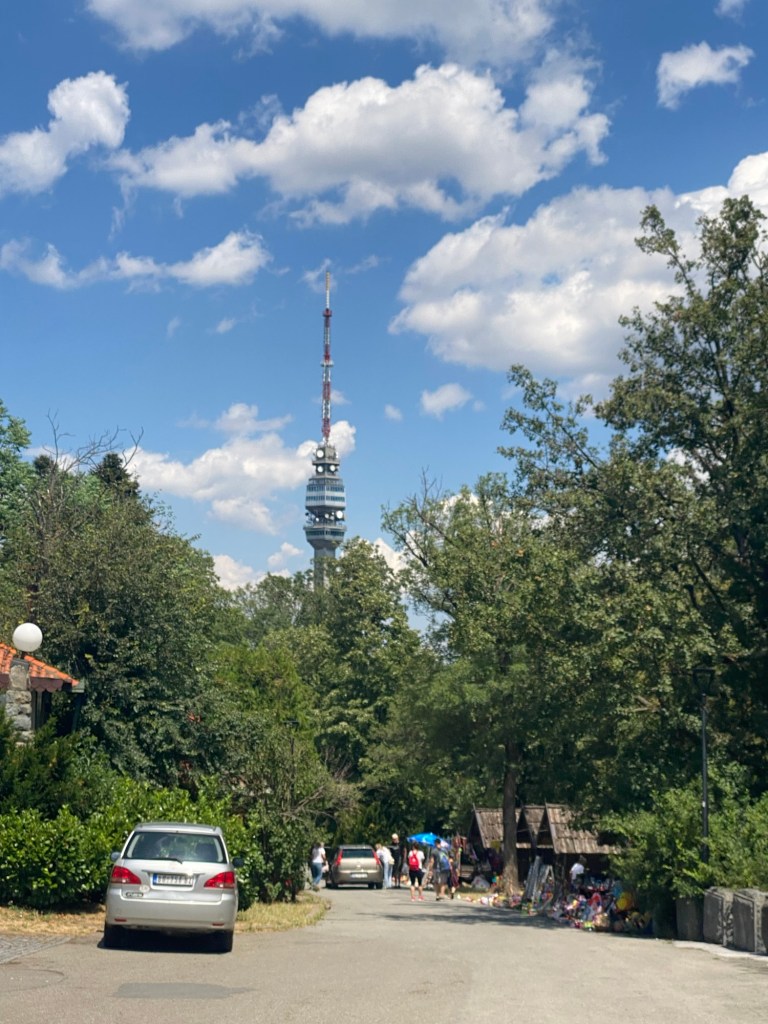
I haven’t done as much hiking as I originally anticipated on my trip. Although I do look for the odd day hike that I can do to see more of the lay of the land than just the urban centres of places I visit. In Belgrade, I had heard of a short hike up Avala Hill to a tower and a World War I memorial that I thought could be good to see.
Avala Hill is on the southern end of Belgrade, technically outside the city limits. I took advantage of the free public transport to get out to the town of Avala where a trail begins up a hill. I used the Moovit app to help navigate which buses I needed to take as the route took a bit over an hour on a couple buses. The gentle cutbacks of the path made it easy to climb. Part way up there is a small sitting area with a fountain that you can get water at. Although the path had some places of uncertainty as to direction, particularly at the top where it wasn’t clear which path took me to the memorial and which to the tower, a helpful local got me oriented and in the right direction.

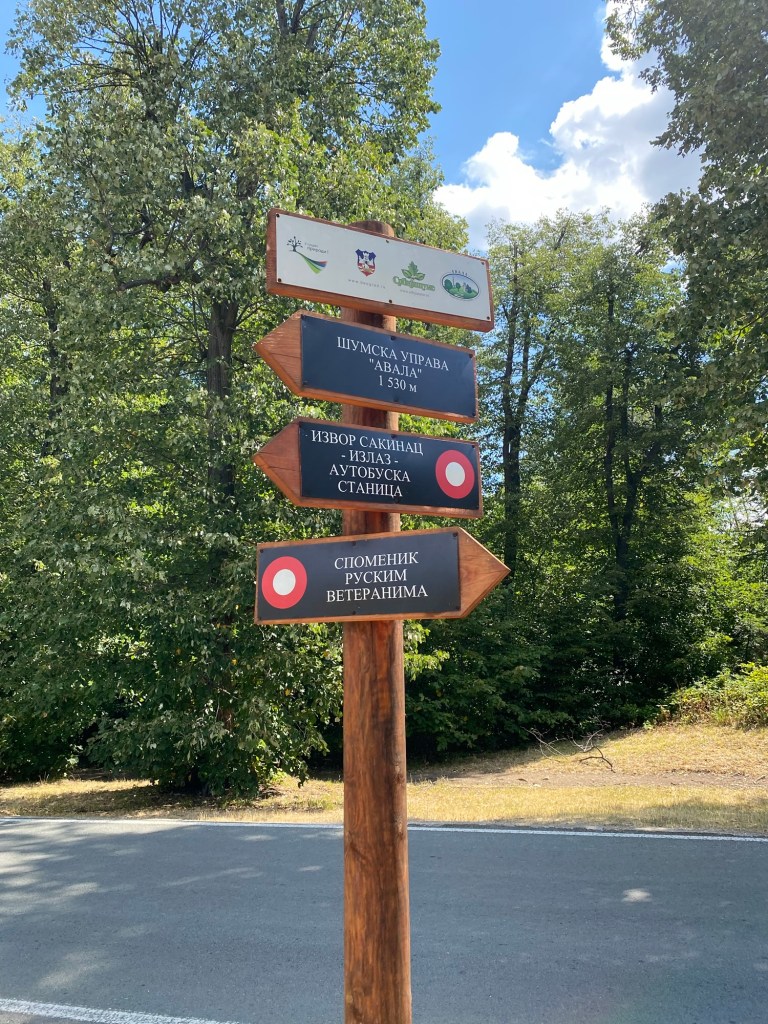
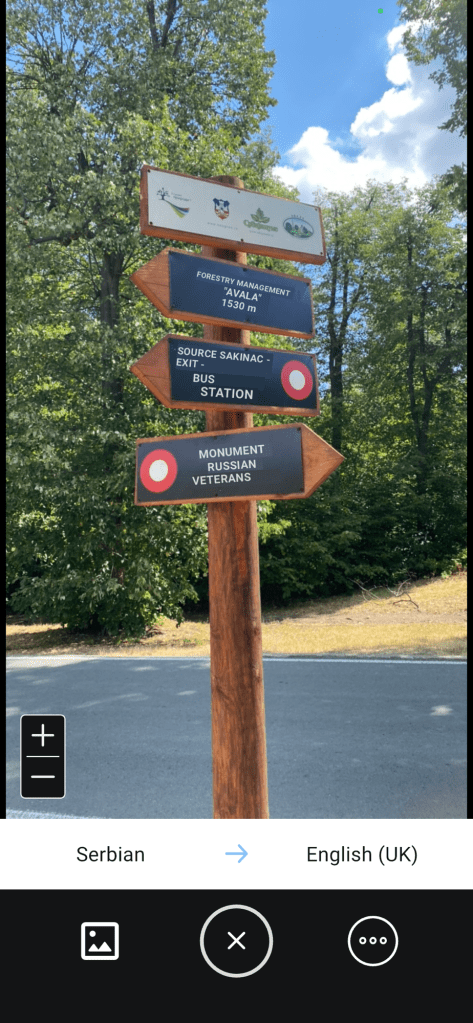
Thankfully google translate helped me navigate the Cyrillic signs.

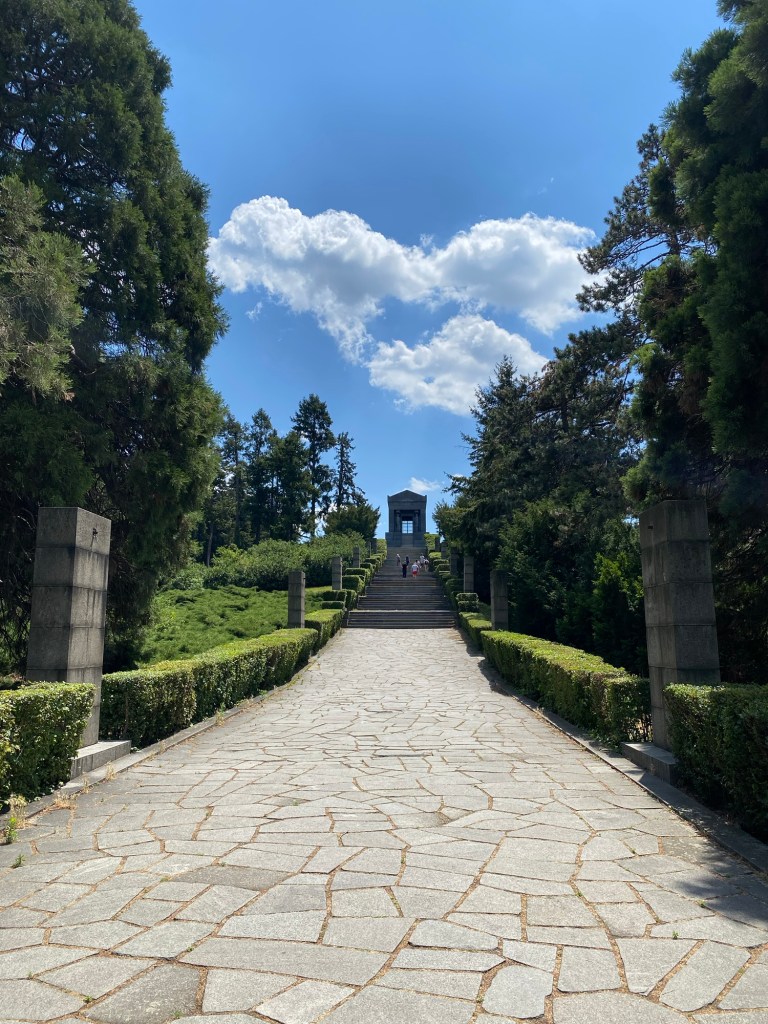
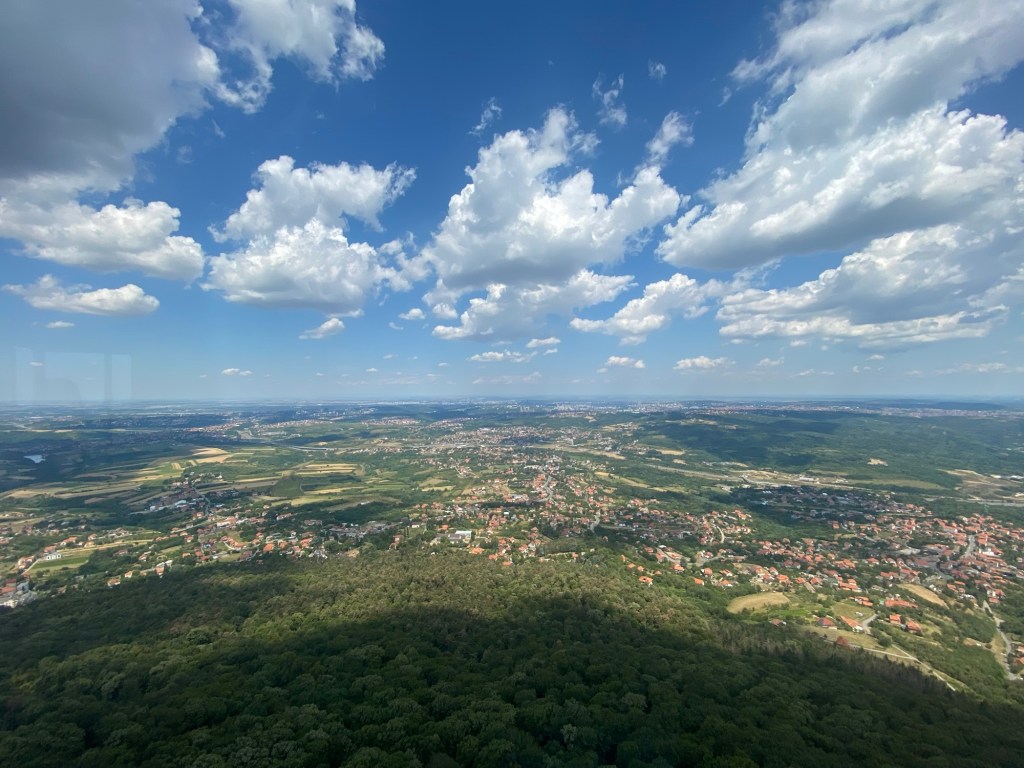
The Memorial was to then unknown soldiers lost in World War One by the Slavic nations. It had a strong Soviet design and looked south over the fields of Serbian. The tower was about 500 metres north but obscured by trees from the memorial and trail as it wasn’t at the peak. Information suggested it had been one of the ten tallest buildings in the world when it was constructed but had long since come off this list. Still, the observation deck gave a broad panorama where you could see Belgrade and the Danube to the north and the rural areas surrounding it. A museum and coffee shop were on different levels of the tower.

Avala Tower.
War Monument.
Looking north from Avala Tower observation deck.

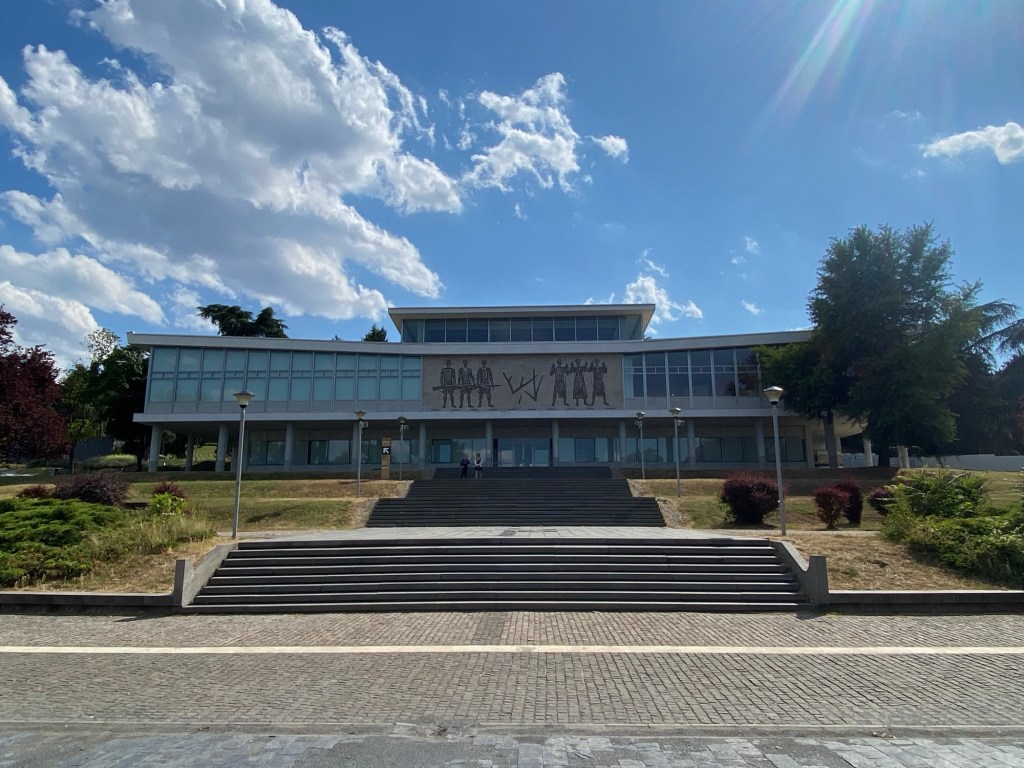
In the afternoon, I made my way back to Belgrade and stopped part way to visit the Yugoslavian National Museum. It was an interesting design including four buildings: the main museum building, the ticket office/store, the old museum, and the House of Flowers. As I ex-pored it became apparent that this museum was really about the long-term President of Soviet Yugoslavia, Josip Broz Tito, and not so subtly was encouraging his cult of personality. The Old Museum had the majority of the exhibitions, interspersed with items given to Tito over his 28-year rule. The House of Flowers was apparently a main office for Tito which he had constructed along with the other buildings with a broader park area. It was also where he lay in state prior to his funeral. The main museum really had two main rooms to visit which appeared to be rotating exhibits. On my visit, one room celebrated Soviet monuments across the former Yugoslavia, and the other told the story of one of the other Yugoslavian Soviet leaders, Veliko Vlahovic.

Yugoslavian Museum.

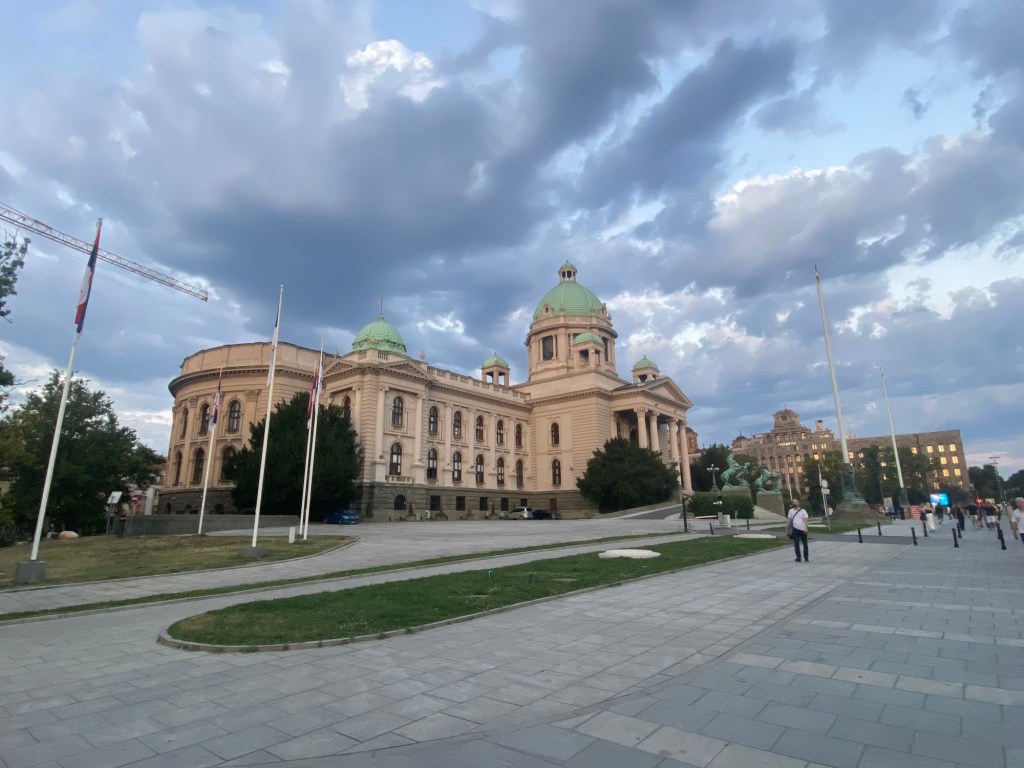
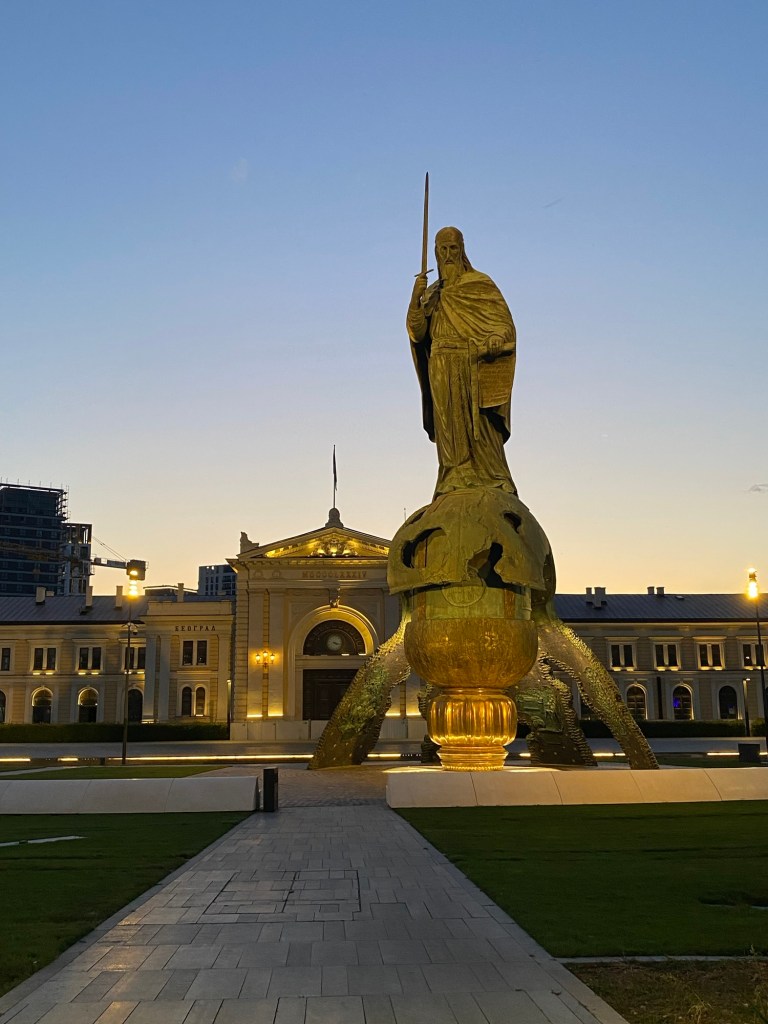
For my last evening in Belgrade I explored some of the parks and monuments I hadn’t seen, including walking by the Serbian Parliament.

In Belgrade

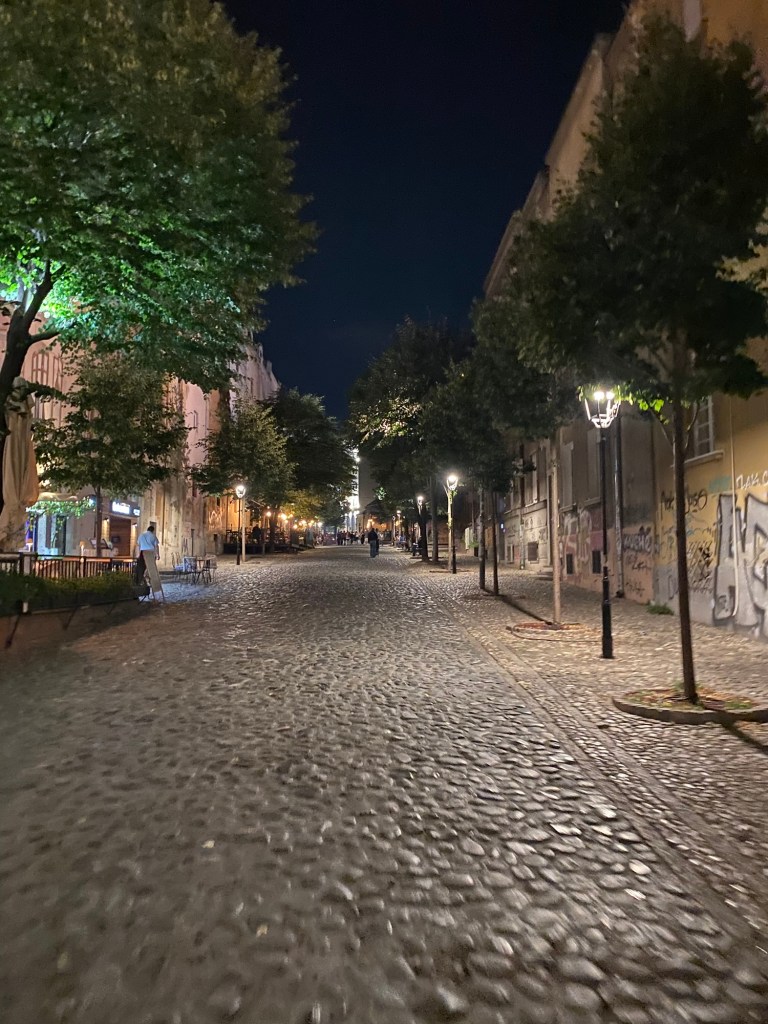
It is always interesting to book accommodation online in a place you don’t know and then show up to see where and what you actually booked. In the case of Belgrade, I got fairly lucky. I booked the Up Hostel and found it was right in the middle of the active bohemian walking street, Skadarska. Right outside the doors of the hostel is a scenic street with many restaurants, bars, and a few shops. Many of the restaurants play live music long into the evening giving it a vibrant atmosphere. This street is also not far from main central walking street, Prince Michael street, which connects to many of the main tourist attractions in the central area of Belgrade.

The first evening I was able to explore and wander the streets and largely people watch while I got myself situation and made plans for the time in the Serbian capital.

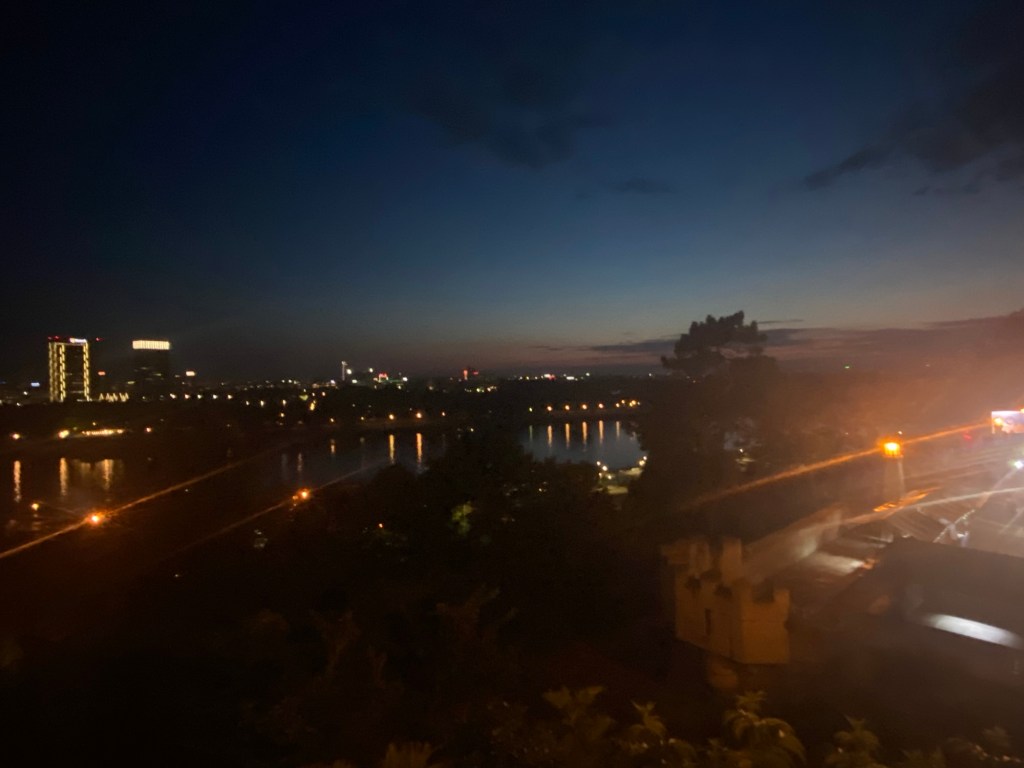
The first full day, I joined the free walking tour to have a two and a half hour tour through the neighbourhoods I had wandered through the night before. It was a good way to learn some of the history of the country and city and to better understand what I was looking at. With the city situated at the confluence of the Danube and Sava rivers, it was clear that this had played a large part in making this city a major thoroughfare over the generations. The guide noted that the city had been attacked more than any other city in the world due to the location. He indicated that there had been 119 battles for Belgrade or its predecessor cities, going back to pre-Roman times. This is likely why the Belgrade Fortress is a central part of the tour and looks across at an island situation between the two rivers called Great War Island.

Belgrade Fortress.

In the afternoon I explored the Serbian National Museum and took in some of the history and art of the Serbian country. The museum did a good job of providing a visual timeline of activity in the area from Neanderthal findings to early human settlements and through the Roman, Ottoman, and early Serbian Independence as part of the Slovak Nation. I am assuming most of the modern history is in the Yugoslavian Museum which I have yet to visit.
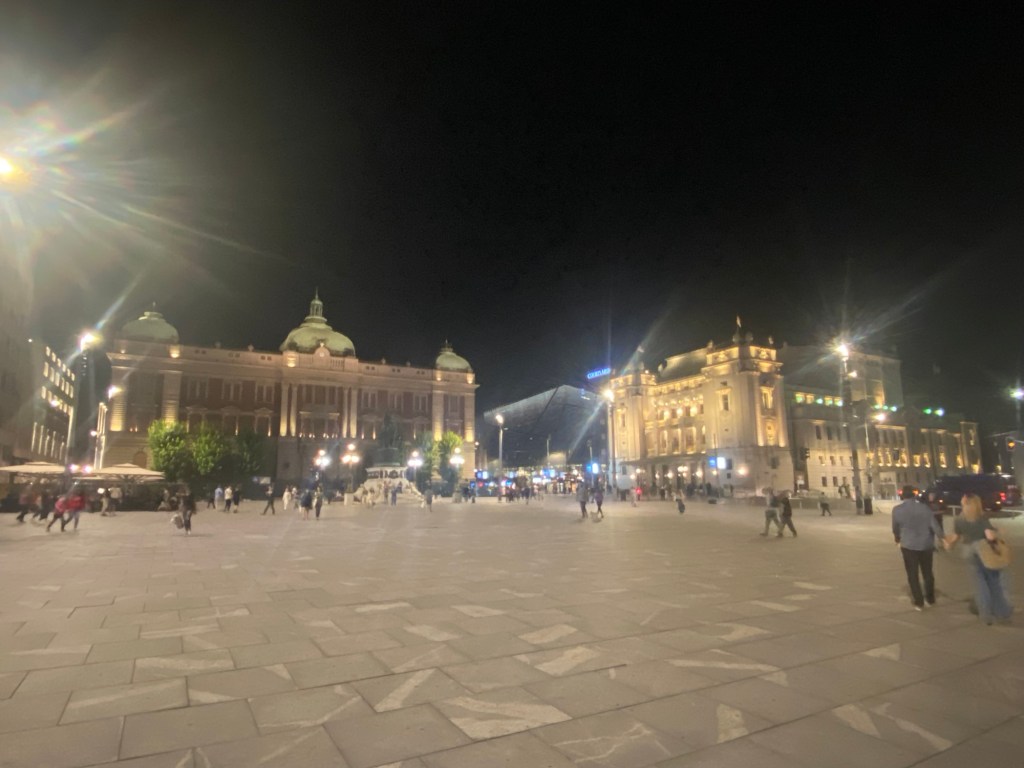
Serbian National Museum and National Opera House in Prince Michael Square.

Timisoara and the start of the western Balkans trip

I am on a train to Belgrade from Vrsac. Yesterday was my last day in Romania before heading into the travel through Serbia, Kosovo, North Macedonia, Albania, and Bosnia and Herzegovina before meeting up with Jenny, Shaan, Hannah and Taran in Croatia in early July. I realize this is a lot to pack into the next three weeks.

Timisoara was a nice starting point although I ran into challenges with a delayed train out. Rather than getting in around 2130, I arrived at 0100. The guesthouse I was staying at was accommodating, but not too happy about the late arrival.
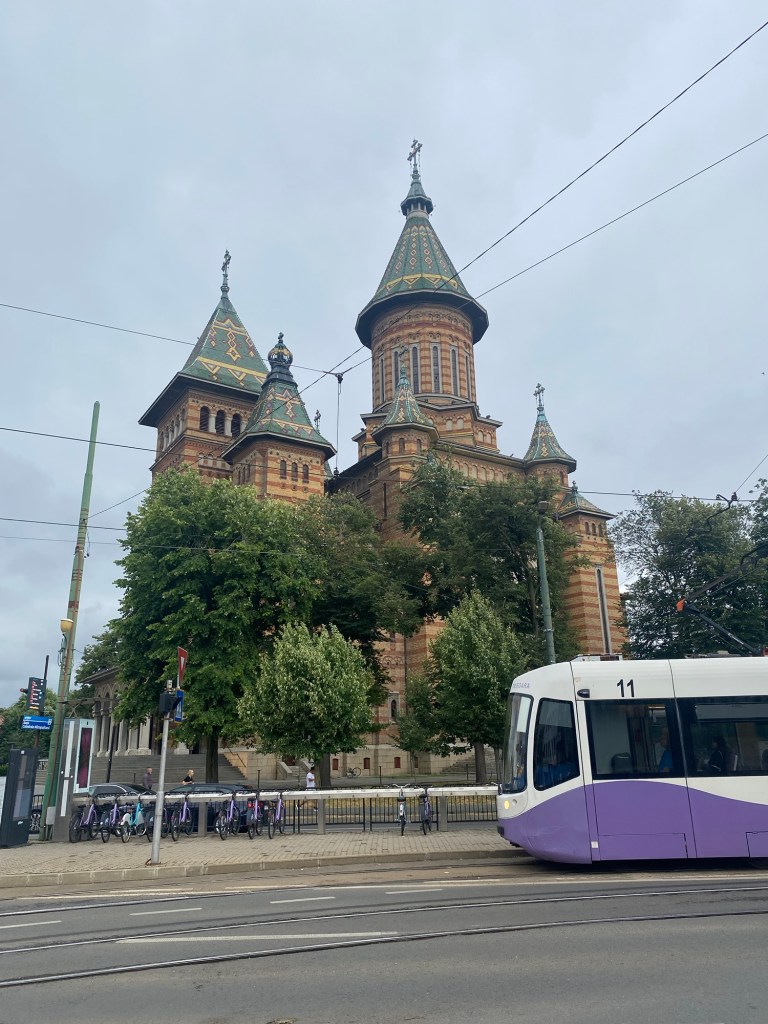
On the walk to Central Timisoara

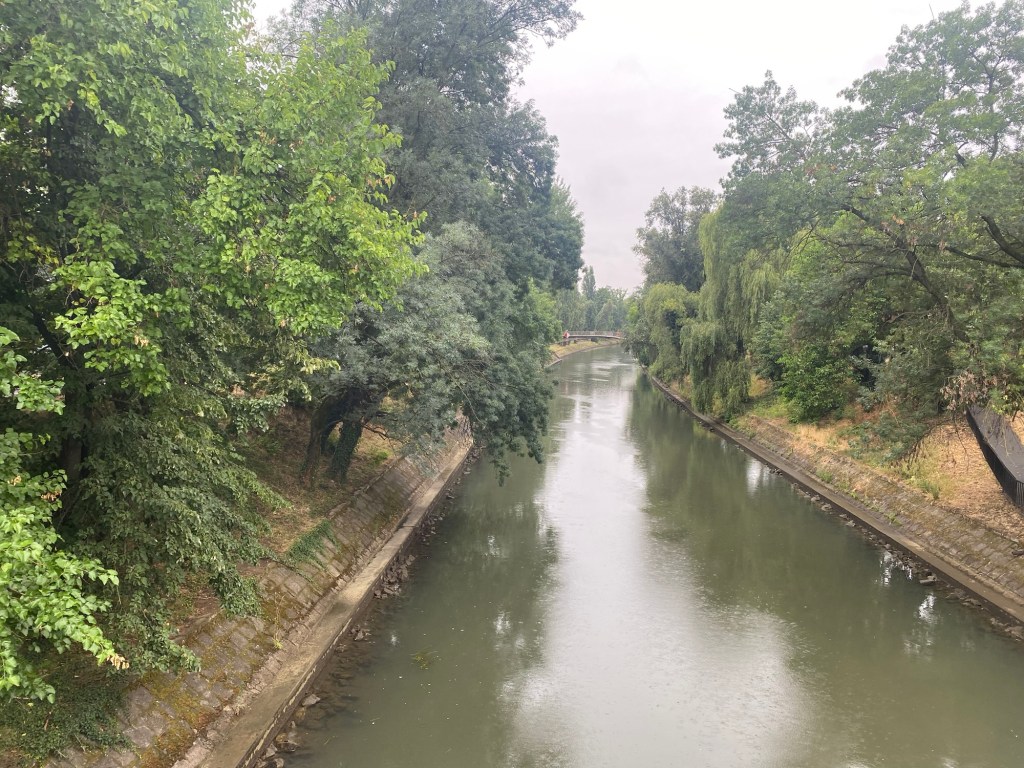
Timisoara was a nice small city with a claim to being the greenest city in Romania. Definitely the Old City and downtown core had a lot of parks and squares that provided greenery and a sense of perspective of the older sections. It appeared to be a younger city in terms of the “old” city section with many of the buildings built in the late 19th and early 20th century. Some of the medieval battlements remain but most had been repurposed into shops or museums.

Union Square

I started the day exploring the Memorial to the 1989 Revolution which told the story of how Timisoara was the start of the revolt against Ceasescue and the Romanian Communist party in December 1989. It was well done and provided a lot of context to the events in Timisoara and how they spread through Romania.

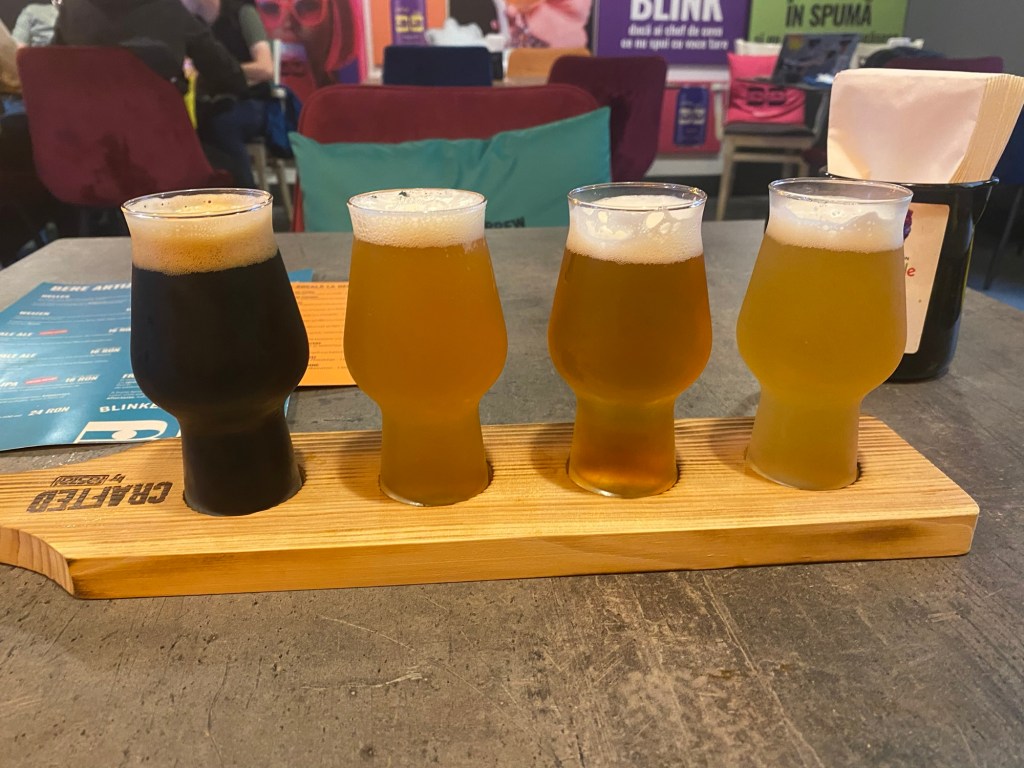
I spent a lot of time wandering and looking at the various sites along the cobblestone streets of Timisoara. Due to the rain I went to the National Art Gallery as well. Then I ended the day trying some beer at a brewery that had a store downtown.

It was a good way to end my time in Romania for now. The trip out of Timisoara to Serbia was a bit more eventful. I had read that there wasn’t any direct bus or train routes, so was expecting to catch a bus to Morivita, town just inside the border from Serbia, take a taxi across the border to Vrsac, the first town not he Serbian side. Somehow I ended up with a miscommunication to the taxi driver who felt I needed to just go to the border. I was confused, but hopeful I could find someone to drive me on the other side, and I think the border guards thought I was some migrant sneaking in to work illegally. I got a few more questions that usual. At any rate, I did get through but didn’t find taxis on the other side. My phone also wasn’t connecting in to any network and so I decided to walk the few kilometres to Vrsac. At least it was a nice day for the walk.

Now I am on my way by train to Belgrade. The adventure continues.

Day six and seven in Bulgaria: Pleven and area

We decided to break up our return to Bucharest by picking a central location on the journey so we would have about three hours on both days. After some discussion of a few locations we decided to stop in Pleven.

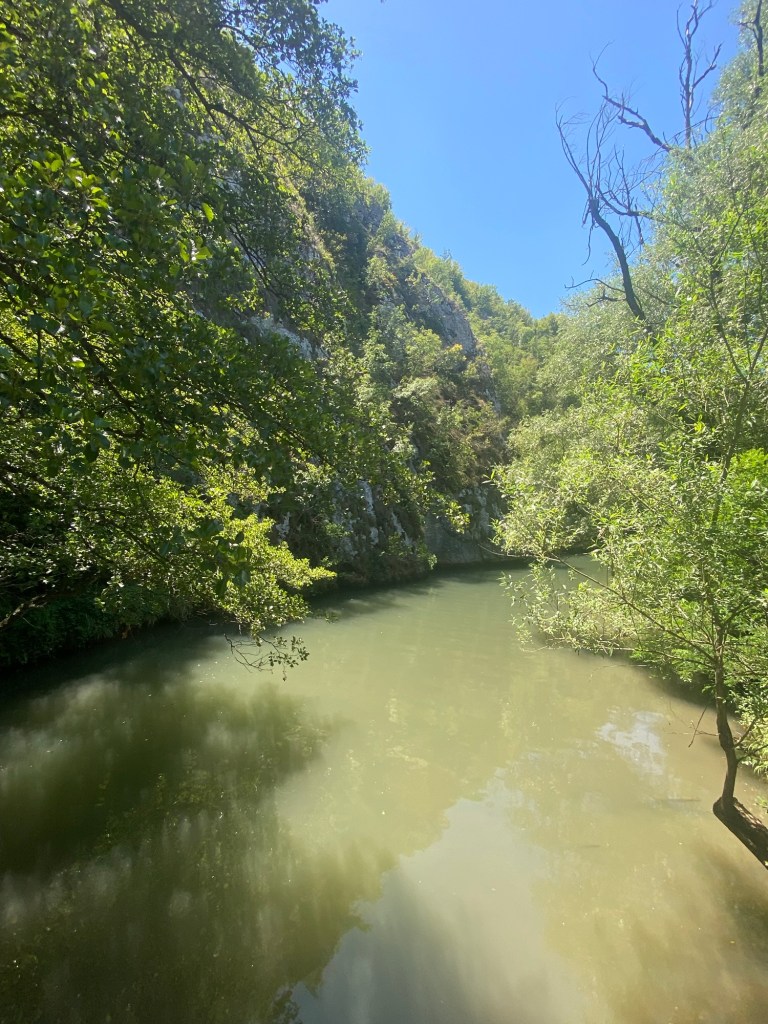
Stream beside walking trail.

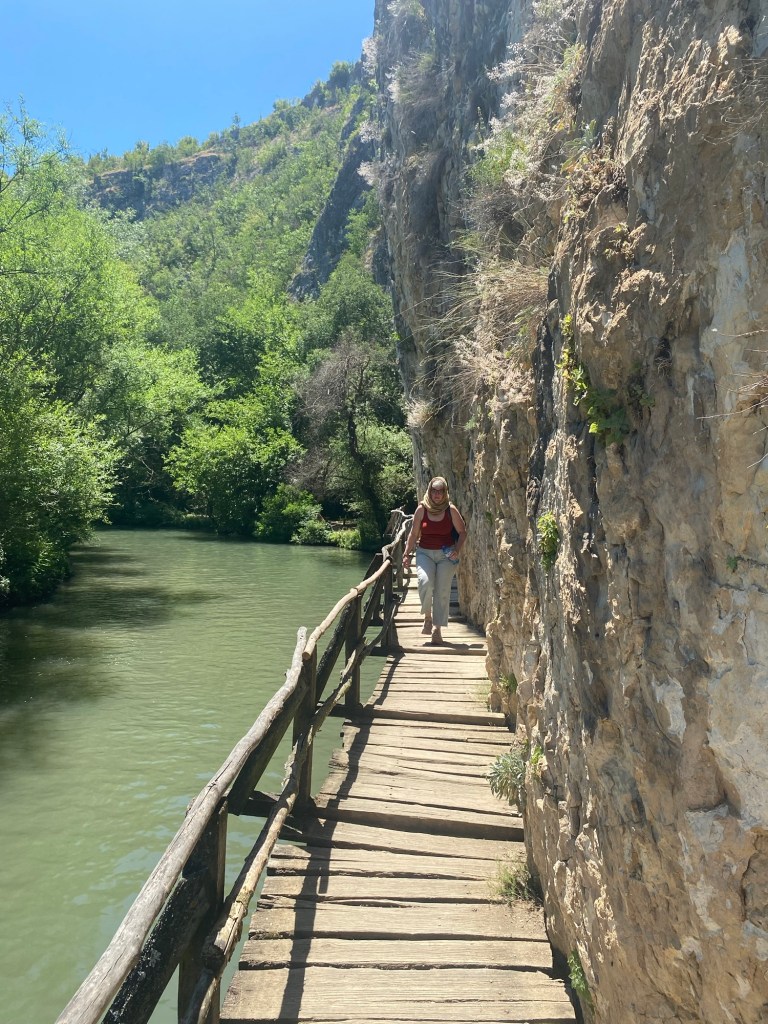
On our way to Pleven we noted a road side pullout that was more active than most. We decided to stop as it was past noon. We wandered down a path and found a nice sitting area where we could sit in the shade and eat lunch. In looking on thenAllTrails app it appeared to have some sort of undocumented walking path. We wandered down to a small dock about 400 metres from our lunch spot and found there was a path, built partly on an old Roman road, that had been set up along a small stream that went for about 1.6 kilometres. We wandered it going over a couple bridges, passing a few picnic areas with semi-enclosed shelters. As we wandered further the path went under cliff faces will walkways built beside them. This led to a series of caves that we could walk into. Not having any gear other than the iPhone lights we didn’t go deeper than around 100 metres. I learned afterwards that there was a series of caves in the area, the most famous of which is “The Eyes of God” which allows people to walk into a large cave with two eye shaped holes at the roof  that look down on those who enter. We did not get to this location for ourselves. At the end of this in and out walk was a shire with a number of paintings on the cliff wall. It was a nice break from drive. 

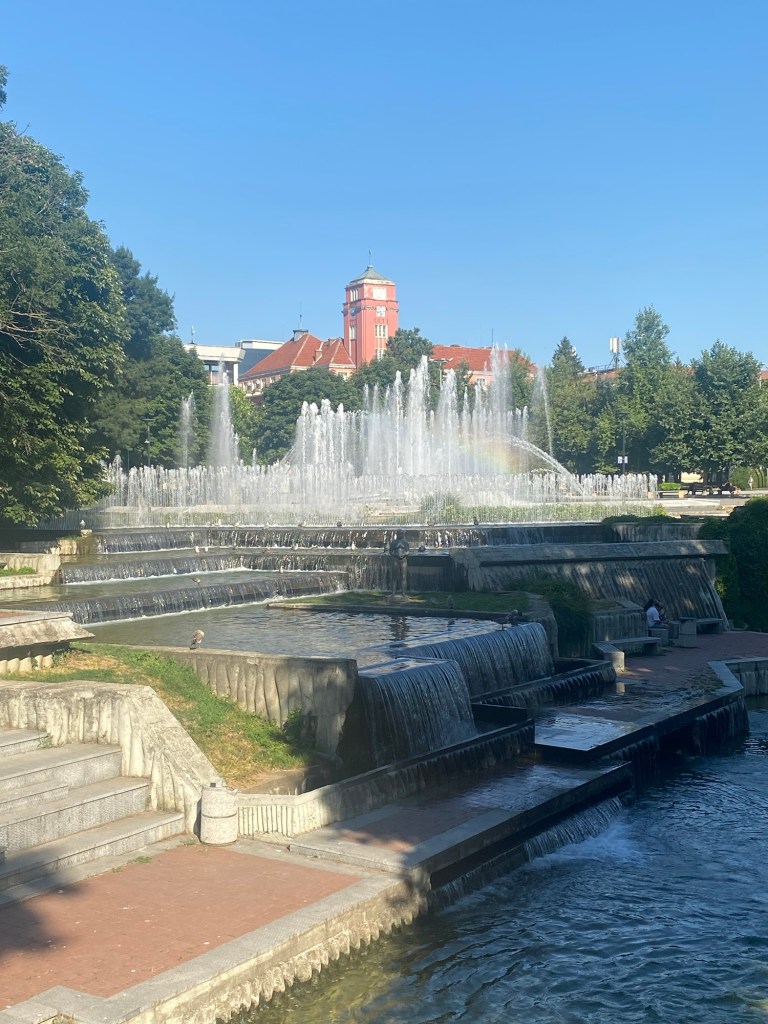
We got into Pleven in the late afternoon and found the hotel we booked as located right on Pleven’s Central Park. This large green area in the middle of Pleven was a nice respite on a warm day. It had countless fountains that we spread over the park and, as it became evening, some of the fountains danced with colour and water displays making the busy park more exciting. 

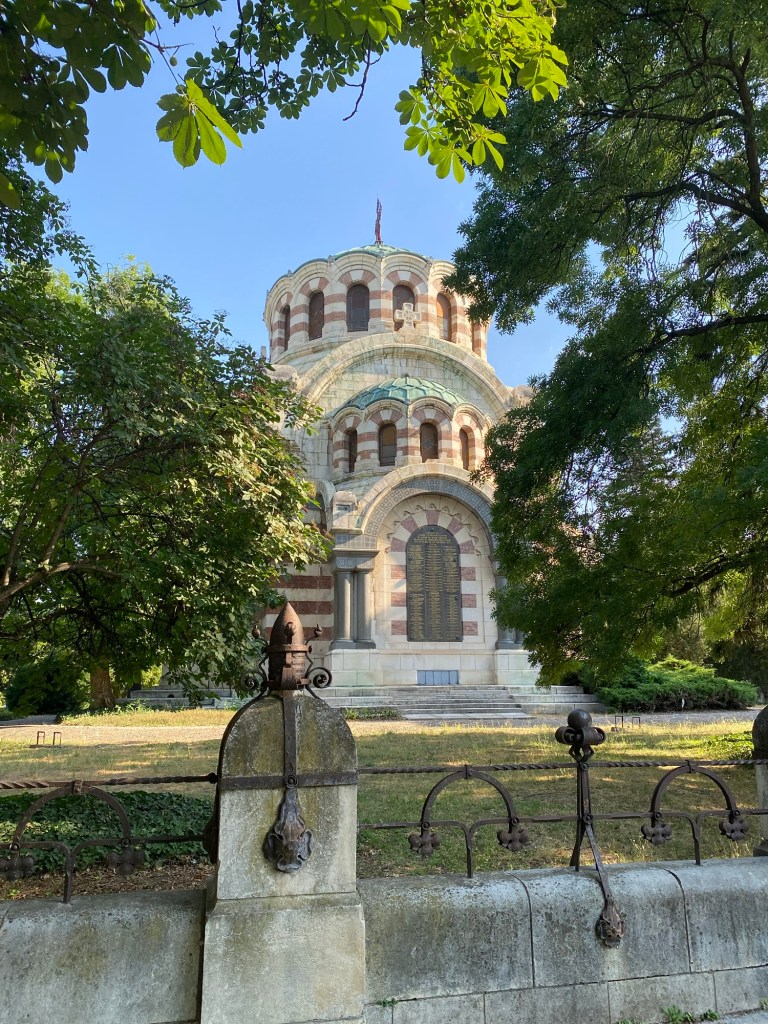
Around the park was a number of restaurants, a mausoleum commemorating the Second World War, and a church that had been converted into an art gallery with art from a Pleven-born, former National Art Gallery Director who had bequeathed his personal collection to his home town. This latter gallery was interesting to look through with its array of art from Bulgarian artists, but also a range of art from more famous artists of the 19th and 20th century like Manet and Picasso. 

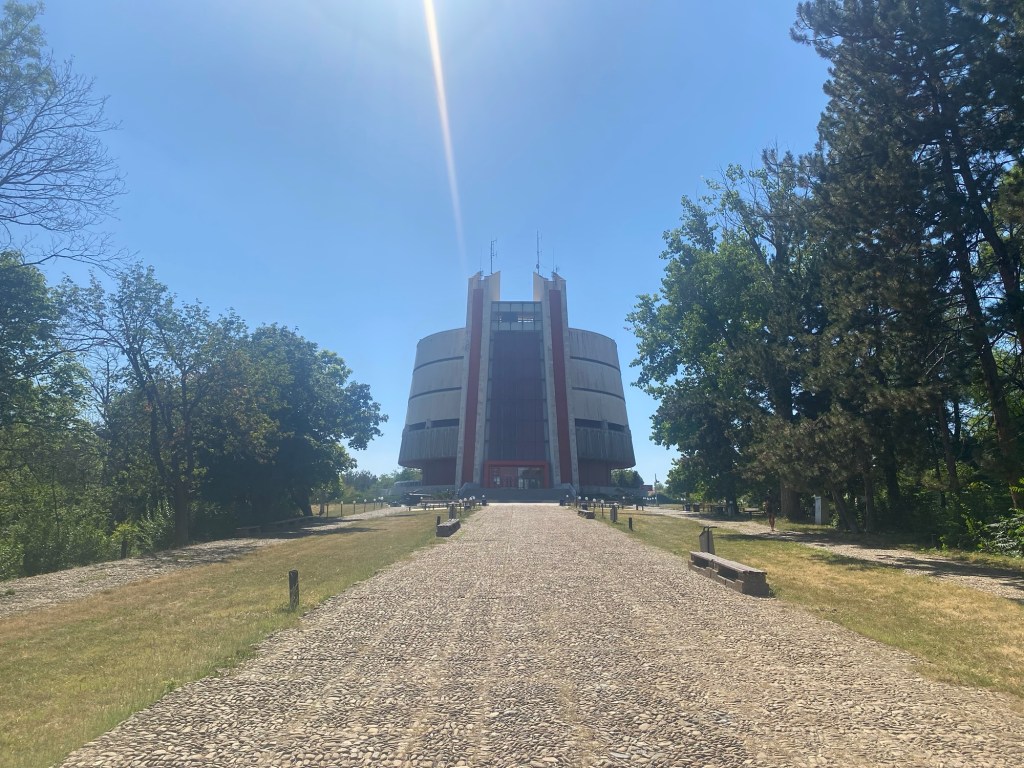
We had chosen Pleven as a stop to check out their War of Independence Museum. Set at the highest point of the city, a location that also put it in the midst of the battlefields that engaged the Ottoman, Russian, and Bulgarian troops in 1877 during the Siege of Pleven. This ended up being one of the major wins for the Bulgarians that helped set them on the path to Independence from the Ottoman Empire. The Museum included a number of large art pieces including the 360 degree panorama that covers the circular walls of the fourth floor of the Museum and gives a perspective on what the battle may have looked like at its peak. 

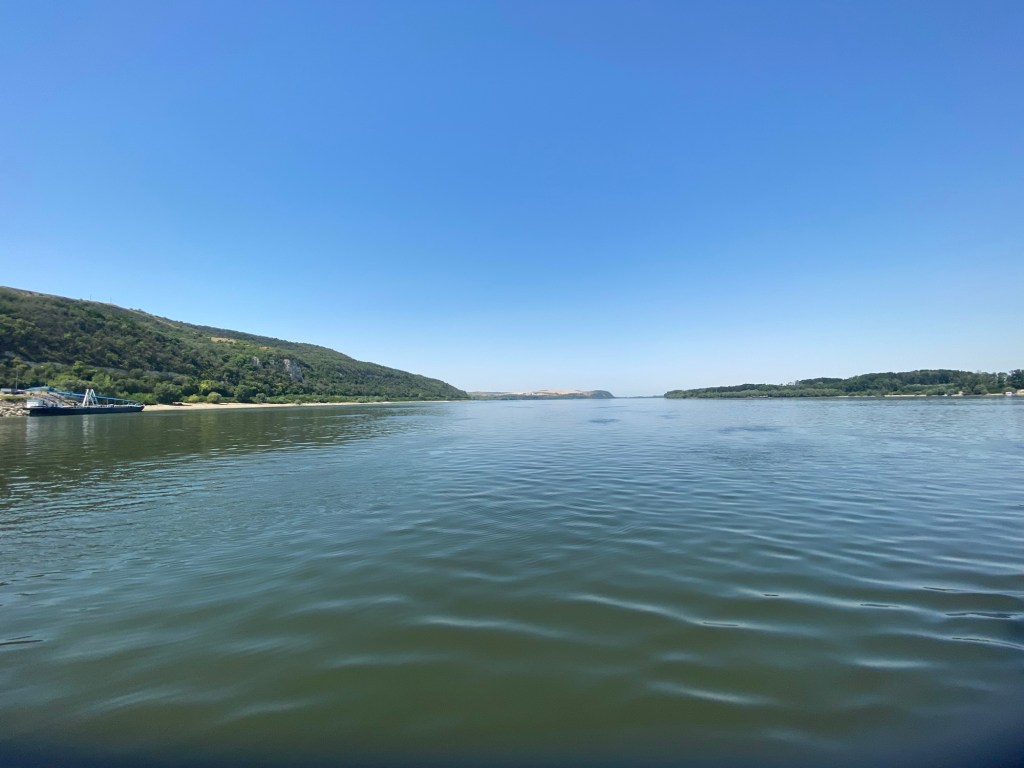
In returning to Bucharest we took a different route that allowed us to cross the Danube by ferry. It was an interesting way to see a different part of both Bulgaria and Romania. 

Day five in Bulgaria: the Rila Mountains

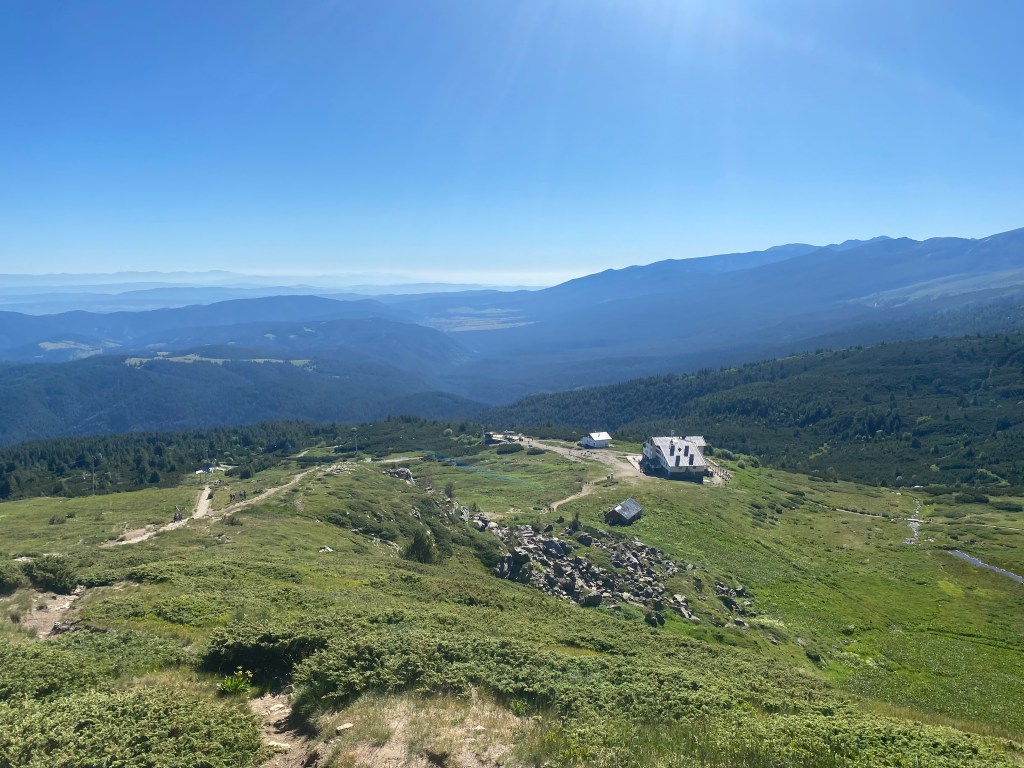
When I initially was planning on travelling to Bulgaria I had thought on doing a multi-day hike through the Rila Mountains. My plans advised when my sister Fiona joined me, but I still wanted to see some of the beautify of the Bulgarian mountains and visit the Rila Monastery. We chose to use GetYourGuide to book a full-day trip that would take us to both the Seven Lakes area of the Rila Mountains and the drive is around to the Rila Monastery. It was a 12-hour trip with three two-hour drives between the sections. We departed Sophia behind the Alexander Nevsky Cathedral at 0700 and returned twelve hours later after an active but enjoyable day.

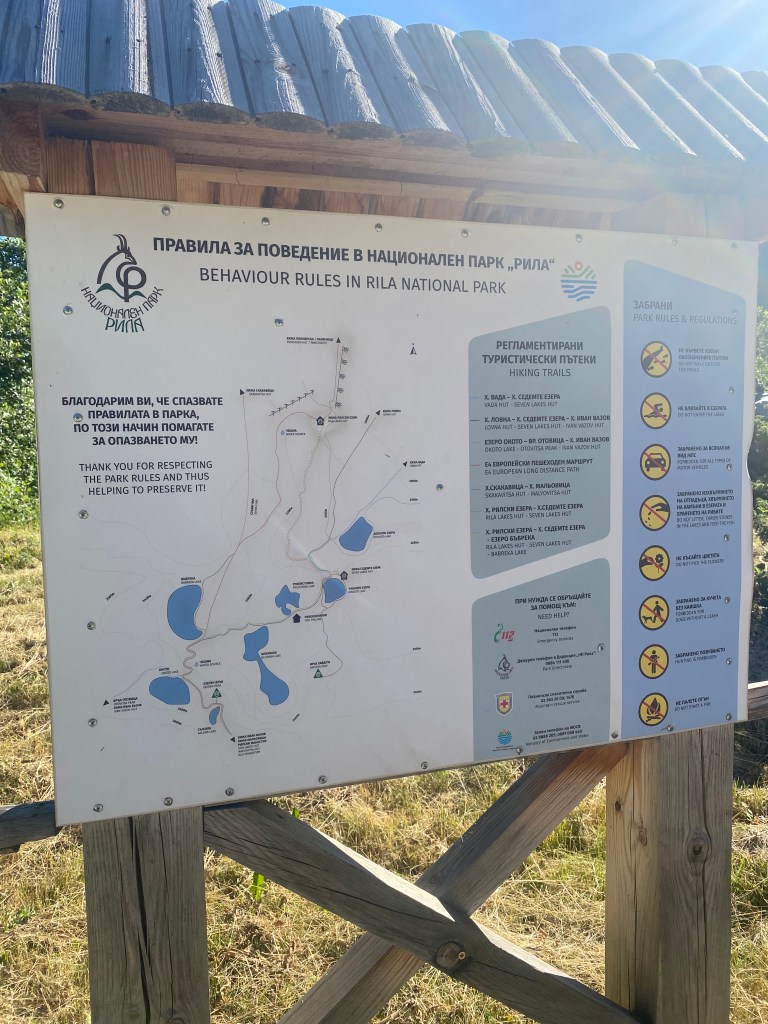
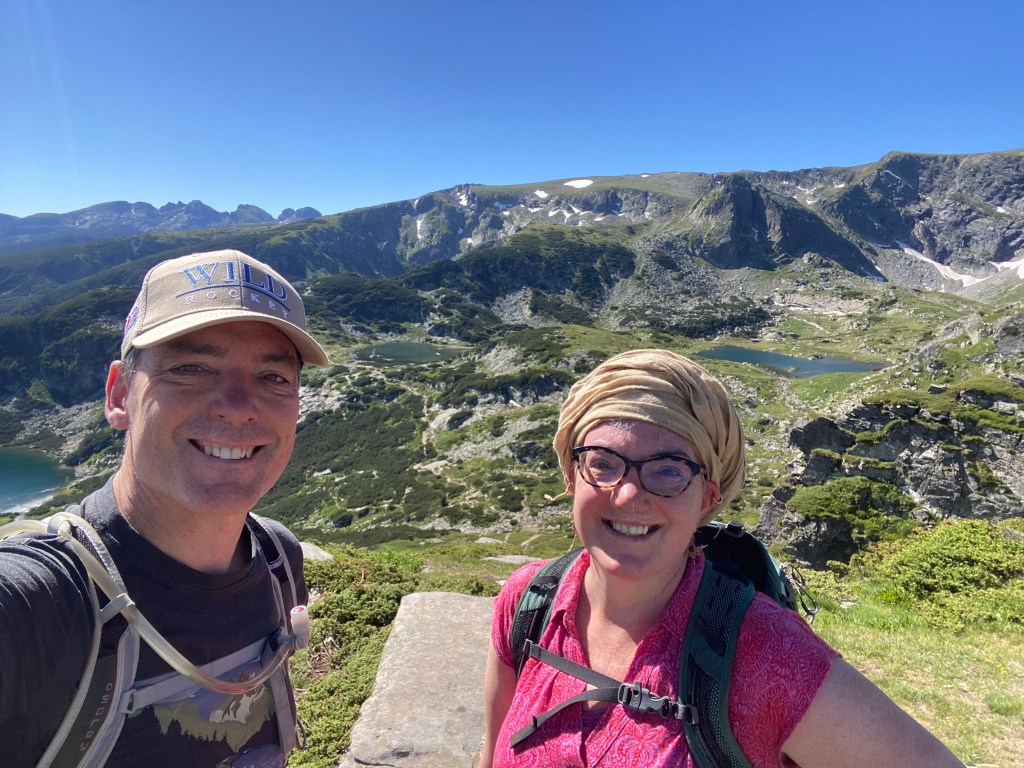
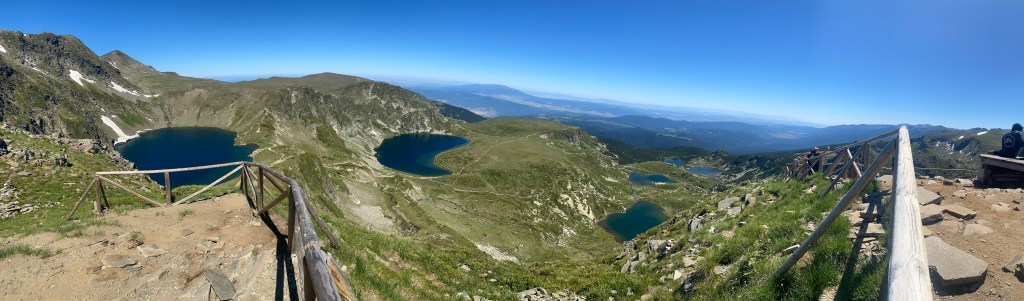
The Seven Rila Lakes was an enjoyable nine kilometre round trip with a fair bit of up and down. The hike started with a 20-minutes ride up a ski lift to the Rila Lakes Chalet. From here we started upwards towards the lakes. The first lake, Lower Lake, was seen about twenty minutes into the hike and the hike kept revealing new lakes about every fifteen to twenty minutes after this. We had the benefit of explanations of then names, geology and history of the lakes from our guide who grew up in the Rila Mountains. It took us just over ninety minutes to get to the seventh lake, Egg Lake, and the vantage point from which you could look down on all the lakes. On the return we took a route closer to the initial three lakes that showed us a different view of these and took us just under Rogue’s Peak, a unique rock formation popular with mountain climbers.


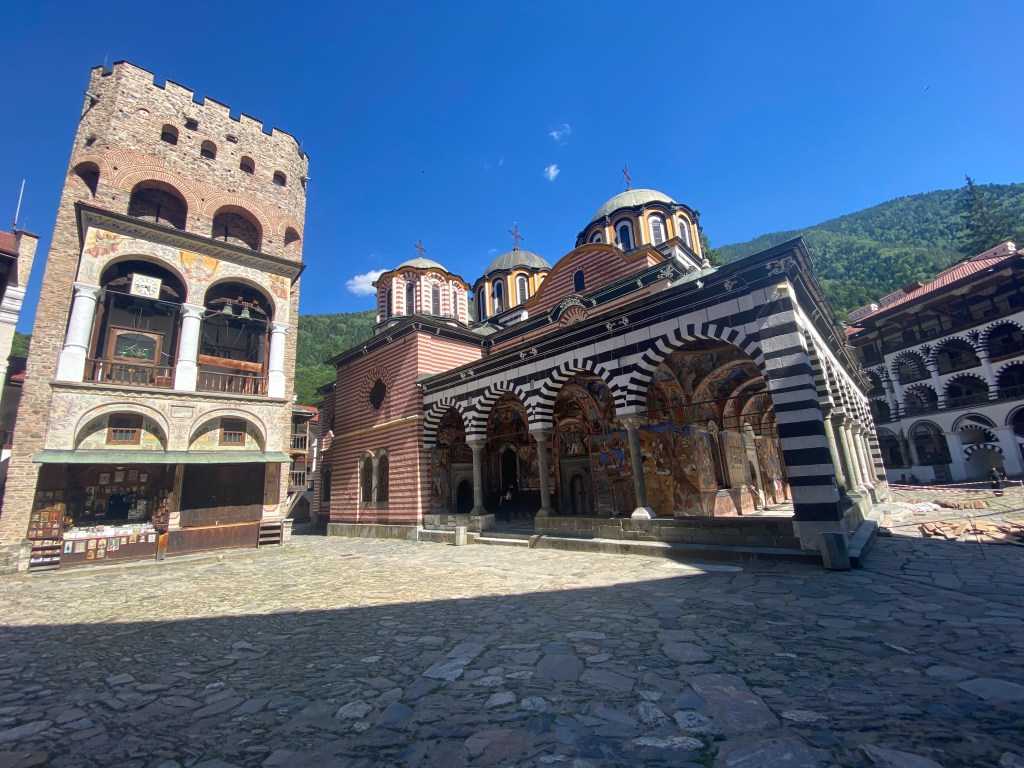
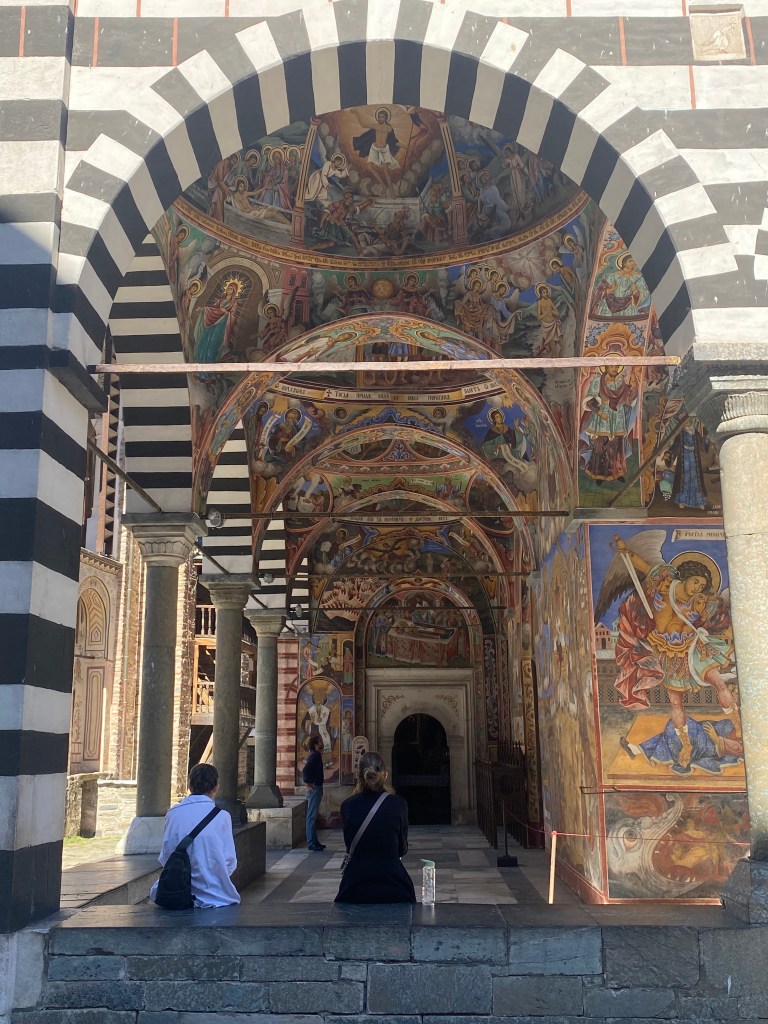
After returning to our bus we drove the two hours to the Rila Monastery, a serene setting that is seen as a central site for the Orthodox Christianity that is the main religion in Bulgaria (although multiple guides indicated that most of the population in non-religious after years of communism in Bulgaria). The monastery once housed 400 monks and learners, but today has around twenty monks living at the Monastery. As this was an active Monastery we weren’t exploring the various floors of the four level structures where the work and living quarters were, but wandering the main level was interesting enough. The Nativity of the Virgin Church is the central building that draws the eye as you walk into the Monastery. It is entirely covered in paintings of scenes from the Bible inside and outside. On our visit the inside was being cleaned and touched up to bring out the more colourful aspects of this art that was originally painted in the early 19th century. The oldest building, Hrelja’s Tower, was erected in the early 14th Century. We paid the small fee to go up the tower to see the chapel at the top including its painting that dated back to its construction. Definitely the Rila Monastery was worth the visit.