Day five in Bulgaria: the Rila Mountains

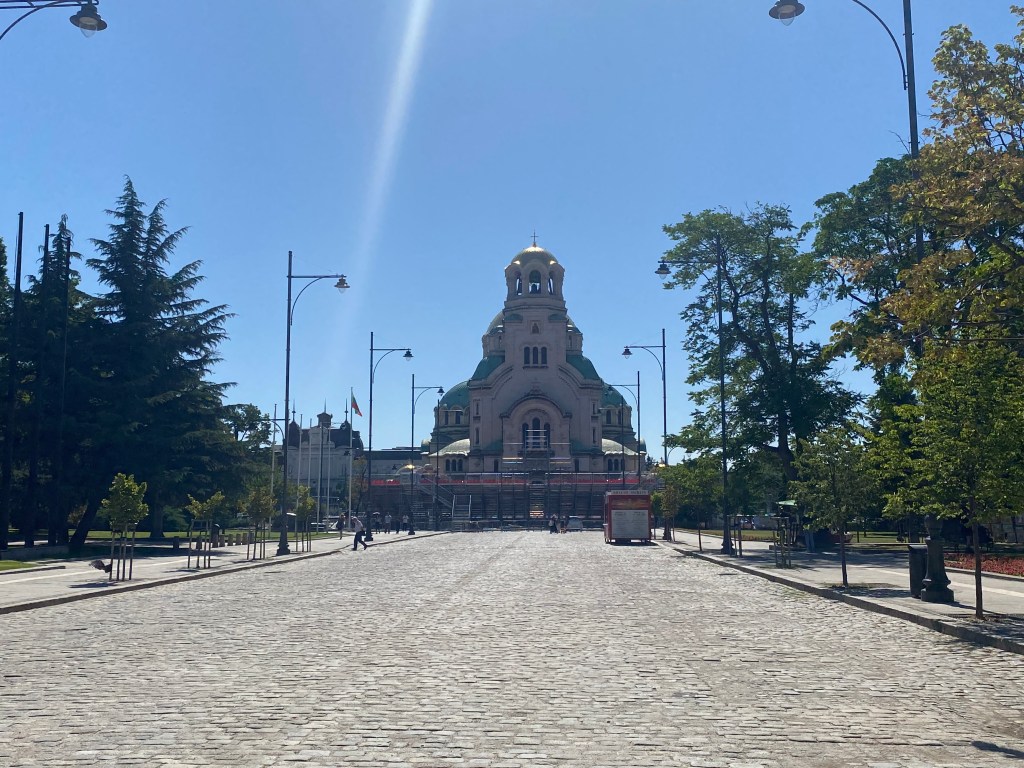
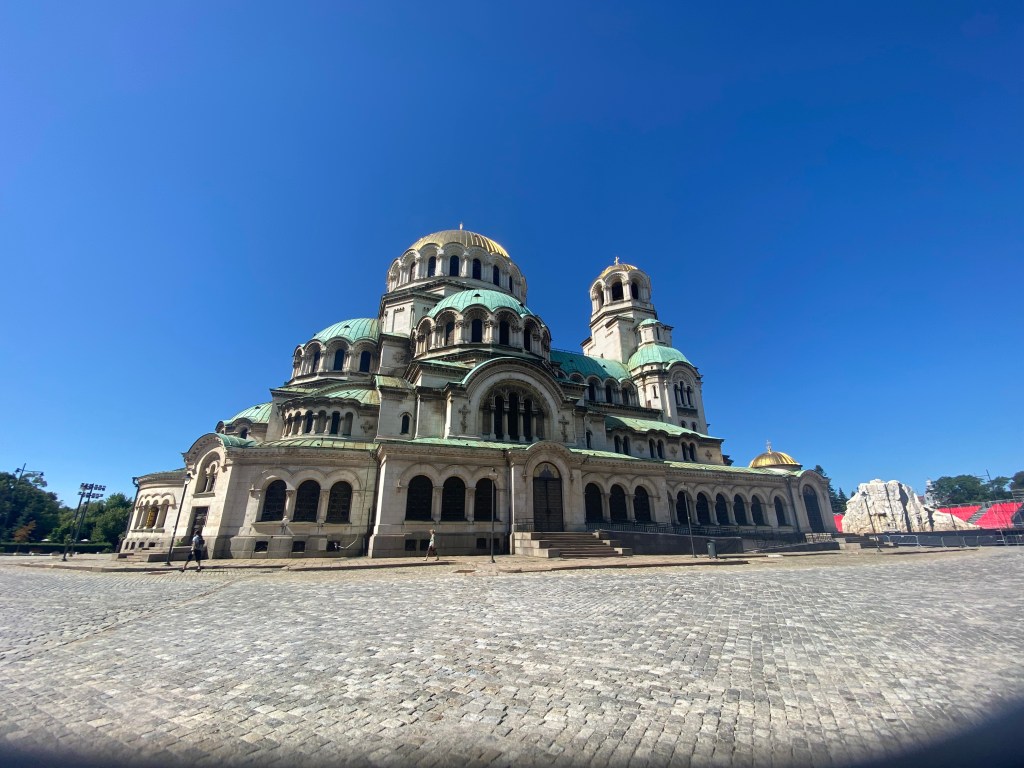
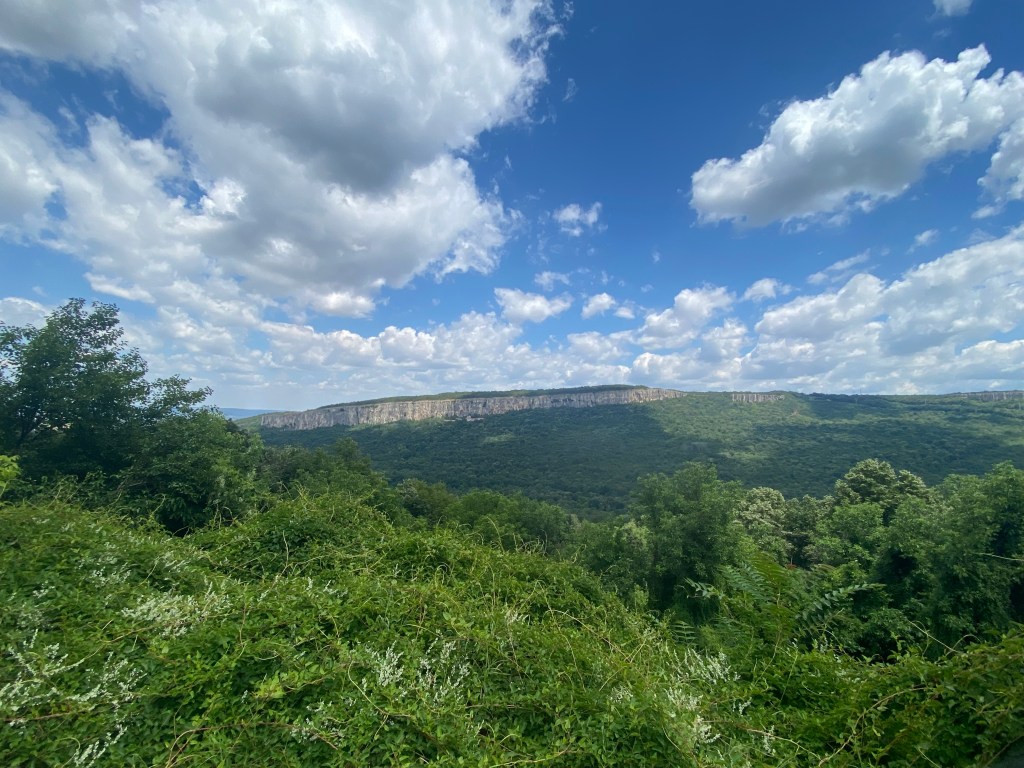
When I initially was planning on travelling to Bulgaria I had thought on doing a multi-day hike through the Rila Mountains. My plans advised when my sister Fiona joined me, but I still wanted to see some of the beautify of the Bulgarian mountains and visit the Rila Monastery. We chose to use GetYourGuide to book a full-day trip that would take us to both the Seven Lakes area of the Rila Mountains and the drive is around to the Rila Monastery. It was a 12-hour trip with three two-hour drives between the sections. We departed Sophia behind the Alexander Nevsky Cathedral at 0700 and returned twelve hours later after an active but enjoyable day.
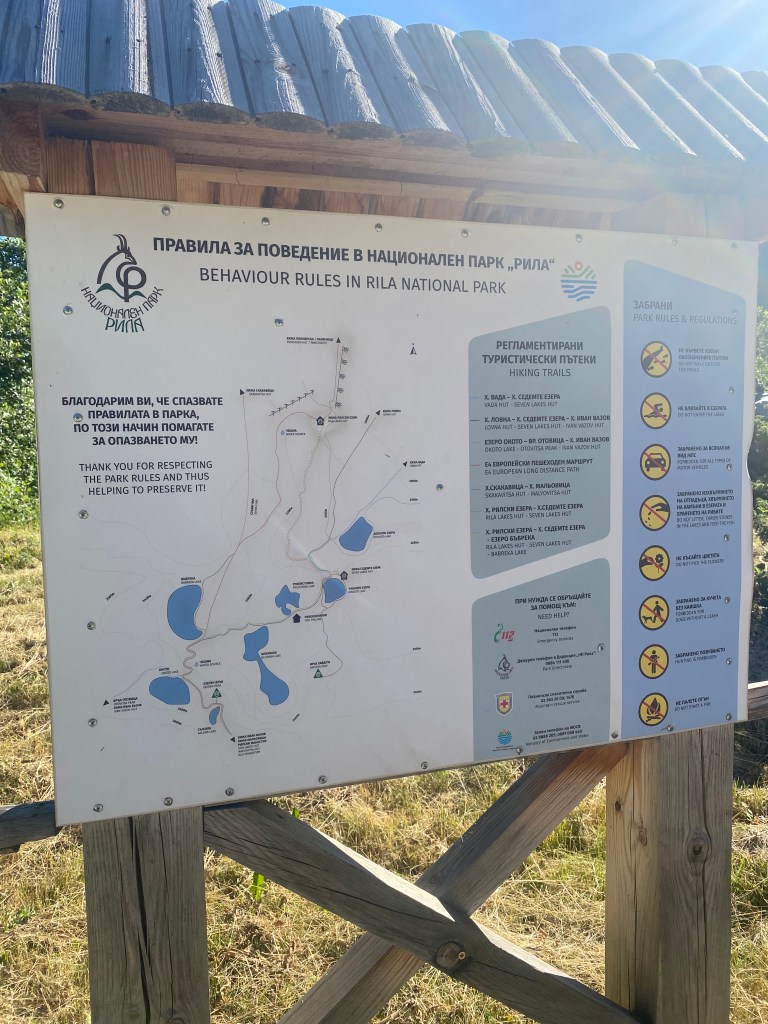
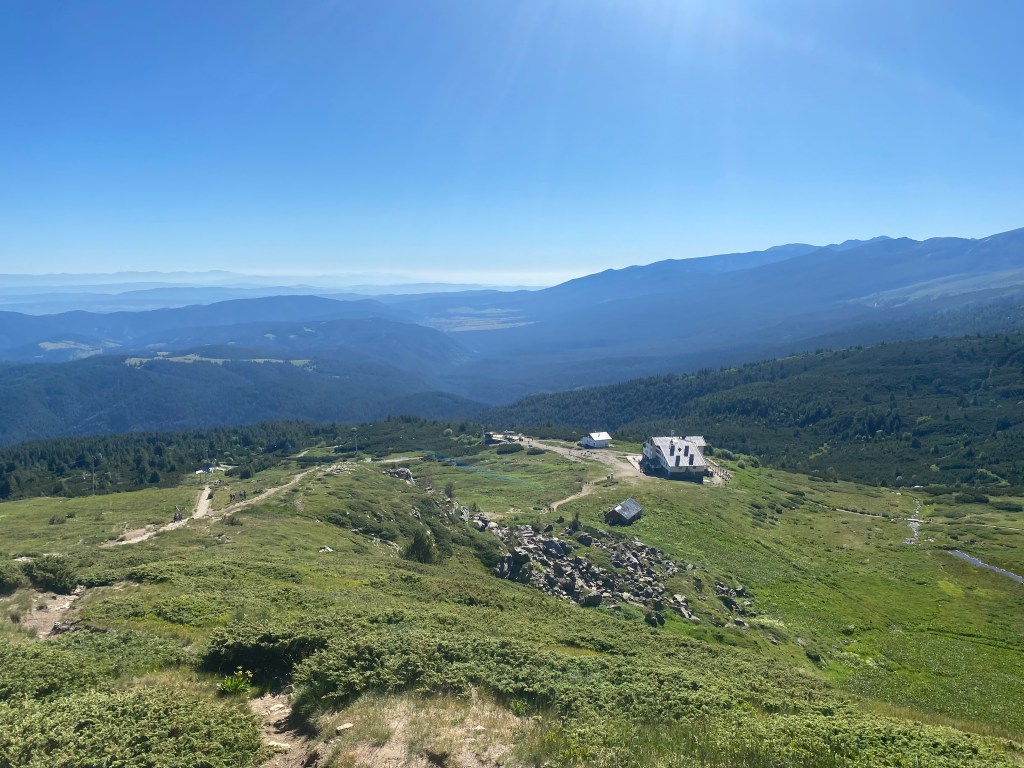
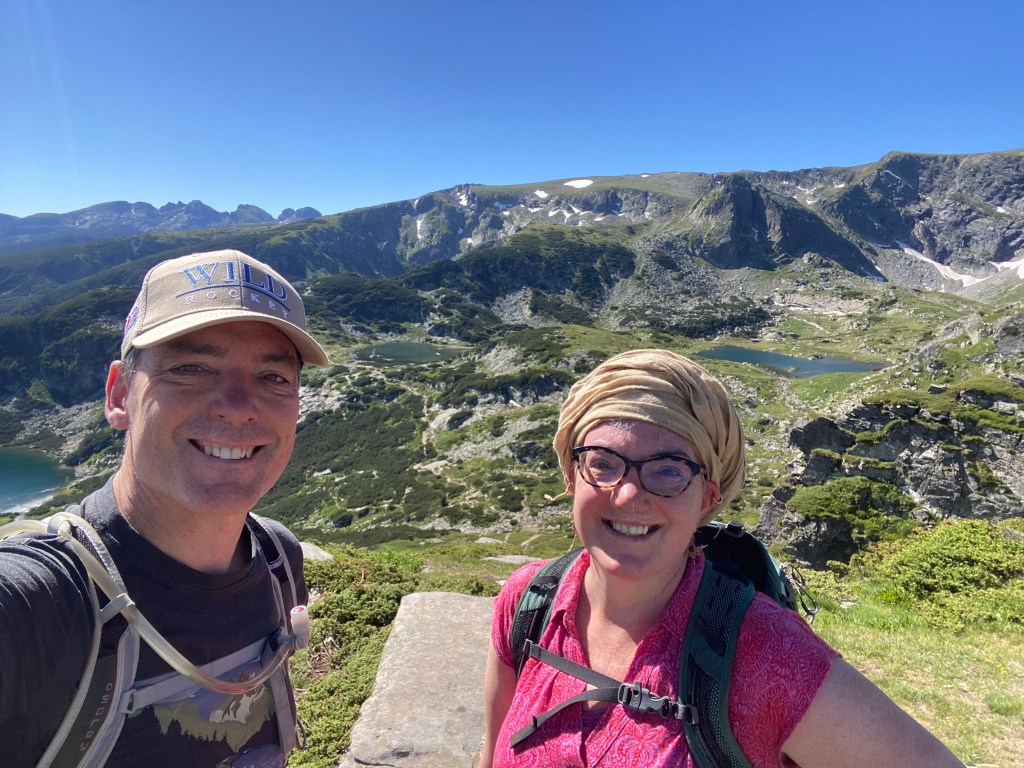
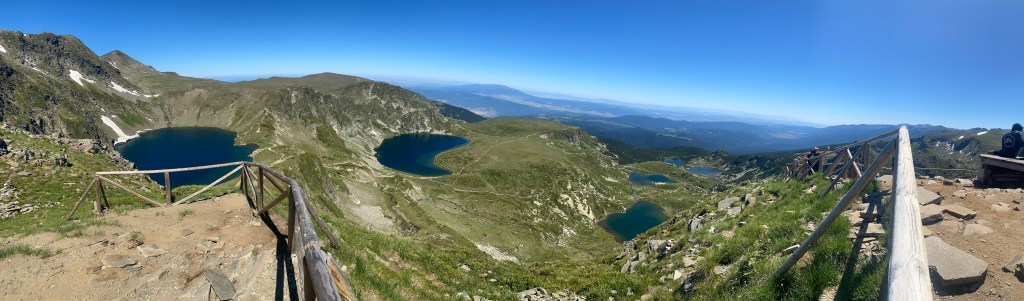
The Seven Rila Lakes was an enjoyable nine kilometre round trip with a fair bit of up and down. The hike started with a 20-minutes ride up a ski lift to the Rila Lakes Chalet. From here we started upwards towards the lakes. The first lake, Lower Lake, was seen about twenty minutes into the hike and the hike kept revealing new lakes about every fifteen to twenty minutes after this. We had the benefit of explanations of then names, geology and history of the lakes from our guide who grew up in the Rila Mountains. It took us just over ninety minutes to get to the seventh lake, Egg Lake, and the vantage point from which you could look down on all the lakes. On the return we took a route closer to the initial three lakes that showed us a different view of these and took us just under Rogue’s Peak, a unique rock formation popular with mountain climbers.
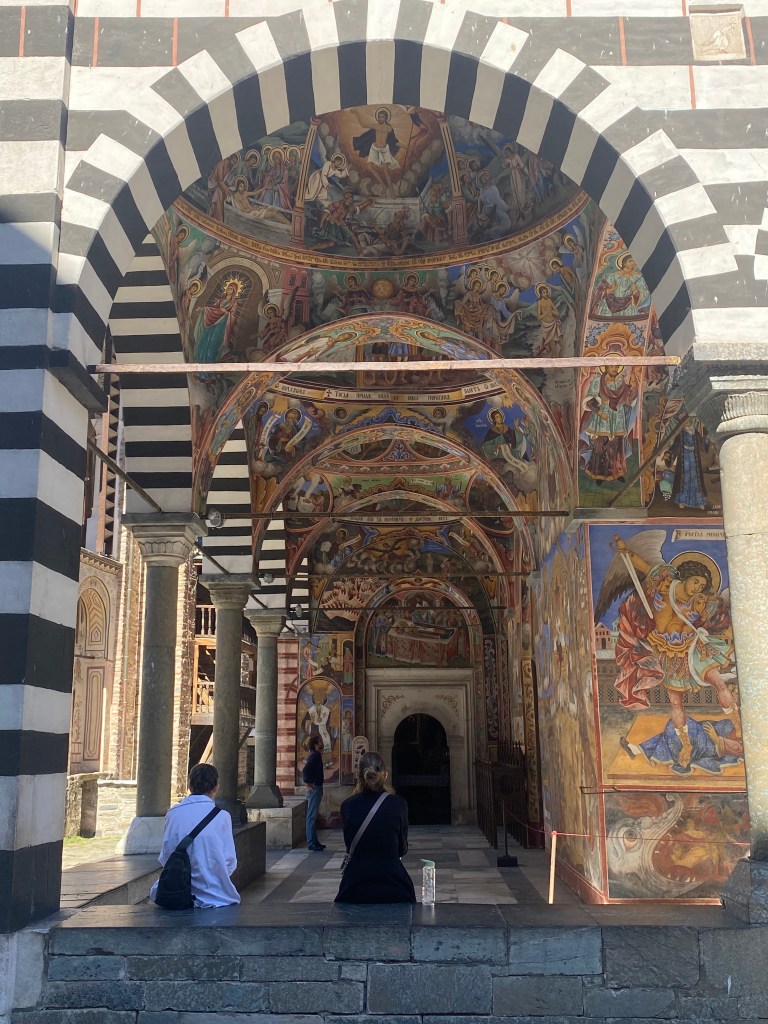
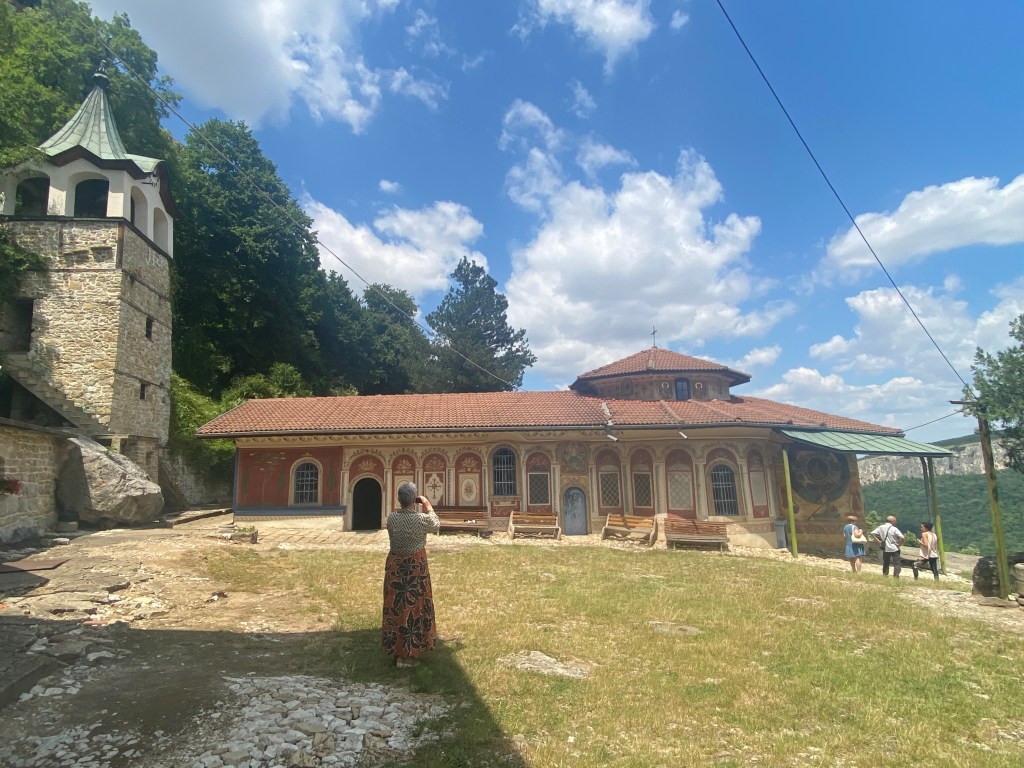
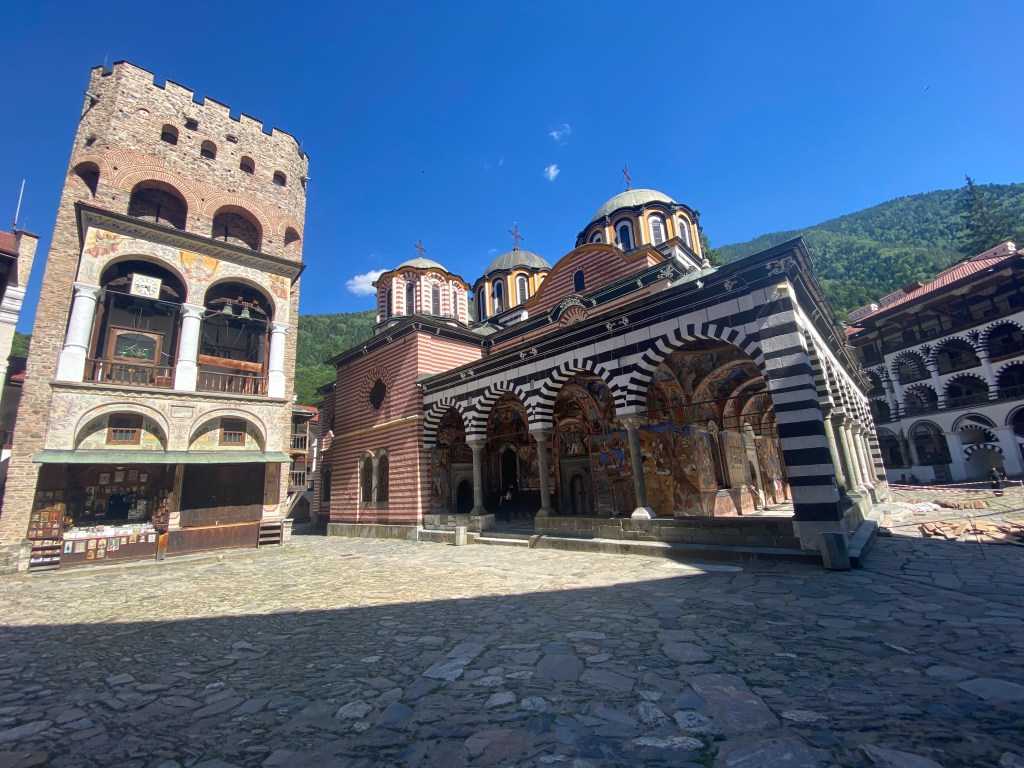
After returning to our bus we drove the two hours to the Rila Monastery, a serene setting that is seen as a central site for the Orthodox Christianity that is the main religion in Bulgaria (although multiple guides indicated that most of the population in non-religious after years of communism in Bulgaria). The monastery once housed 400 monks and learners, but today has around twenty monks living at the Monastery. As this was an active Monastery we weren’t exploring the various floors of the four level structures where the work and living quarters were, but wandering the main level was interesting enough. The Nativity of the Virgin Church is the central building that draws the eye as you walk into the Monastery. It is entirely covered in paintings of scenes from the Bible inside and outside. On our visit the inside was being cleaned and touched up to bring out the more colourful aspects of this art that was originally painted in the early 19th century. The oldest building, Hrelja’s Tower, was erected in the early 14th Century. We paid the small fee to go up the tower to see the chapel at the top including its painting that dated back to its construction. Definitely the Rila Monastery was worth the visit.

Day three and four in Bulgaria: Sofia

Fiona and I travelled the main cross country highway from Plovdiv to Sophia. The rolling hills and windy highway offer a lot of scenic views of farmland and orchards as we approached the capital Sophia.

Fiona’s car was not providing much cool air as the air conditioning had stopped. With the warm weather we decided to see if the Hyundai dealership could fix this. They were helpful and allowed us to have it looked at on the same afternoon we arrived. Very nice to feel cool air instead of having to drive with the windows down.

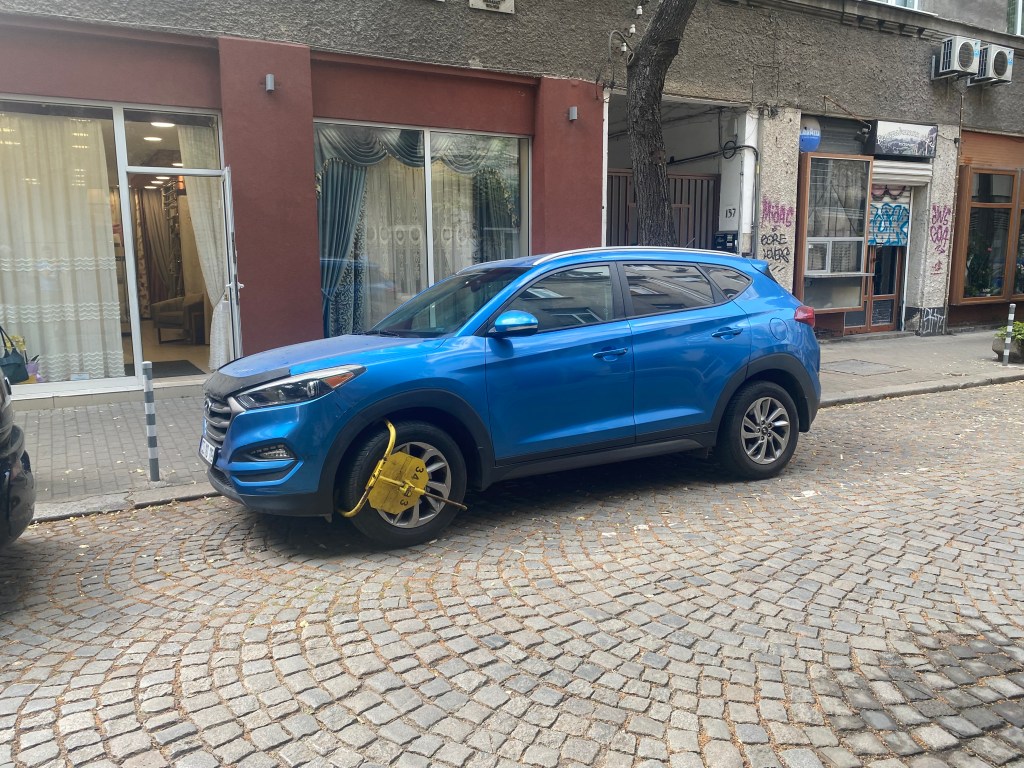
Our initial foray in Sophia was to get our hotel sorted. We parked a block away given the packed street parking. After getting a detailed description of the Sophia downtown from the receptionist at the Art Hotel, we asked about parking. She got very concerned that we may be clamped as there was apparently a zero tolerance for non-payment of parking. We hadn’t seen signs indicating the SMS payment methods for hourly street parking. Sure enough we had a clamp on the vehicle and spent the next hour waiting to have it removed and relocating our car to a parking lot recommended by the hotel.

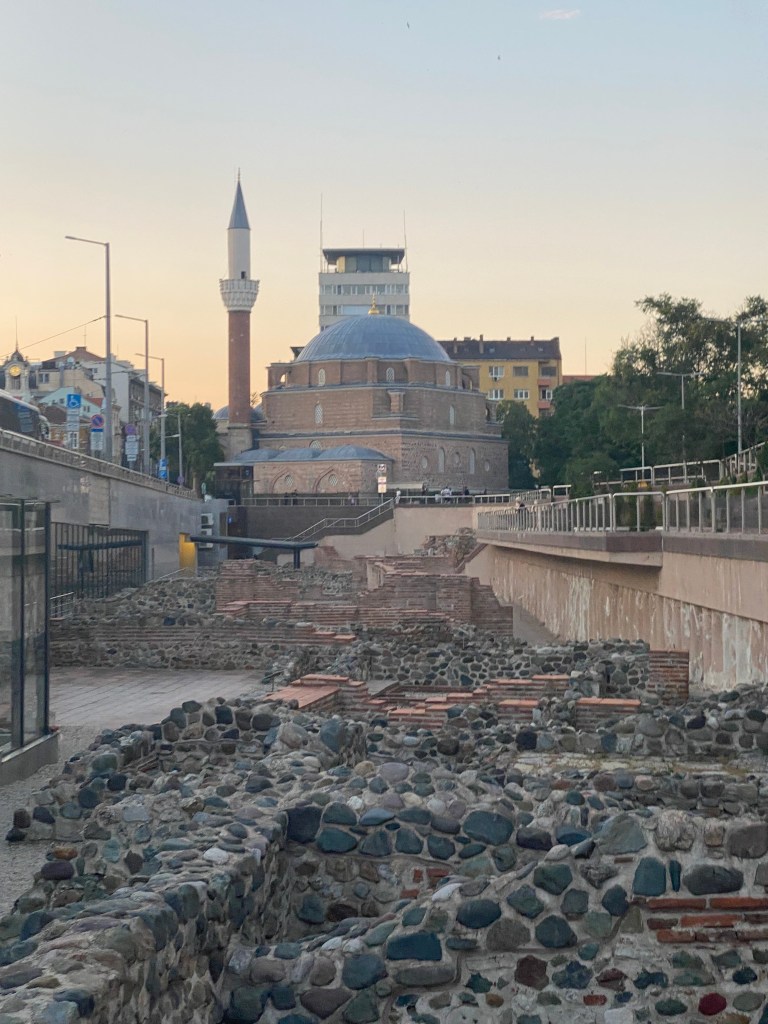
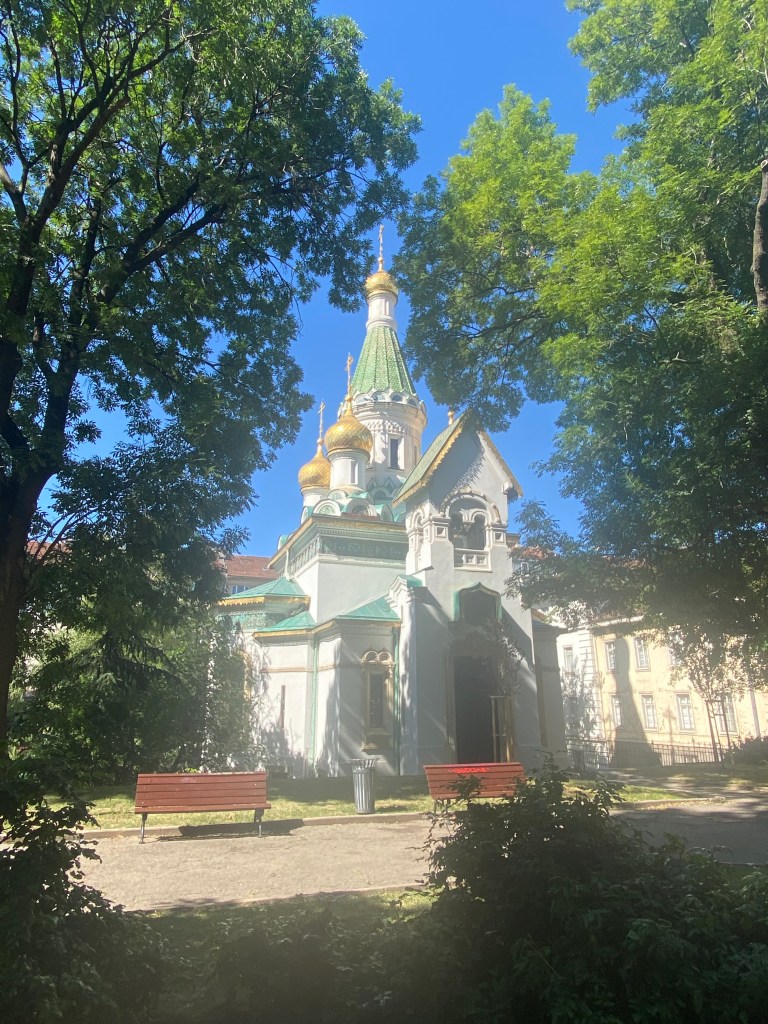
Having started our time in Sophia on a sour note, the experience did get better. We wandered the web of streets in the city centre seeing an array of historic buildings that are interspersed among the more modern ones. A number of green areas spread across the city in what our guide from the free city tour described as “one of the few good things the communists did in Sophia”. It made it more pleasant to explore the city with all this green space.

We went to the National Ethnographic Museum to see a few displays on Bulgarian history and culture and an interesting exhibit on Bulgarian science and the Universe which looked at Bulgarian contributions to astrophysics and space programs. Afterwards we went to a wine tasting at TempusVini. We tried five wines and some Bulgarian cheeses while learning the brief history of viniculture in this country. Following this we joined the aforementioned free city tour that provided a lot more context to Sophia’s sights. The changing religious and political influences on a country that went from being mostly Islamic to Christian with the defeat of the Ottomans in the 19th century and went from being more aligned with Europe to being in the Soviet Bloc before reorienting to Europe with the fall of Communism had influenced architecture over the generations. Sophia has a mix of architectural styles as a result.

Sophia has been an interesting and enjoyable place to visit.

First day in Bulgaria

My sister Fiona and I crossed into Bulgaria from Romania this morning. Although the roads were a bit rougher, the rural setting reminded me of where I had grown up in Alberta, Canada. The only difference was that the yellow fields were sunflowers rather than canola fields.

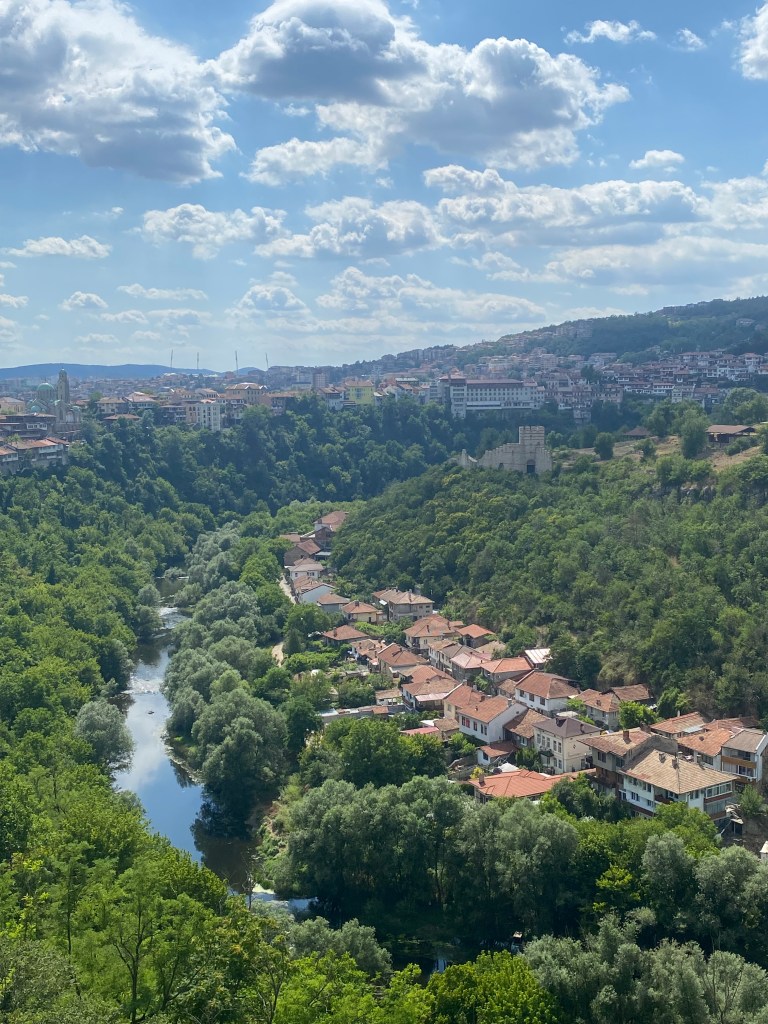
We travelled to Veliko Taranovo where we are staying our first night. Just north of the city we stopped to see the Monastery of the Transfiguration. It was an older structure, in some disrepair, but represented almost 800 years of history of a monastery at this site. The setting was on a side of a large hill overlooking the cliffs as we entered a valley in which Veliko Taranova was constructed.

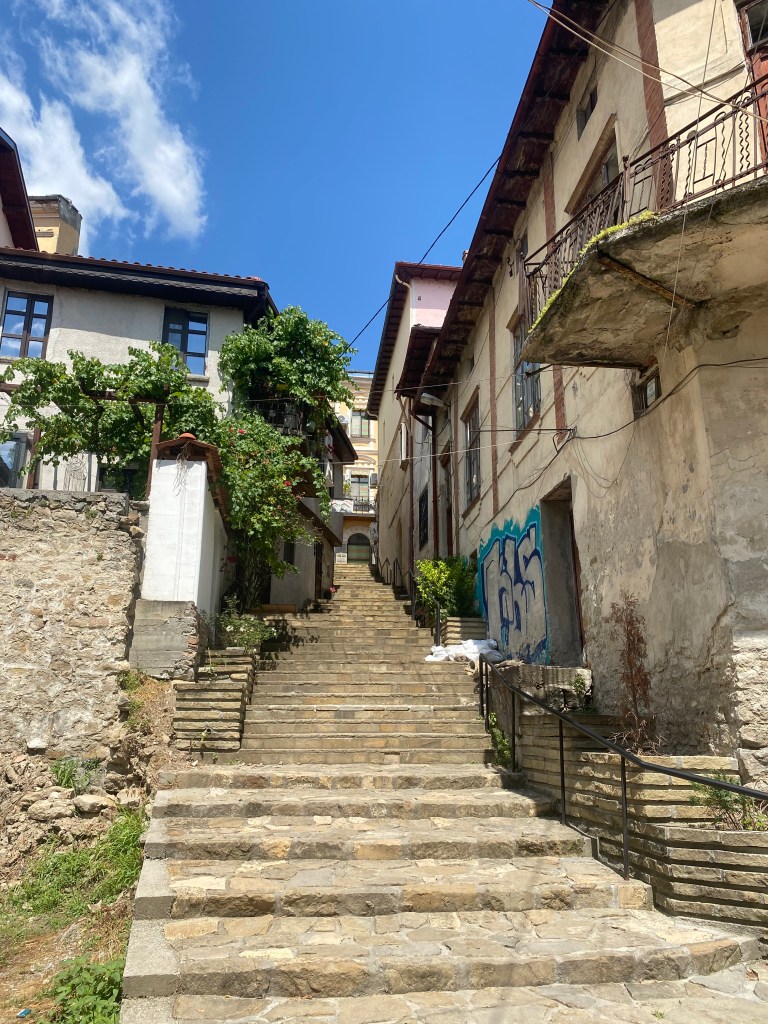
Veliko Taranova is a very vertical town due to the geography. Windy cobblestone streets curl around the sides of steep hills in a river valley where houses are built on levels up the sides. It makes for very picturesque images with the old and modern intertwined around many corners.

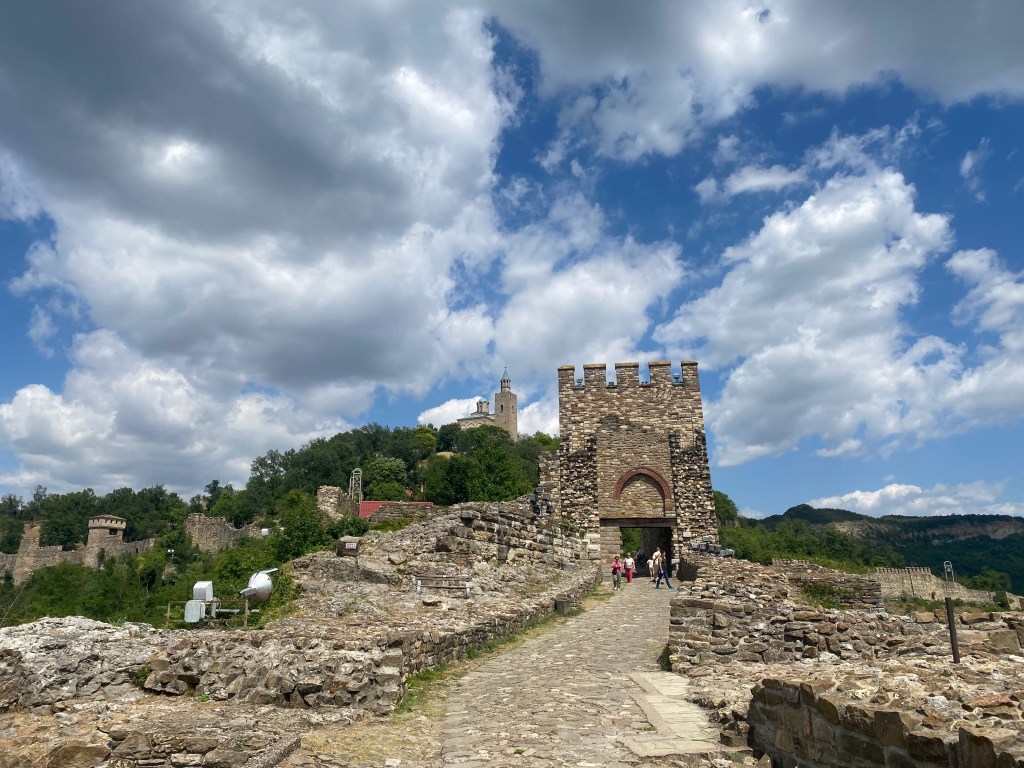
Our first stop after dropping off things at the hotel was to walk to the Tsarevets Fortress. An imposing hill structure across a bridge at one end of the town. In the 12th century it housed over 1000 people until it was sacked by Turkish invaders. The floor level structures have been excavated, but the walls remain as a testament to the history of this fortress. At the pinnacle of the hill on which the fortress is built is a renovated cathedral. It is visually drew my eyes as I circled the fortress streets and made my way up the hill. I was surprised to see a modern take on the history of the cathedral and the religious iconography on the interior walls as I entered the structure. It was beautiful but different from any other Orthodox Church I have visited.

After leaving the fortress we wandered the streets where many stores catered to locals and tourists. It felt like a vibrant town with lots on the go. We ate some traditional Bulgarian food at Cafe Risch. The stew I had was delicious along with the tomato and cumber salad. We had a beautiful view over an art gallery in the valley where a celebration of some kind was in full flight. It was part of the vista of the town that was enjoyable to look out as we ate. I have definitely enjoyed this visit to Veliko Taranova.

Jet lag and planning

I am on my third full day in Romania. After sleeping through my first night I have had two nights of waking up around 2 am and having a few hours of wakefulness before falling into a deeper sleep for another couple hours. Not helping is that Bucharest is hot. Temperatures have been up to the high 30s centigrade and nights can be a bit warm.

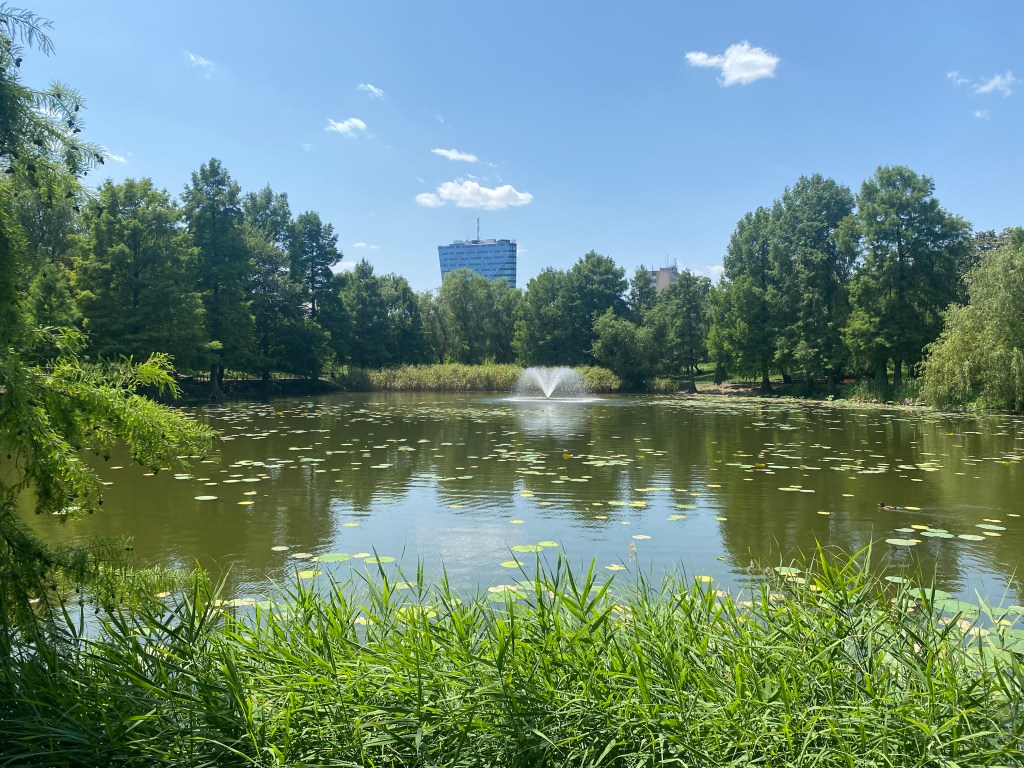
Despite this I am enjoying a casual approach to a city I visited last year and so haven’t done the formal tourism as much as wandered and relaxed. It is nice to explore some of the local parks despite the temperature. My sister suggested going to Circus Park, or Parcul Circului in the local context, which was a small city park with a nice water feature in the middle. A few locals were enjoying the shaded paths by the water.

I also started planning for the initial trip from the base of my sister’s apartment in Bucharest. I am fortunate that my sister, Fiona, has a week off and has a vehicle. Our plan is to do a loop in central and northern Bulgaria over the upcoming week.

We will start with a night in Veliko Tarnovo and seeing the Monastery of the Transfiguration just north of this city. We will continue south to Plovdiv, considered the oldest settlement in Europe with over 6000 years of known history from the area. We will enjoy staying in the Old City and exploring some of the history of this city. From there we will head to the capital of Sophia for a few days. During this stay we are hoping for a day trip to the Rila Monastery and a hike to the Seven Lakes. On the return we hope to check out Pleven. It should be a busy but enjoyable trip.

A Hundred Days in Europe

I’m at the Frankfurt Airport starting the initial trip of my gap year. I didn’t deliberately plan for this to be 100 days, but when I booked my ticket—adjusting for the lowest fairs based on the dates of travel—it ended up that I would have 100 days for this leg of the year.

The trip started off a bit rough with delays anticipated for the first two flights—one from Saskatoon to Toronto and then from Toronto to Austria—which was going to leave me missing my connection to Romania. Air Canada adjusted my ticket at the start sending me through Frankfurt rather than Zurich. I now have a four hour layover in Frankfurt where I am using the time to charge my phone and do some other work. If I can get the charge soon enough I may try to get into the city for a walk before catching a flight this afternoon.

The next 100 days should be interesting. I will see my sister in Romania and do an initial trip to Bulgaria with her. She will return while I do some hiking before heading off on a tour through the Balkans. My partner is coming to Croatia in early August and I am hoping that as she comes south from Austria—the flights were $1000 CAD cheaper than flying directly to Croatia—I can come north from Albania, Montenegro, and Bosnia & Herzegovina to connect for a week or so with her. This both feels like a lot of time and too little time, but will make the best I can of it.

I changed my final plans as my Father is travelling to Scotland in September. My sister and I will join him and his wife for a week before I do some hiking in the Highlands. This means I will need to delay my trip to Turkey for another time.

A hundred days should go quickly but still be time to explore and experience some of the varied cultures and history of Europe. Here’s to the next 100 days.